Sea-scapes into Landscapes
03.06.2026
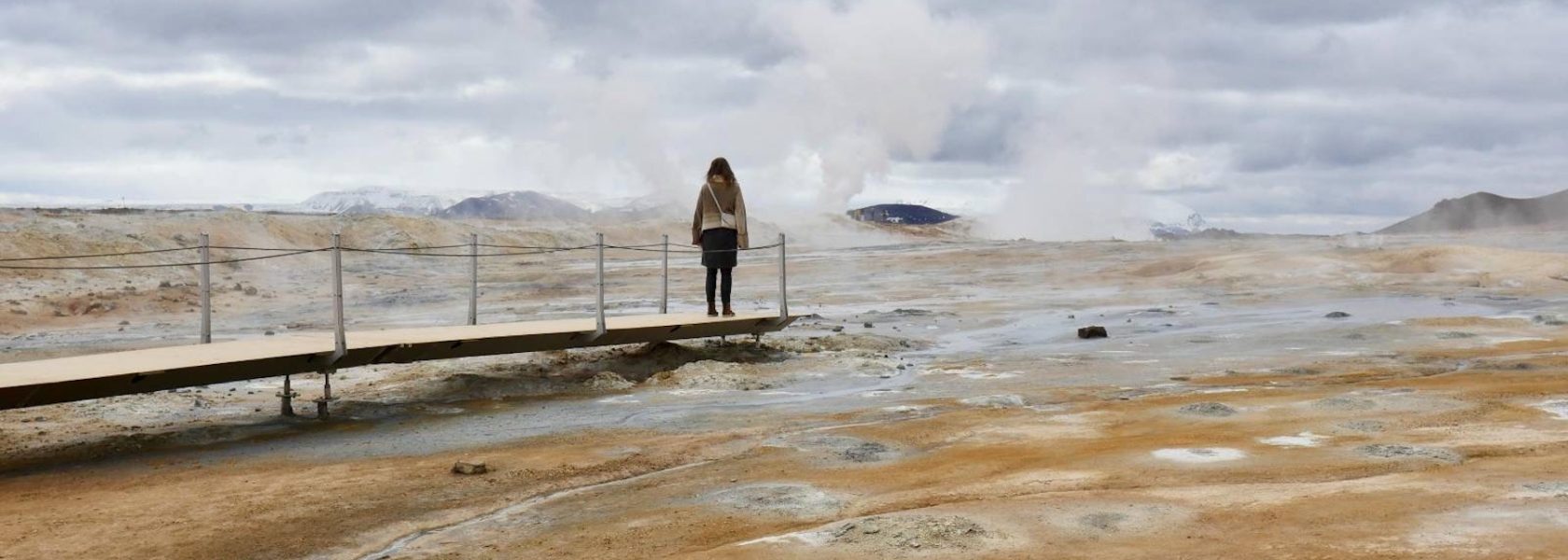
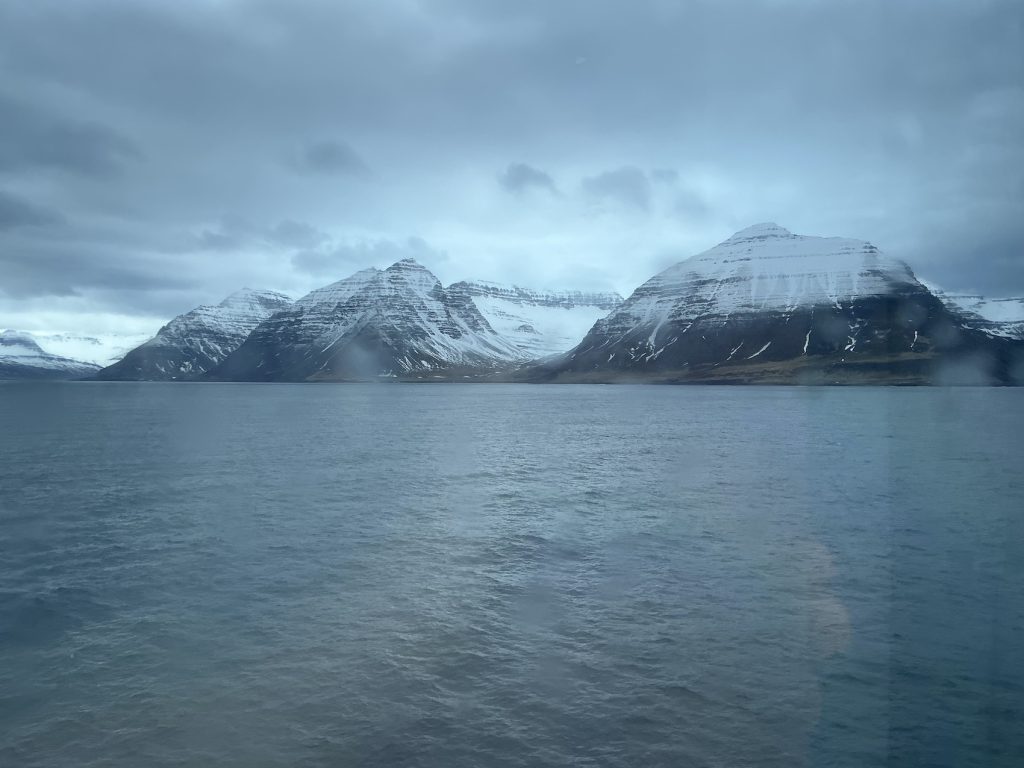
Once we arrived in Iceland, Seascape turned into Landscapes…
At first, I was a bit baffled, trying to imagine how this would have looked to the earliest medieval travelling monks who arrived on the island from the South. Not a very hospitable place and not easy to land!
I remember reading the Voyage of Saint Brendan the Abbot by Brendan of Clonfert (c. AD 484 – c. 577), in which he describes scenes that resemble Hell, but also unstable islands that turn out to be giant fish instead. One of the things I appreciated about that story is the pedagogical tools it uses to convey its message, and one can clearly see how time moves in a cyclical format where the same theme returns over and over again. This is very much how Eduardo and I built our teaching as well. Taking one practice and deepening it for every iteration that was made.
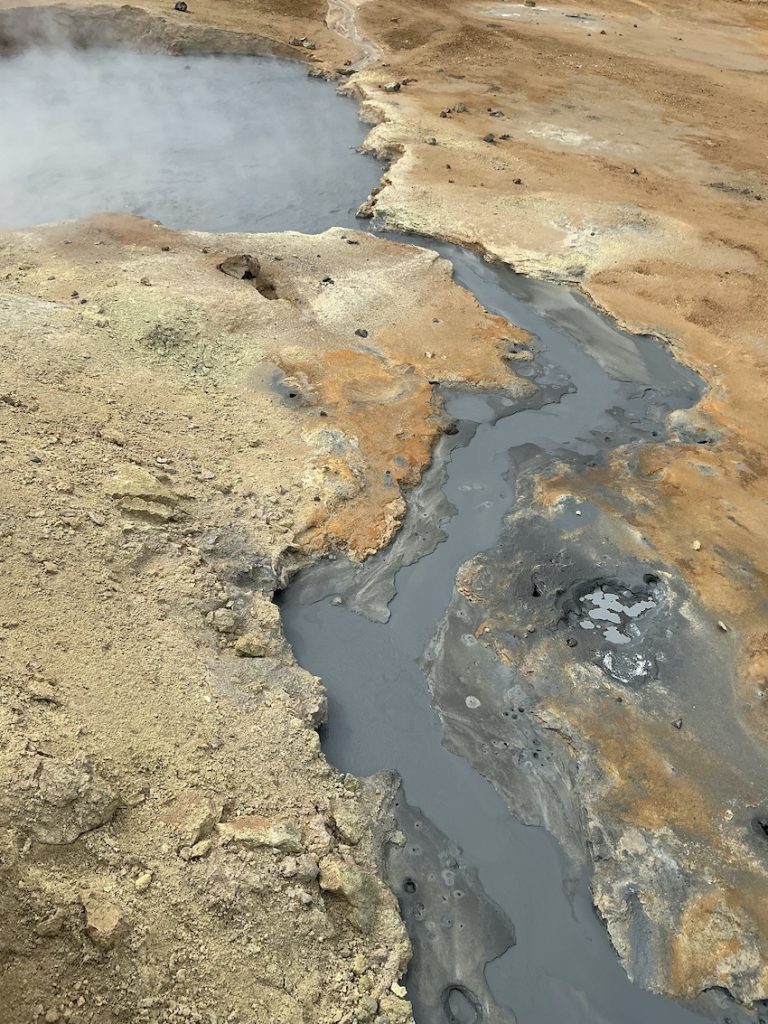
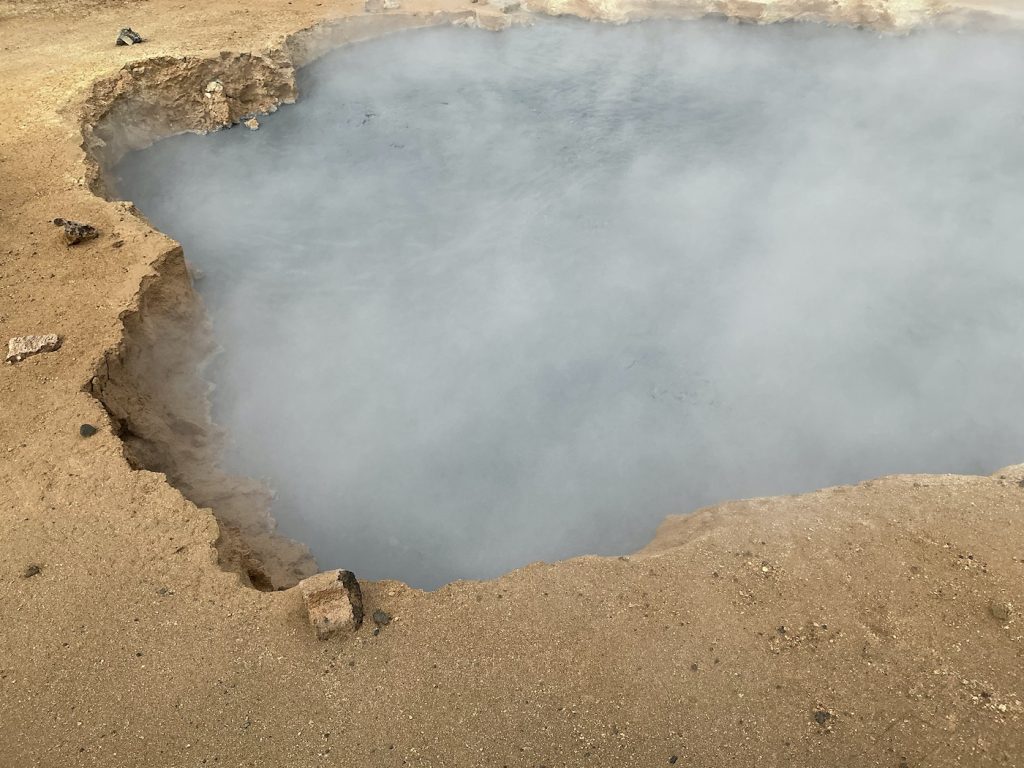
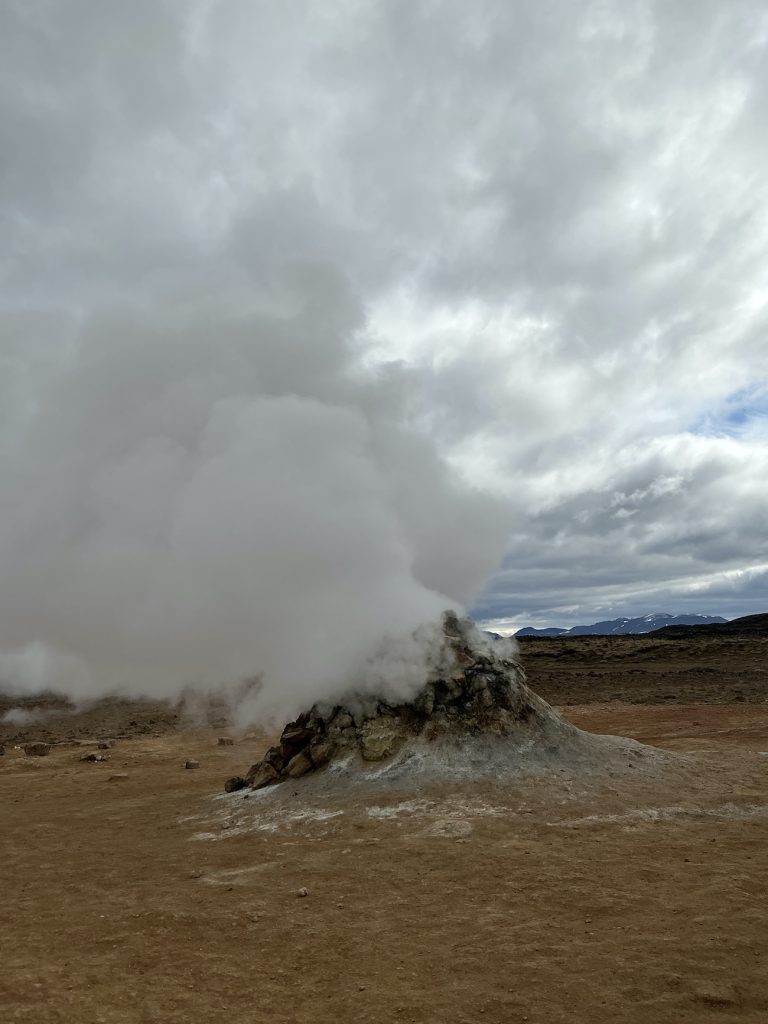
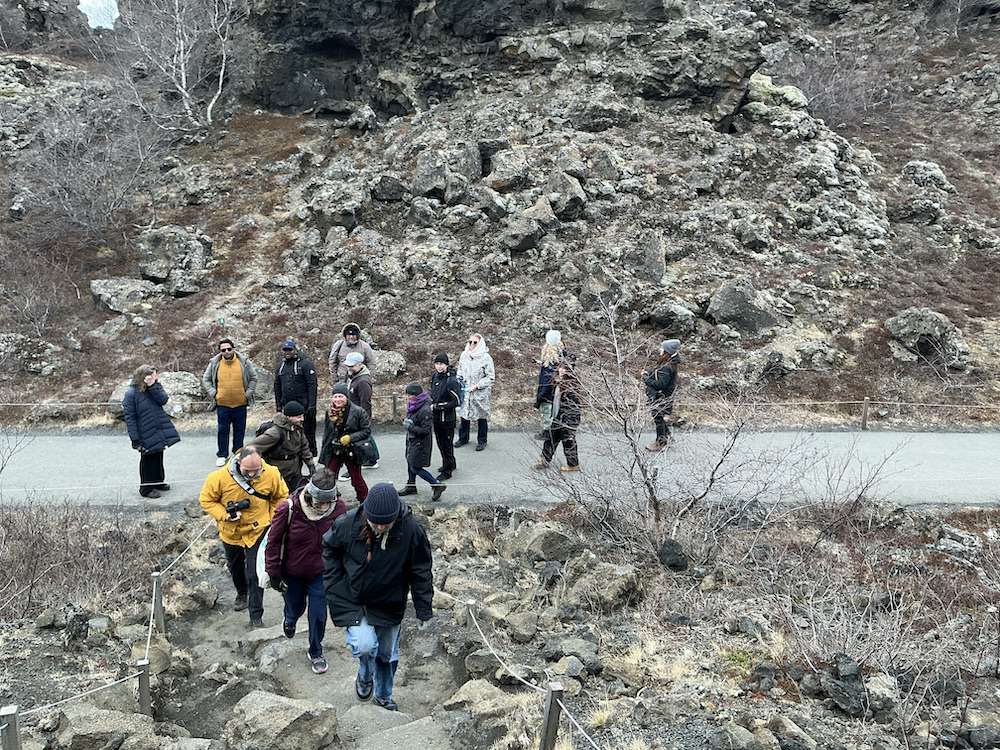
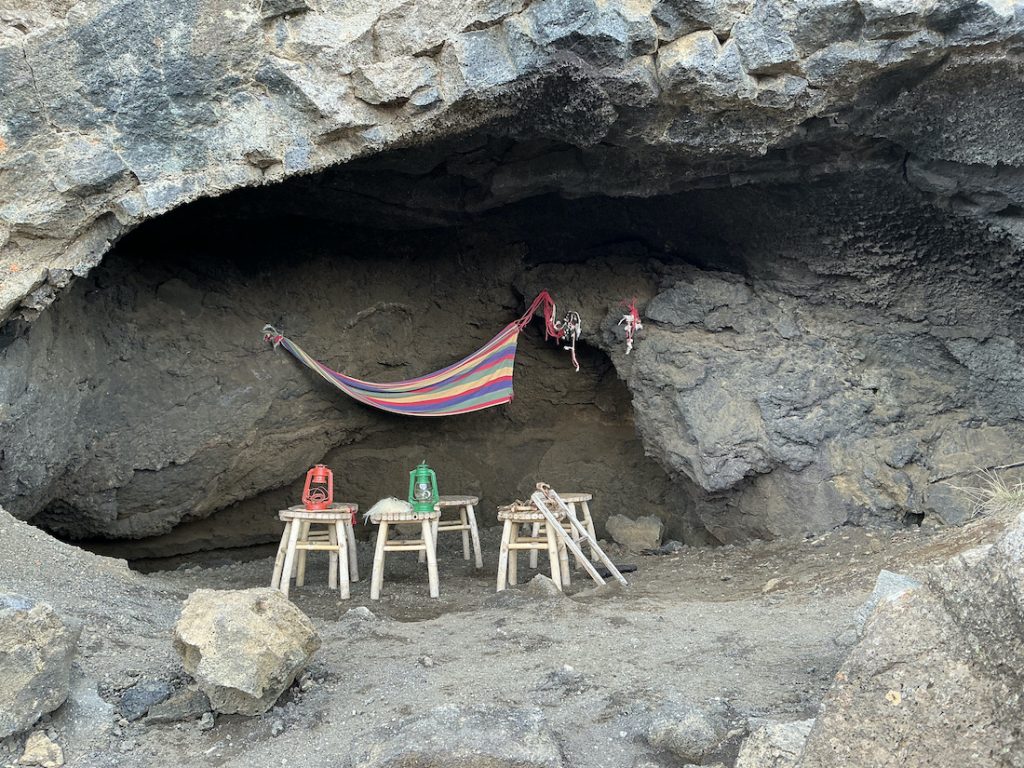
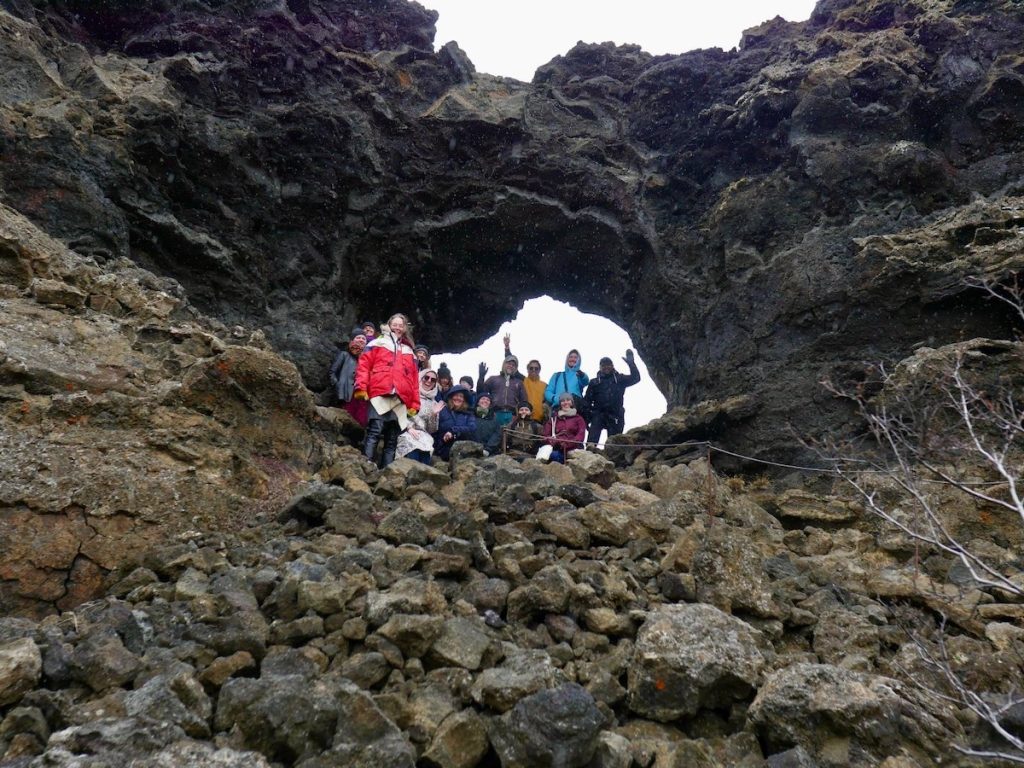
Our first stop during the first day on solid ground was in Mývatn. There we met with Auður Aðalsteinsdóttir from The University of Iceland’s Research Centre in Þingeyjarsveit. She took us on a small guided tour in the Dimmuborgir area and told us not only about the Jule lads and Trolls that live in this intriguing geography, but also about a variety of ways that different stakeholders in the region are working together to find more transdisciplinary solutions to live with the highly active grounds, large groups of visiting tourists, and continuous environmental challenges.
In many ways, Auður’s descriptions reminded me of the biosphere work in the Archipelago Sea region and particularly how this year’s theme on Folklore comes very close to the setup we found at Dimmuborgir. At the same time, however, I am also surprised every time I see places that mainly use stories of folkloric character as tourist attractions or heritage sites of nostalgic connection. For me, as a theologian and working with anti- and de-colonial practices, speaking about ”superstition” (even in quotation marks), is highly problematic, and unfortunately, that is often what people do with stories about trolls, gnomes and such. More importantly, though, there are so many kinds of knowledge and patterns of making sense of and with the world hidden in myths and creatures of this kind that it makes me sad not to see people tap into that. Hopefully, our upcoming event in November with the Skärgårdscentret will be able to open this up a bit further – Welcome to book your calendars for this!
As an organiser and facilitator of transdisciplinary work, I found it particularly interesting throughout this journey how many people seem to have tried transdisciplinary work and found it so demanding that they gave up. At the same time, it was also rewarding to see how many people got genuinely excited when hearing about our particular approach to this work, as it sounded like a set of practices full of potential.