How to relate to the lands and waters?
04.06.2026
When it comes to transdisciplinary work, our experience has shown us that it is quite common nowadays for people from the natural sciences to team up with artists of different kinds and do a fun project together. In communities like the SOS team, almost everybody has tried this at one point or another. What is more rare is to find communities where you have people from the Natural Sciences, Humanities and artists or other people working outside of academia, to build mutual communities of learning where they design the whole research project together and build all its parts in a way where everyone is an equal partner. That level of collaboration demands a wholly different setup, as it means that every-one needs to step outside their own comfort zone and try something different.
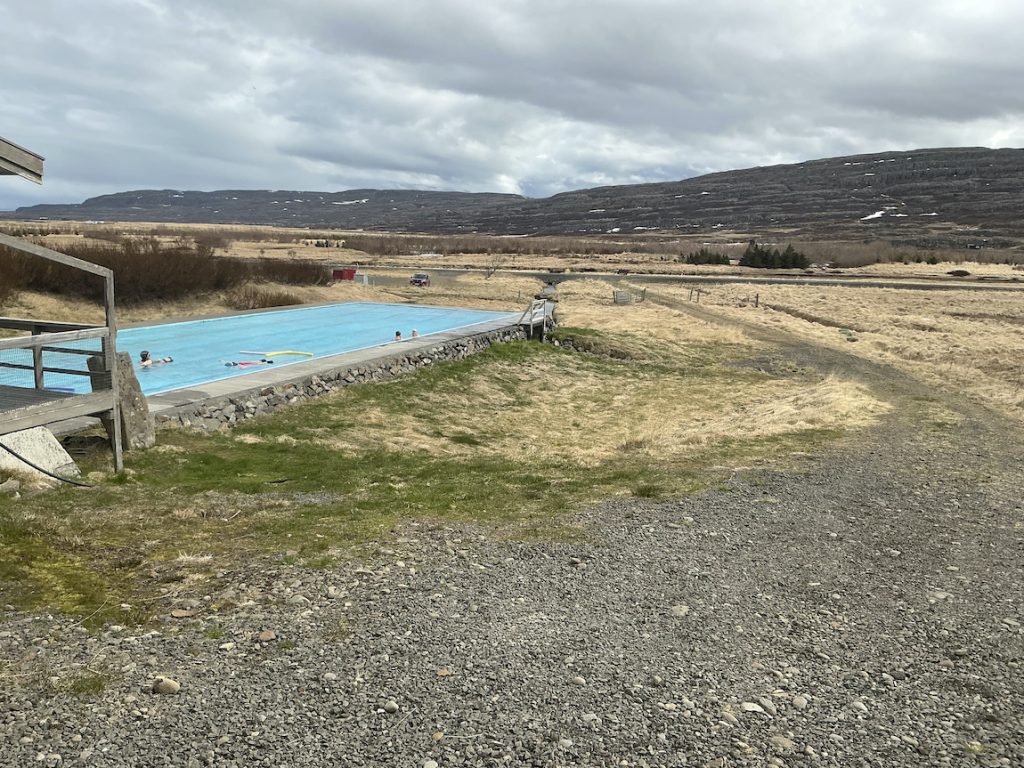
Many of the collaborators we met during our Knowledge at Sea journey to Iceland could attest to being part of projects that are transdisciplinary only on paper, and being in even interdisciplinary projects where true respect and insight into other ways of doing and being in the world did not manifest. At the same time, we were also happy to meet up with people like Auður Aðalsteinsdóttir from The University of Iceland’s Research Centre in Þingeyjarsveit, who could attest to the fact that one can be invited to a collaboration where the other partners are curious about what your skills can bring to the topic of mutual interest and are willing to find ways where many different kinds of knowledges can start to communicate with each other. In the Mývatn area, an example of this was the article written by some of Auður’s colleagues: `Trolls, Water, Time, and Community: Resource Management in the Mývatn District of Northeast Iceland´by Sigurðardóttir, R. et al. (2019).
Inspired by these challenges, Eduardo and I modified one of our prepared exercises to the landscape and stories we were now part of. In the bus ride to Akureyri and beyond, we asked our participants from Åbo to:
Imagine yourself being a person trained in the Natural Sciences… How would you map the Stakeholders of this landscape? And how would you get to know their needs?
Imagine yourself being a person trained in the Humanities… What kind of Atlas of memory or storytelling would you apply to understand and make meaning of this place?
Imagine yourself being a person trained in the arts… What sensory patterns and constellations of associations did you experience while being in the lands, winds, waters and scent of this community of relations?
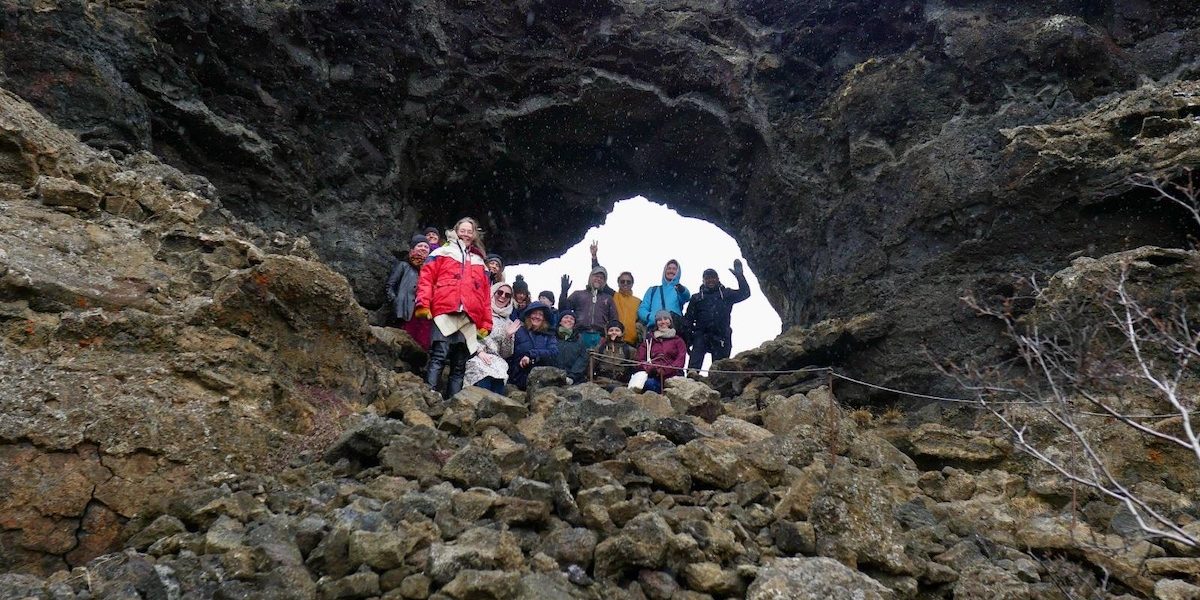
Once we arrived at the sorcerers’ cottage – a reconstructed site of local knowledge traditions – a quite remarkable dialogue session took form. Creating a constellation of the different voices, skills and stakeholders present in the lands we had passed by, I became an algae floating in the middle of our water system. The ”scientist group” questioned whether they would be allowed to name the algae as an actual stakeholder and still be considered scientists. Other groups discussed who has the competence, ability or ”privilege” to speak for the algae? And, while the humans were debating and the government and industry were busy making plans, I just continued growing, until nobody could doubt my agency nor ignore my ”voice”…
Our little exercise showed in no time what Tim Rudbøg and Kocku von Stuckrad spoke about in the last episode of the Eco Thoughts podcast.