
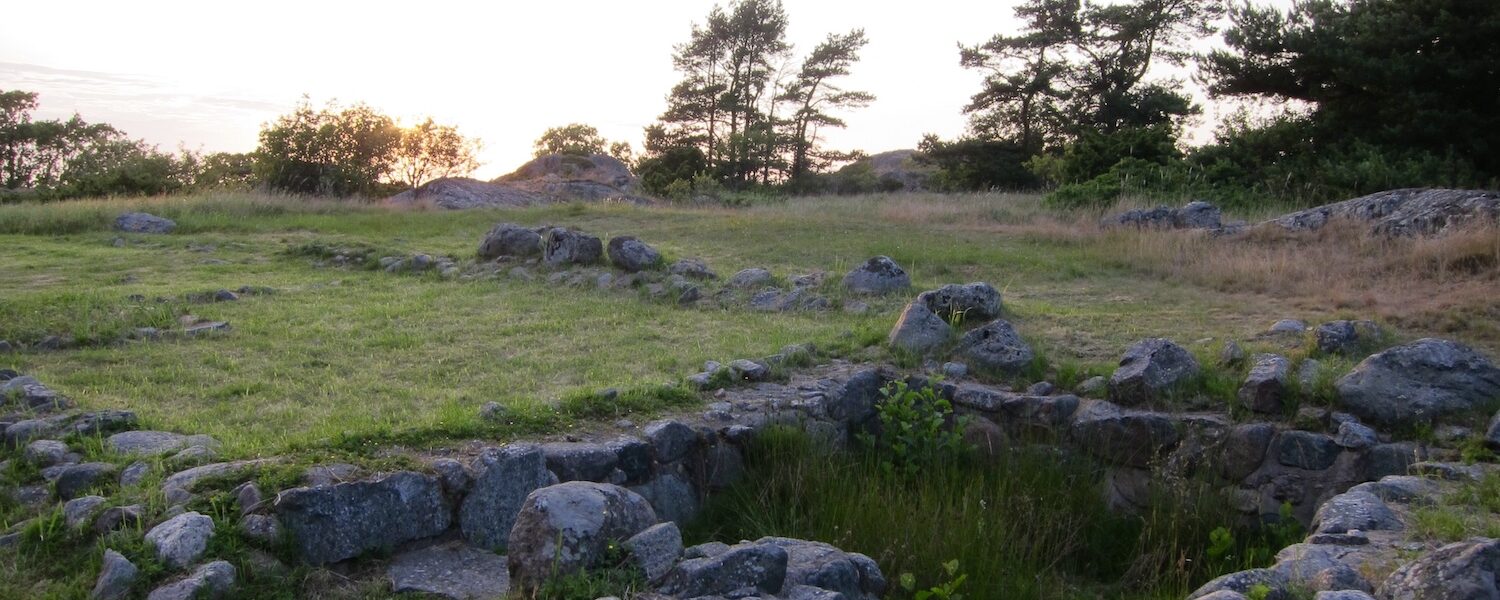
Tracing theological roots or finding my rudder!?
19.10.2025
In certain theological contexts, particularly in Sweden, Martin Lönnebo (27 February 1930 – 26 April 2023) is considered almost a modern-day saint. I myself have sat at his feet during the legendary ”efterglöd” sessions of the meetings called Pilgrims Höstmöte, where young adults from across denominations gather in Bjärka Säby to listen to inspiring theologians, artists and thinkers from around the western world. I’ve heard Lönnebo’s encouraging words: ”Be like a wood-heated oven” and seen the loving care and intellectual depth in his eyes when he speaks about ”trasmattsteologi” (theology of weaving).
Martin Lönnebo is hailed for the fact that in a certain modern, secular and post-religion period of the evangelical lutheran Swedish church, he brought in elements like – prayer beds and lighting candles in a mass – that were considered too Catholic or ”popish” when introduced, yet soon became so immensely popular that people do not even understand the level of innovation these spiritual practices brought with them. Lönnebo was skilled, not only in speaking to and working with the everyday ordinary spirituality of people. He also had a deep knowing of the mystical traditions of Western Christianities.
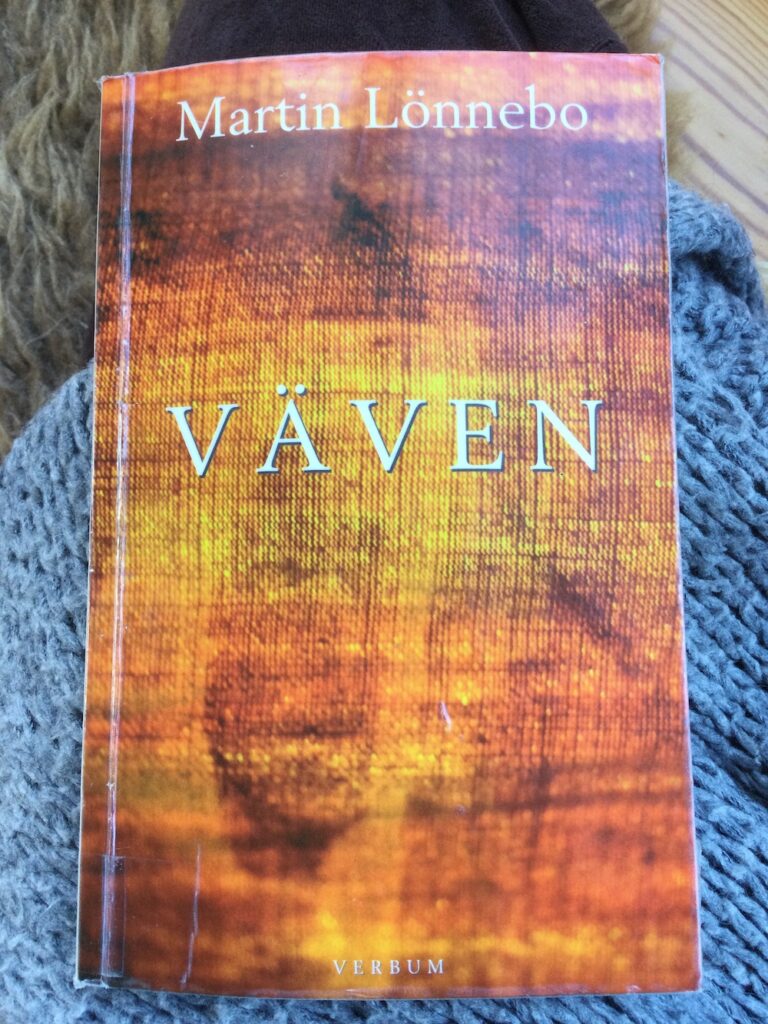
In our research project, I have, for example, used his three-fold dedication of the book Väven, to Cosmos (rymden), Heart (hjärtat) and Sand (sandkornet), as a theoretical frame for building ethical approaches to functioning and brave space of dialogue.

Photos: Laura Hellsten
Martin Lönnebo has a very poignant way of making sure that theological thinking and work always speak to and is open for, the wonders of life, the intellect found in emotional awareness and care work, as well as the brokenness of living as embodied beings in a world full of suffering.
However, this blog post is not so much about Martin Lönnebo, but my more unexpected encounters with Valdemar Nyman (15 August 1904, Vasa in Österbotten, Finland – 25 November 1998, Mariehamn, Åland Islands). As I grew up in Mariehamn, I have always been aware that there is a person named Valdemar Nyman and that he was an influential figure both in the cultural and theological spheres of the Åland Islands. I also remember that during my first visit to the Franciscan feast on Kökar, in the summer of 2016, a theatre play based on the book Broder Kilian by Valdemar Nyman was presented in the church.
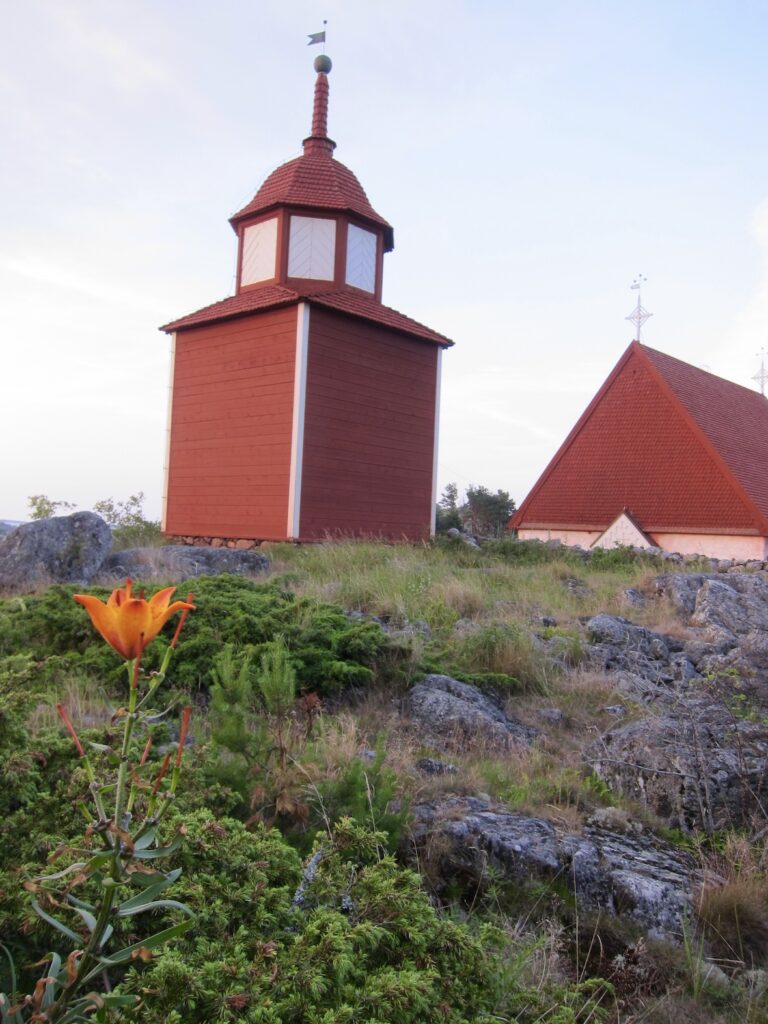
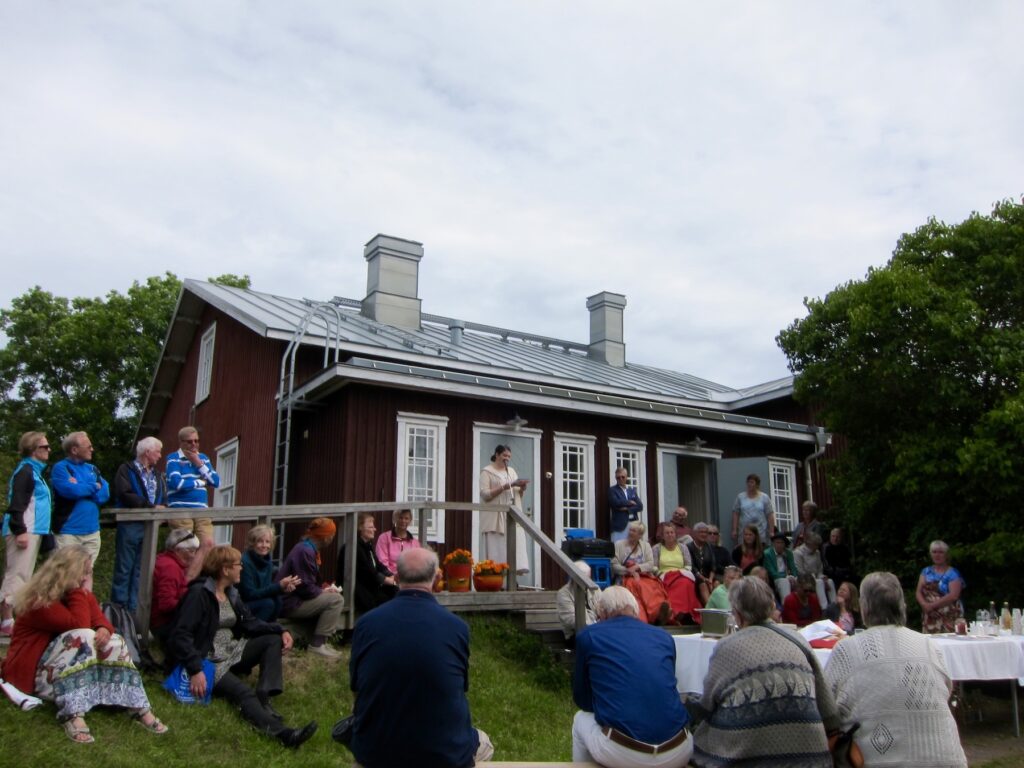
Photos: Laura Hellsten
Broder Kilian (1947), made a huge impression on me as I recognised how this novel carried the capacity to engage modern existential questions while relating the answers to a deeper strand of Franciscan theology that is rooted in the monastic traditions of the Middle Ages. I don’t even remember the exact plot of the story, but I do remember that my own explorations of sailing in a small open boat, dressed in medieval clothes, in order to understand in more depth how the medieval people might have journeyed on the pilgrimage route that we now know as St. Olov Waterway, was resonated in the depictions of how God and creation speak in the same tongue.
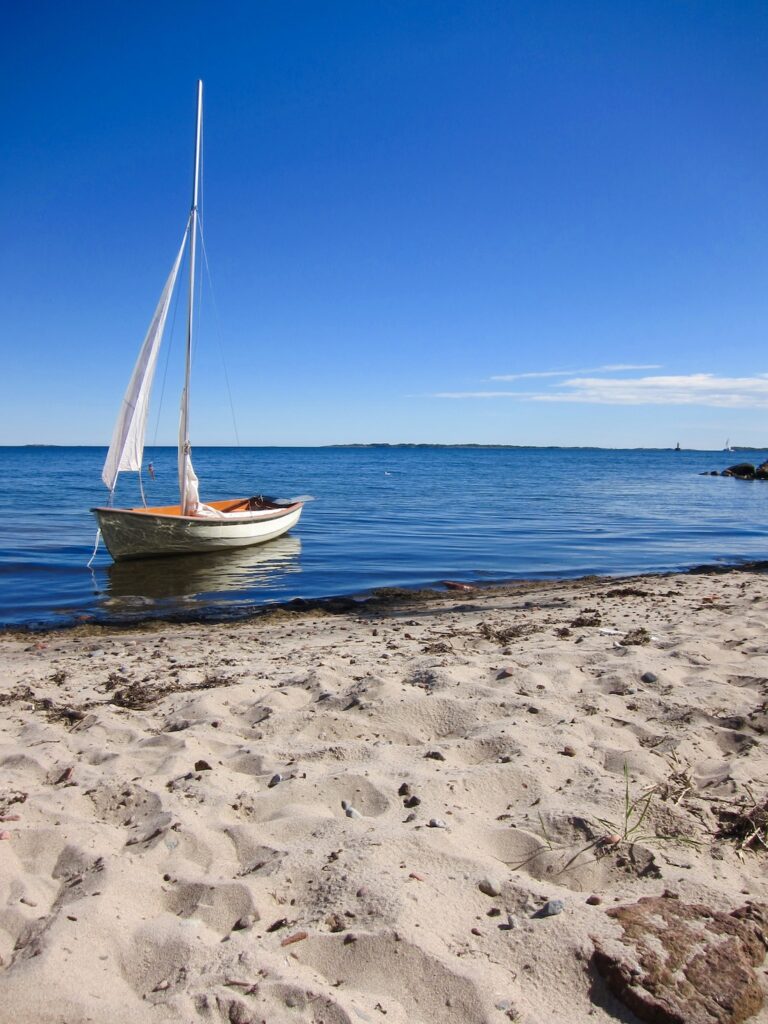

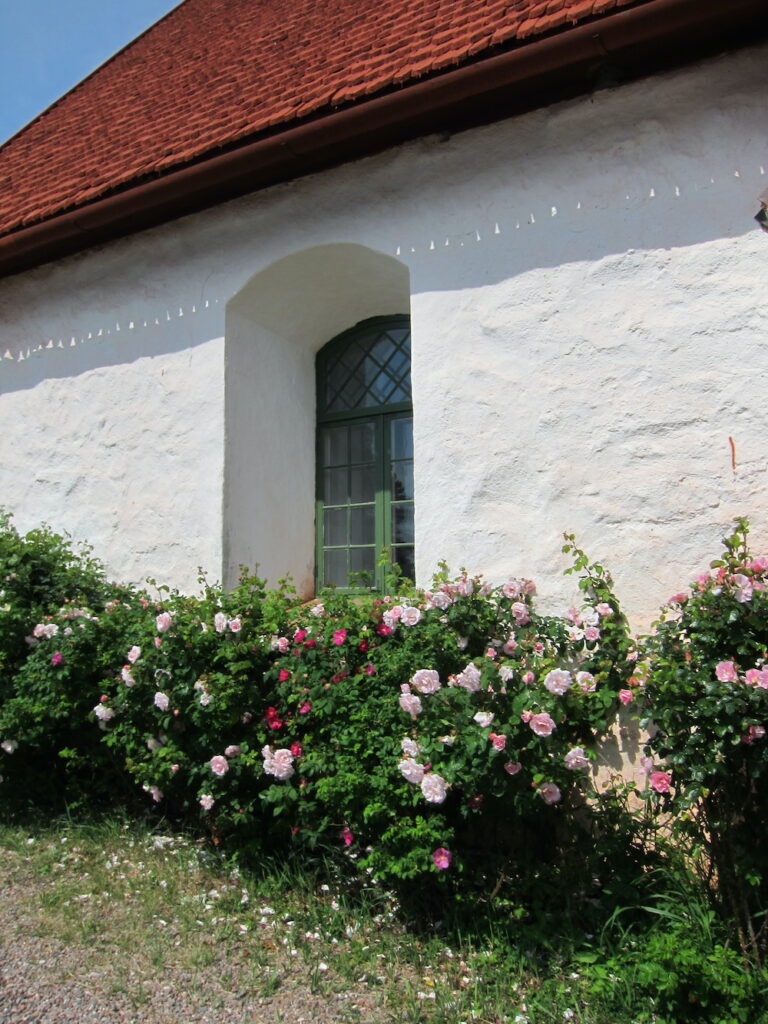
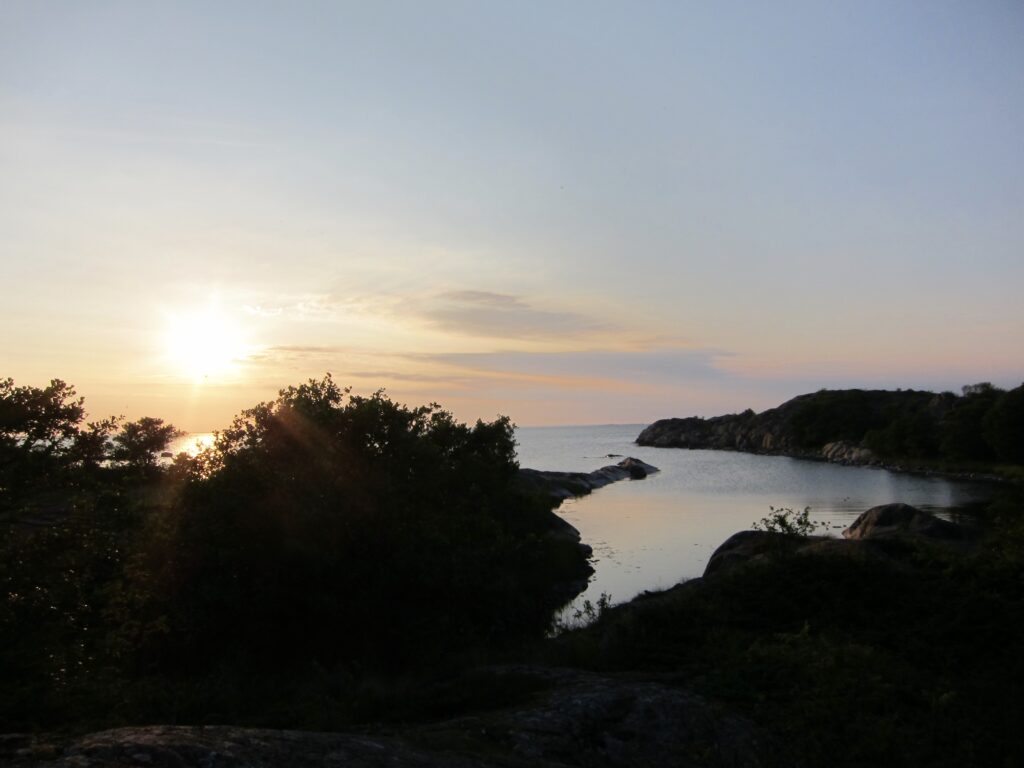
Photos: Laura Hellsten and of me Markus Hellsten.
Later on, I was gifted a book with collected sayings by Valdemar Nyman: Jag en stenskärva som det roar gudomen att kasta smörgås med (2004). When reading it, I would laugh out loud, with recognition of the humorous and profound wordings he coined.
Gud är som havet. Själarna som måsar över havet. Somliga flyger för högt och når inke kontakt med Gud som är därunder.
God is like the ocean. Souls like seagulls over the sea. Some fly high and do not find a connection to God, who is found in the depths/down under. p. 86
Tro änglarna. Extas är inte
flykt från verkligheten. Extasen
för dig in i verkligheten. Hjälper
dig nå din botten.
Trust the angels. Ecstasy is not a flight from reality. Ecstasy brings you into reality/existence. Helps you to find your bottom. p. 38
Katolsk betyder för mig allmännerlig, hela mänsklighetens omfattande (…) Jag tycker det är oförskämt att stå inför himmelens änglar och säga: ”Jag protesterar”.
Catholic signifies to me general, encompassing all of humanity (…) I find it rude to stand in the presence of the angels at the gates of heaven and say: ”I protest” p. 18.
These poetic renderings were able to catch, albeit fleetingly, the ”essence” of the kind of Christianity that I had been brought up with, both within my own family and through what I perceived as being the traditional way of doing church on the Åland Islands.
Towards an eco-theology that can steer the praxis project into new seas?
Once I moved to Kökar, in the autumn of 2023, one of my first tasks was to start exploring the writing of Valdemar Nyman and what he has to say about the archipelago. First, I was struck, in reading På Åländska Vägar – till lands och till sjöss (1980), by the fact that his thinking and writing was not only rooted in a sense of the presence of God in creation, he also carried extensive knowledge about the historical roots of the specific places he visited and a recognition of the importance of both local legends and the mythological features of stories that have influenced Western thinking. However, the unique feature of Valdemar Nyman is not his classicist schooling nor his local knowledge of history – there are plenty of people in his generation who have been formed by this kind of specialised knowledge. What I find intriguing is his fearless willingness to combine so many different genres (transdisciplinary thinking before the term was widely in use) and to layer the knowledges on top of each other.

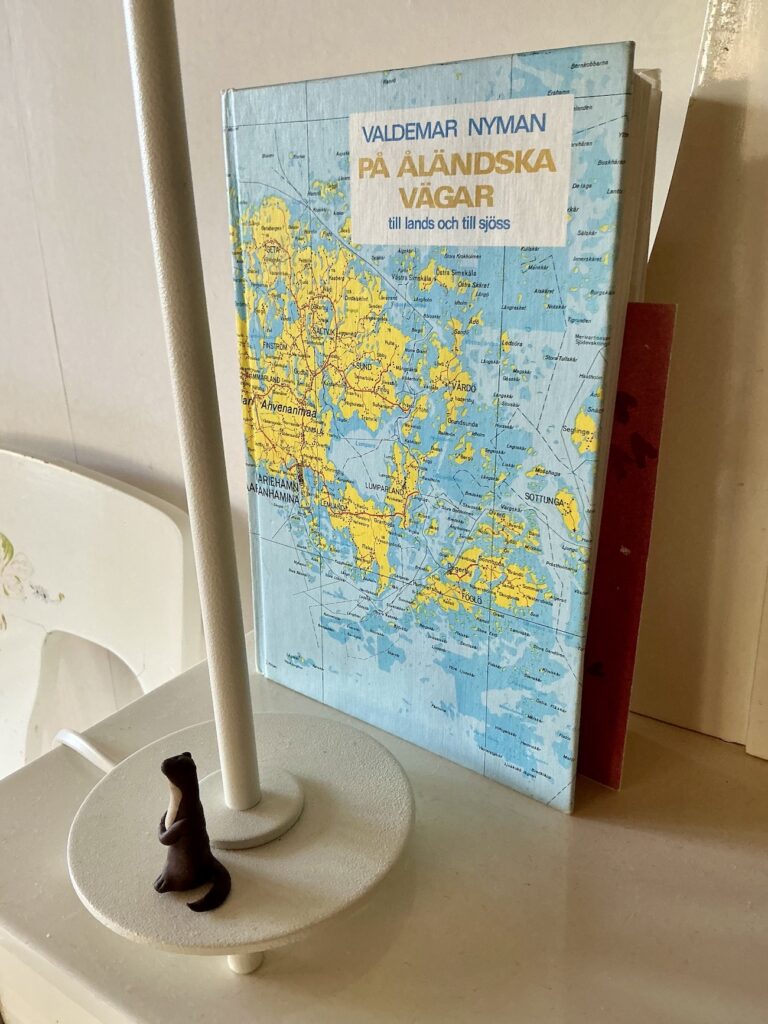
Photos: Laura Hellsten
The pluriversality of gnoseology, which Valdemar Nyman produced in his writing, has been much later described by Walter Mignolo as a path for decolonising Western mainstream epistemologies. In our current research project, we call this polysemous reading practices (a term I coined based on the writings of Peter Harisson and bearing in mind some of Catherine Keller’s work). One of the reasons why I am claiming boldly that a theologically schooled Western white male could have been practising unintended decolonialisation of the mind, is that in his writing we can find the traces of silenced and minor histories, like that of early Sami settlement on Åland (See recent article by Åsa Virdi Kroik).
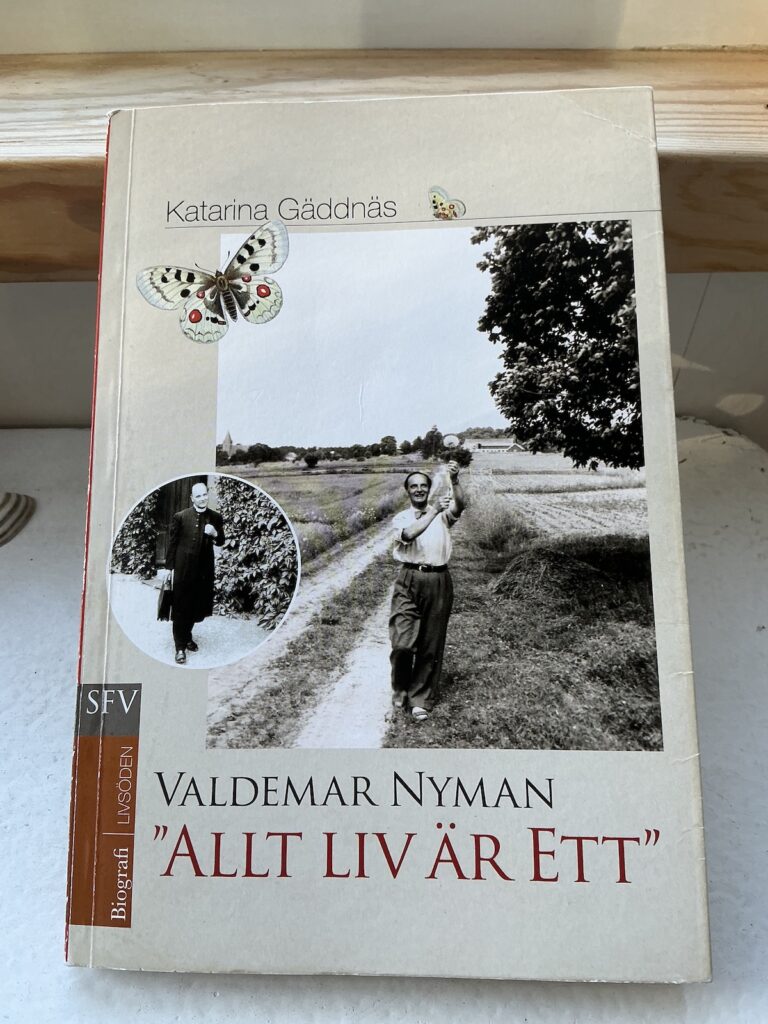
Now, when I have been reading Katarina Gäddnäs’ book on Valdemar Nyman, I realise that there are also many other strands where this person was very much ahead of his time. I did not, for example, know that Nymans’ practice of lighting candles, putting fresh flowers on the altar, making the sign of the cross and kneeling during different parts of the mass, where met with such resistance in 1935 when he became the priest in Finström. In parallel with what I explained about Martin Lönnebo, I had always thought that these ”catholic” features of the spirituality of Åland were ingrained in the medieval buildings themselves. It is only now that I am learning that for Valdemar Nyman, much of this liturgical tradition was something he actually learnt while studying at the theological faculty of Åbo Akademi, and particularly from the teaching of the professors: Yngve Brilioth and Torsten Bohlin. (Fun fact is that in my current position as a post-doc in theology at the Polin Institute, I have been placed in the room named Bohlin!)
More importantly, for the current research project I am leading and collaborations we are planning with the SOS team, what I find particularly intriguing with the life and writings of Valdemar Nyman is what Katarina Gäddnäs describes as a process, not so much of Nyman falling in love with Finström as a landscape, the concrete church as a space for stories and the people of the Åland Islands as carriers of a rich history. Rather, I see in his life and writings a witness for the erotic encounters of Creator and creation. In his work, I sense the lands and seascapes embrace Nyman to be a voice for a kind of border dwelling that opens paths to new ways of being and living with the more-than-human lifeforms. What would be intriguing to explore is how much Nymans’ eco-theology resonates with Willie James Jennings’ writings about the need for a new Christian Doctrine of Creation. Such investigations, I look forward to being part of in the coming years!
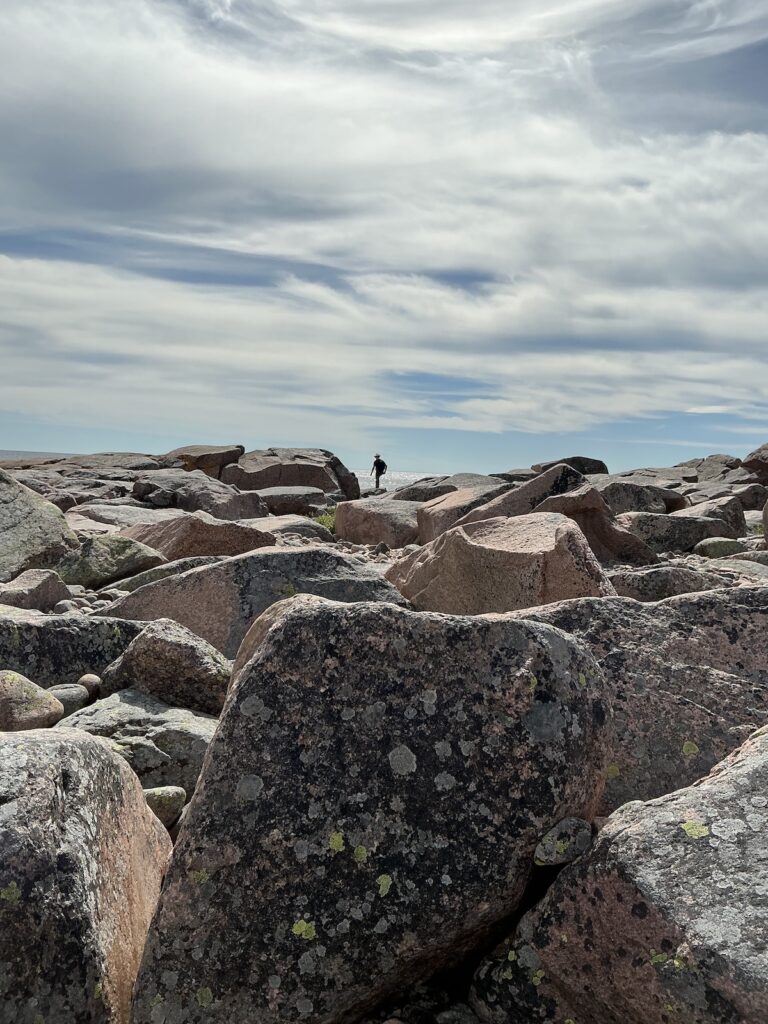
Photo: Laura Hellsten
Further readings:
Gloria Alzaldúa. 1987 Borderlands – La frontera : the new mestiza. Aunt Lute Book Company, San Francisco.
Katarina Gäddnäs. 2021 “Allt liv är ett” – Prästen och författaren Valdemar Nyman. Svenska folkskolans vänner, Helsingfors.
Peter Harrison. 2001 The Bible, Protestantism, and the Rise of Natural Science. Cambridge University Press, Cambridge and New York.
Peter Harrison. 2009 The Fall of Man and the Foundations of Science. Cambridge University Press, Cambridge and New York.
Peter Harrison. 2017 The Territories of Science and Religion. University of Chicago Press, Chicago and London.
Willie James Jennings. 2019 `Reframing the World: Toward an Actual Christian Doctrine of Creation´in International Journal of Systematic Theology Volume 21 Number 4 October 2019.
Willie James Jennings. 2020 After Whiteness: An education in belonging. William. B. Eerdmans Publishing Company, Grand Rapids, Michigan.
Willie James Jennings. 2021 Creating Home : Forming Christians Who Believe in Creation and Creatures – PART ONE and PART TWO.
Walter D. Mignolo. 1995 The Darker Side of the Renaissance : Literacy, Territoriality, and Colonization. University of Michigan Press,
Walter D. Mignolo, Rolando Vazquez. 2013. Decolonial AestheSis: Colonial Wounds/Decolonial Healings. Decolonial AestheSis in Social Text.
Walter D. Mignolo, Catherine E. Walsh. 2018 On Decoloniality : Concepts, Analytics, Praxis. Duke University Press, Durham, NC.
Walter D. Mignolo. 2021 The politics of decolonial investigations. Duke University Press, Durham.
Valdemar Nyman. 1982 På åländska vägar: till land och till sjöss. Söderström, Borgå.
Catherine Walsh. 2014. Pedagogical Notes from the Decolonial Cracks. e-misférica. 11, 1.