
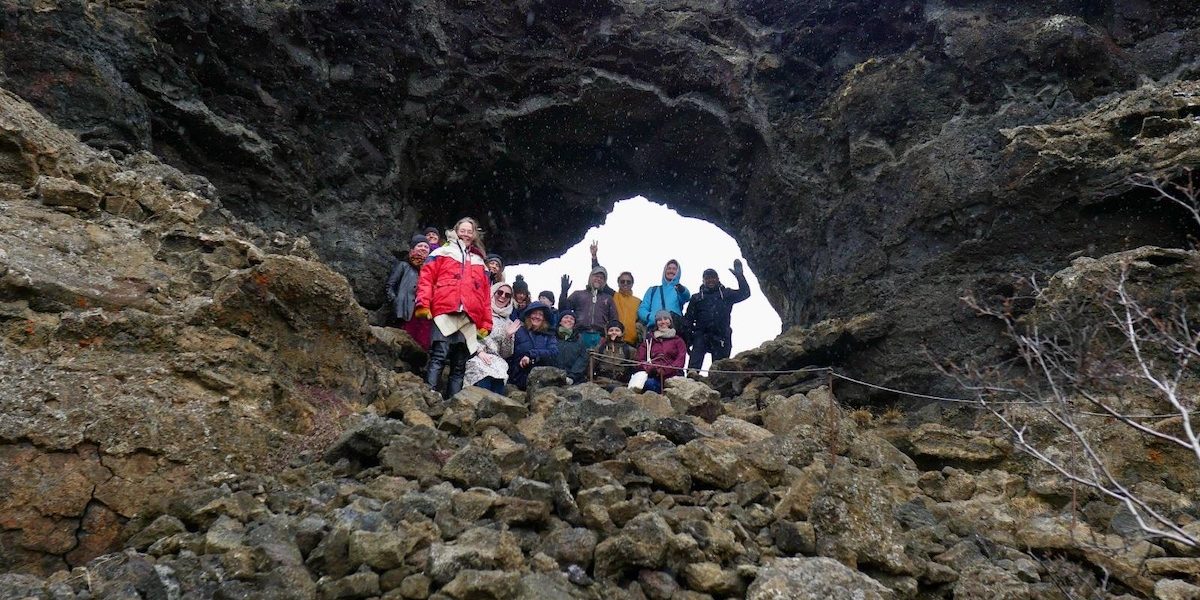
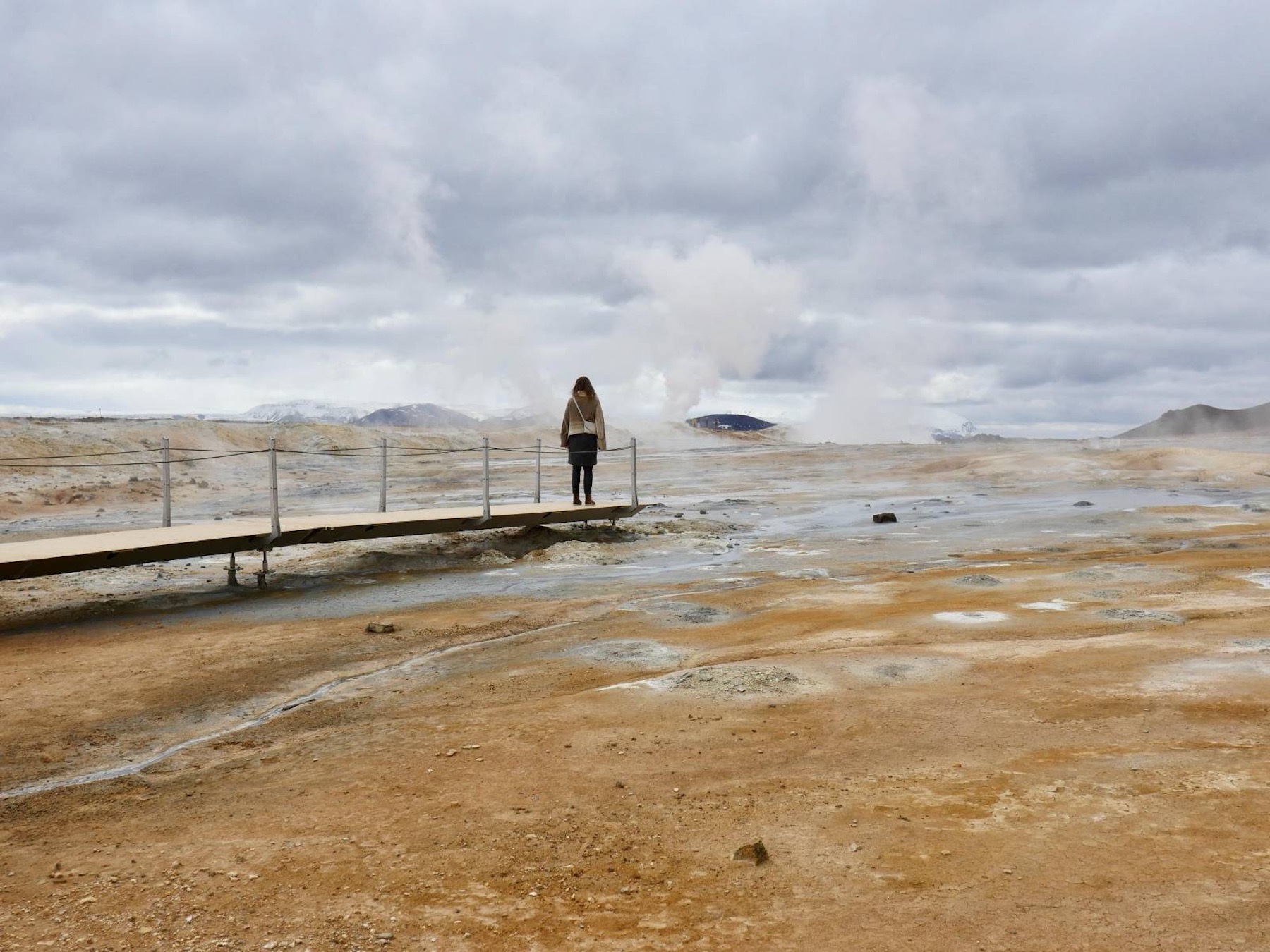
When it comes to transdisciplinary work, our experience has shown us that it is quite common nowadays for people from the natural sciences to team up with artists of different kinds and do a fun project together. In communities like the SOS team, almost everybody has tried this at one point or another. What is more rare is to find communities where you have people from the Natural Sciences, Humanities and artists or other people working outside of academia, to build mutual communities of learning where they design the whole research project together and build all its parts in a way where everyone is an equal partner. That level of collaboration demands a wholly different setup, as it means that every-one needs to step outside their own comfort zone and try something different.
Many of the collaborators we met during our Knowledge at Sea journey to Iceland could attest to being part of projects that are transdisciplinary only on paper, and being in even interdisciplinary projects where true respect and insight into other ways of doing and being in the world did not manifest. At the same time, we were also happy to meet up with people like Auður Aðalsteinsdóttir from The University of Iceland’s Research Centre in Þingeyjarsveit, who could attest to the fact that one can be invited to a collaboration where the other partners are curious about what your skills can bring to the topic of mutual interest and are willing to find ways where many different kinds of knowledges can start to communicate with each other. In the Mývatn area, an example of this was the article written by some of Auður’s colleagues: `Trolls, Water, Time, and Community: Resource Management in the Mývatn District of Northeast Iceland´by Sigurðardóttir, R. et al. (2019).
Inspired by these challenges, Eduardo and I modified one of our prepared exercises to the landscape and stories we were now part of. In the bus ride to Akureyri and beyond, we asked our participants from Åbo to:
Imagine yourself being a person trained in the Natural Sciences… How would you map the Stakeholders of this landscape? And how would you get to know their needs?
Imagine yourself being a person trained in the Humanities… What kind of Atlas of memory or storytelling would you apply to understand and make meaning of this place?
Imagine yourself being a person trained in the arts… What sensory patterns and constellations of associations did you experience while being in the lands, winds, waters and scent of this community of relations?
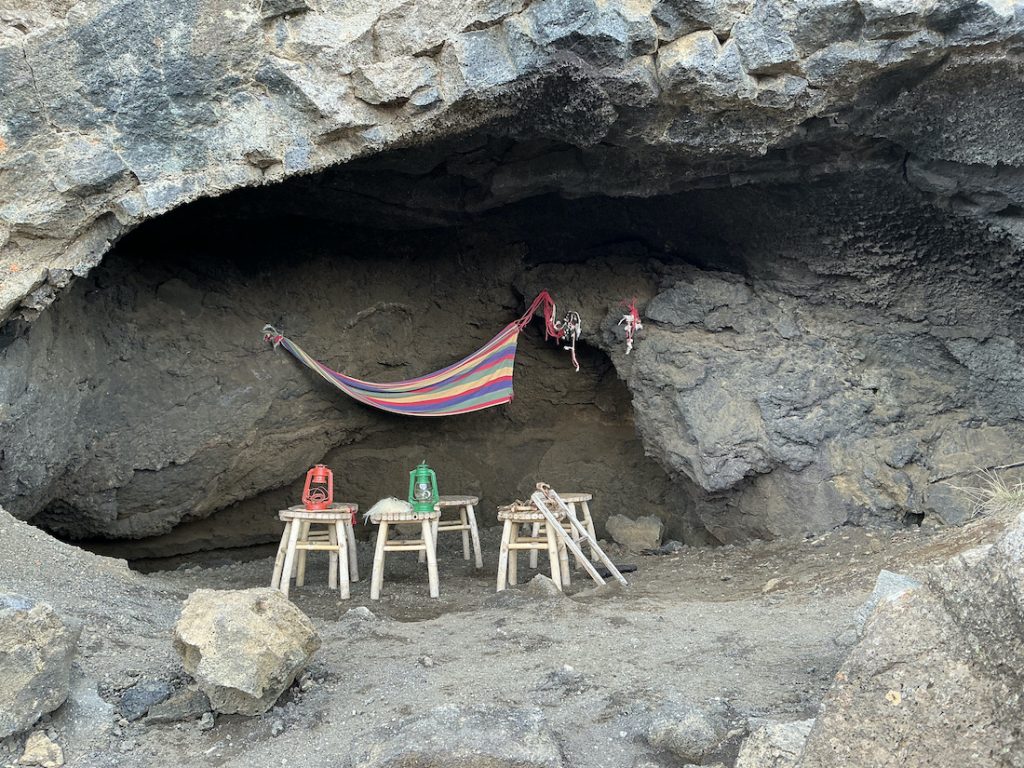
Once we arrived at the sorcerers’ cottage – a reconstructed site of local knowledge traditions – a quite remarkable dialogue session took form. Creating a constellation of the different voices, skills and stakeholders present in the lands we had passed by, I became an algae floating in the middle of our water system. The ”scientist group” questioned whether they would be allowed to name the algae as an actual stakeholder and still be considered scientists. Other groups discussed who has the competence, ability or ”privilege” to speak for the algae? And, while the humans were debating and the government and industry were busy making plans, I just continued growing, until nobody could doubt my agency nor ignore my ”voice”…
Our little exercise showed in no time what Tim Rudbøg and Kocku von Stuckrad spoke about in the last episode of the Eco Thoughts podcast.
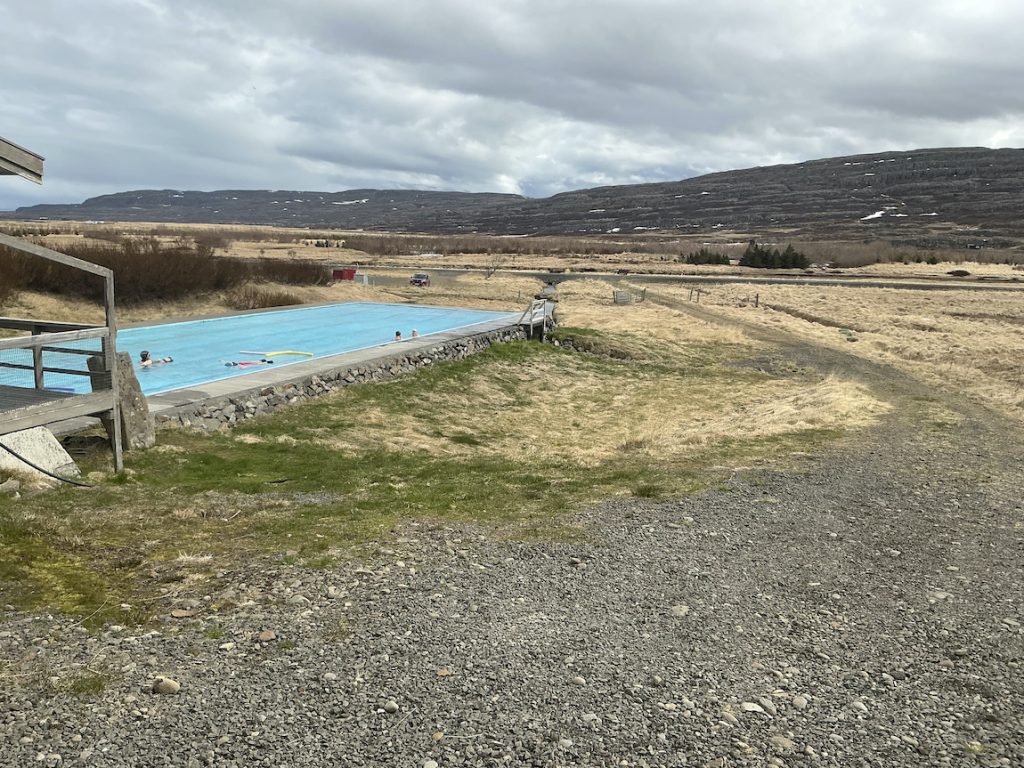
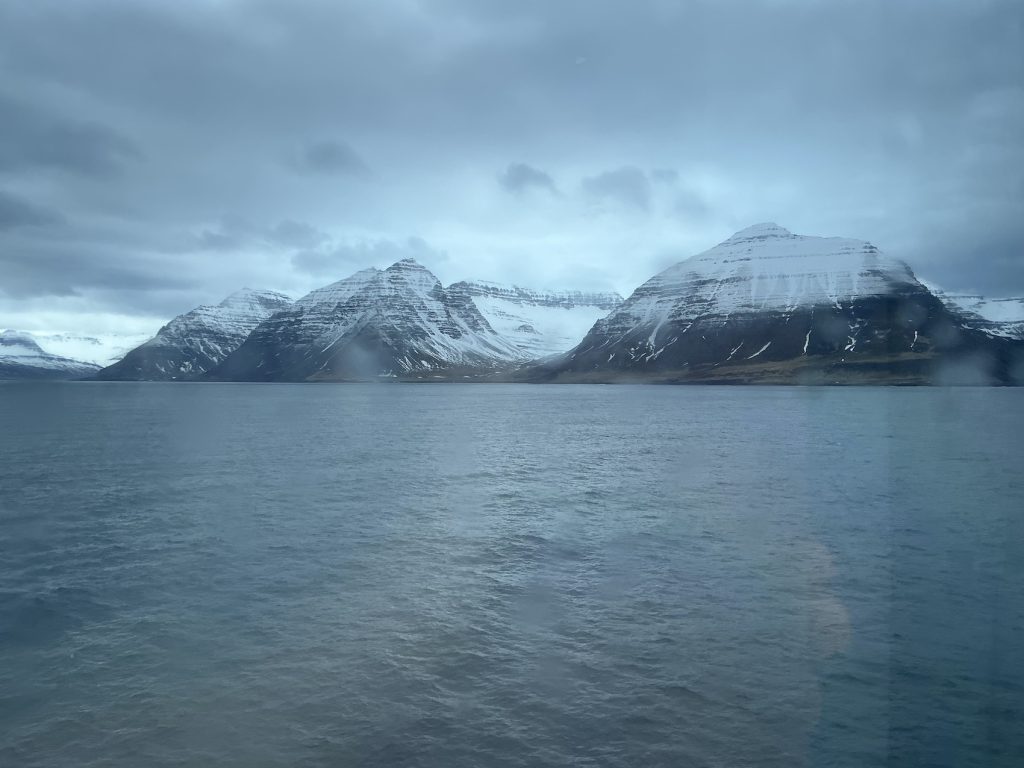
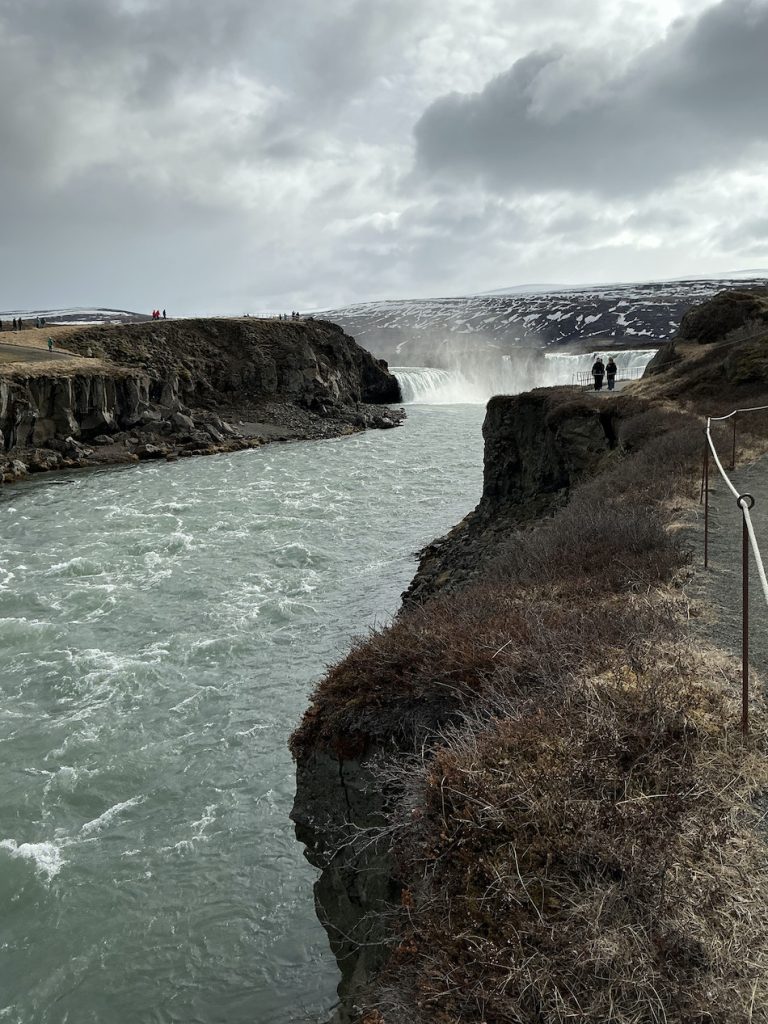
Once we arrived in Iceland, Seascape turned into Landscapes…
At first, I was a bit baffled, trying to imagine how this would have looked to the earliest medieval travelling monks who arrived on the island from the South. Not a very hospitable place and not easy to land!
I remember reading the Voyage of Saint Brendan the Abbot by Brendan of Clonfert (c. AD 484 – c. 577), in which he describes scenes that resemble Hell, but also unstable islands that turn out to be giant fish instead. One of the things I appreciated about that story is the pedagogical tools it uses to convey its message, and one can clearly see how time moves in a cyclical format where the same theme returns over and over again. This is very much how Eduardo and I built our teaching as well. Taking one practice and deepening it for every iteration that was made.
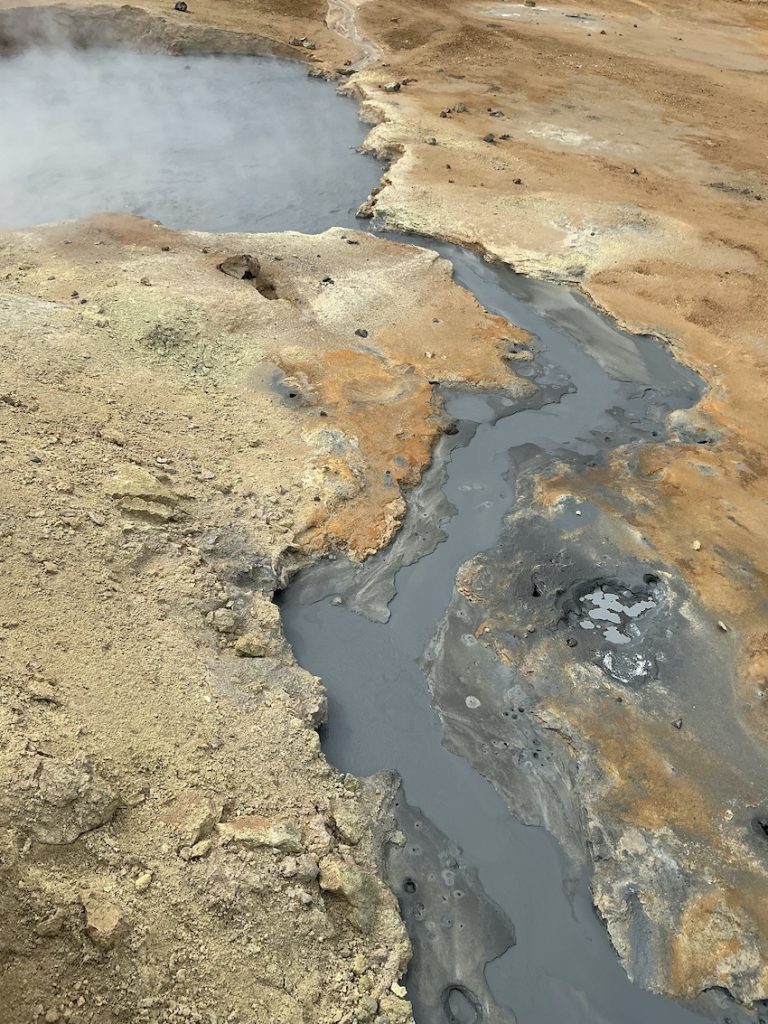
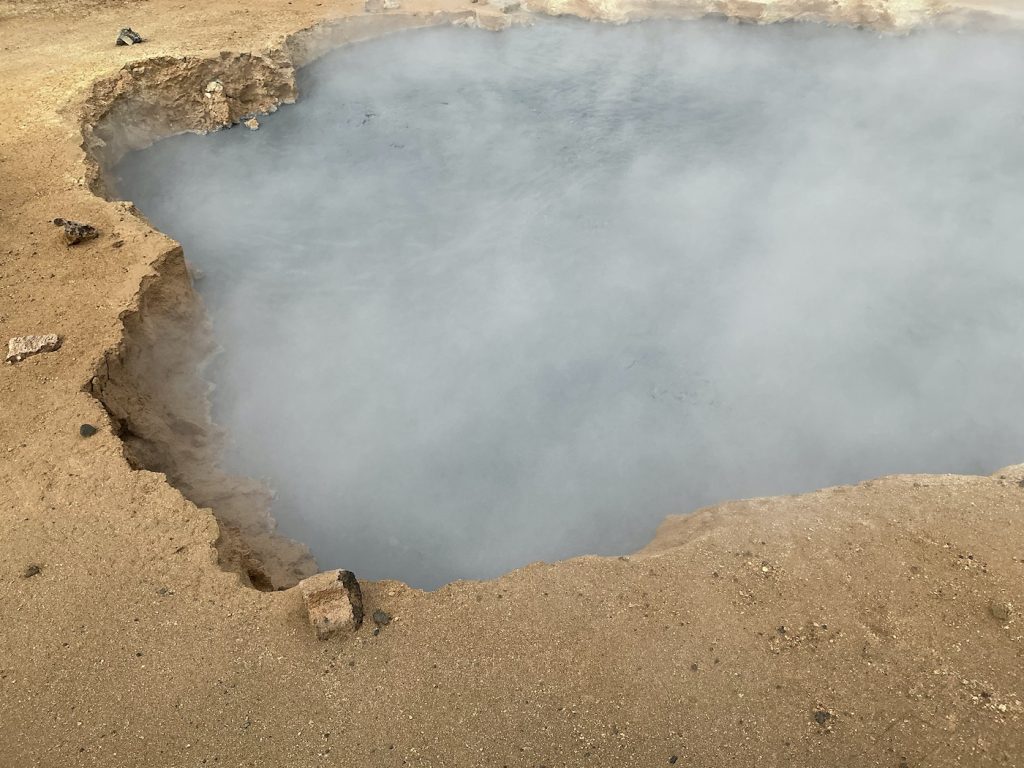
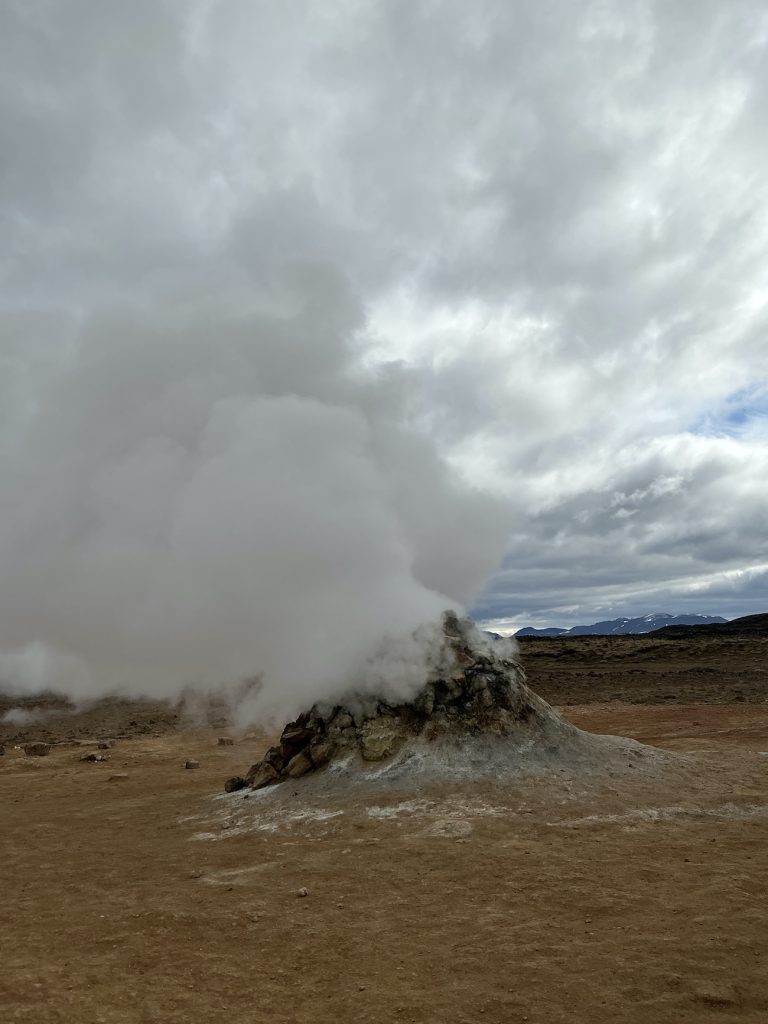
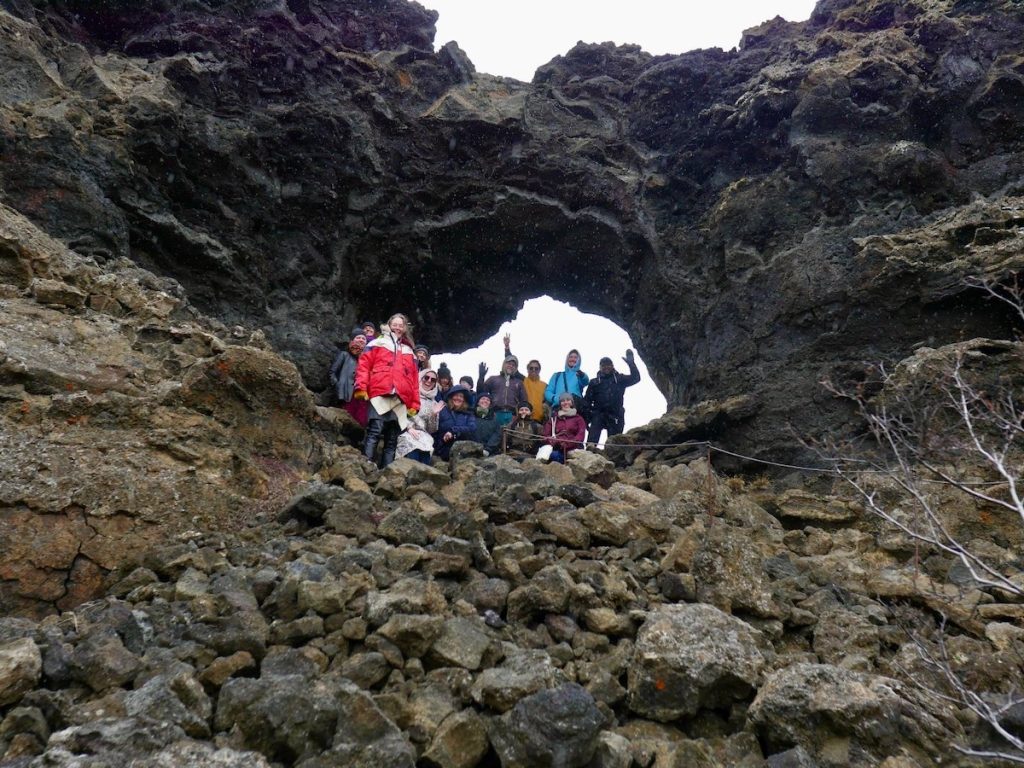
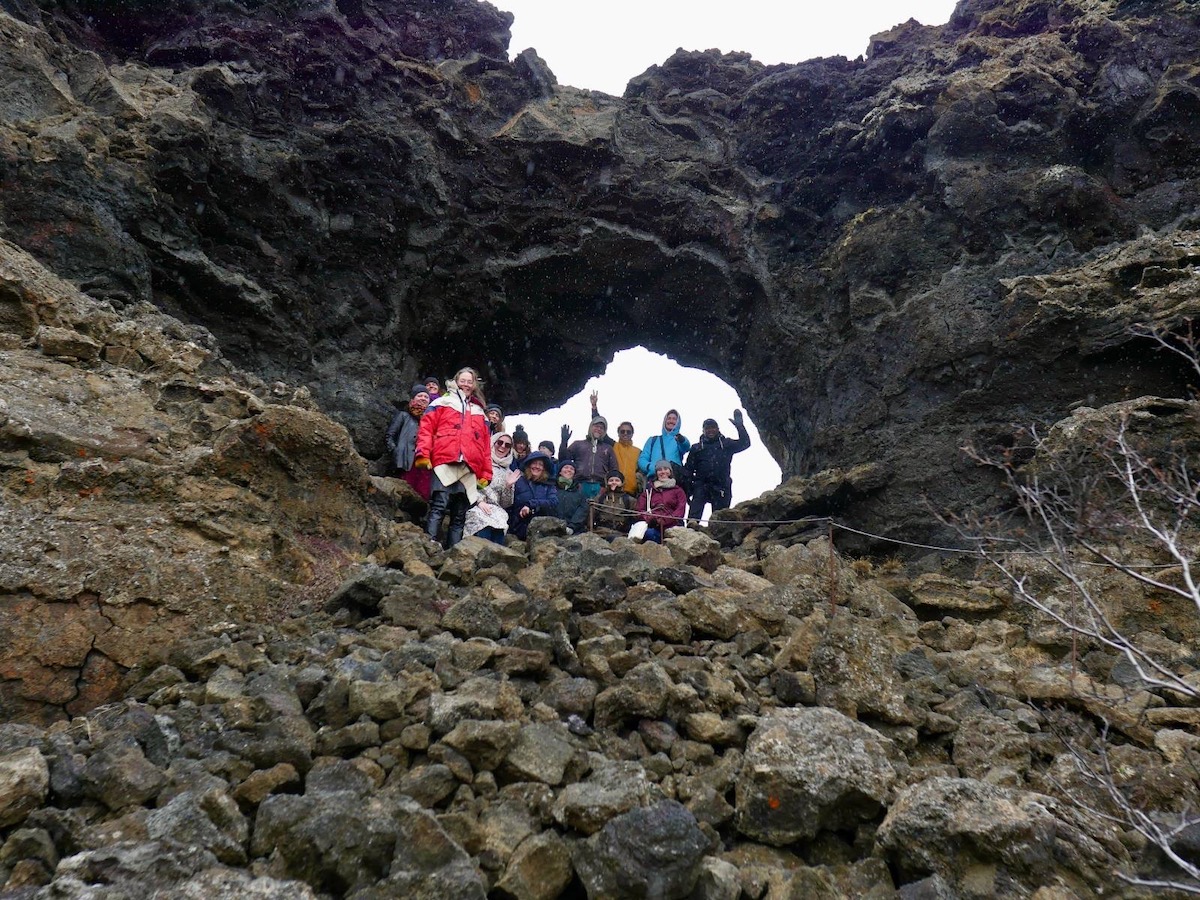
Our first stop during the first day on solid ground was in Mývatn. There we met with Auður Aðalsteinsdóttir from The University of Iceland’s Research Centre in Þingeyjarsveit. She took us on a small guided tour in the Dimmuborgir area and told us not only about the Jule lads and Trolls that live in this intriguing geography, but also about a variety of ways that different stakeholders in the region are working together to find more transdisciplinary solutions to live with the highly active grounds, large groups of visiting tourists, and continuous environmental challenges.
In many ways, Auður’s descriptions reminded me of the biosphere work in the Archipelago Sea region and particularly how this year’s theme on Folklore comes very close to the setup we found at Dimmuborgir. At the same time, however, I am also surprised every time I see places that mainly use stories of folkloric character as tourist attractions or heritage sites of nostalgic connection. For me, as a theologian and working with anti- and de-colonial practices, speaking about ”superstition” (even in quotation marks), is highly problematic, and unfortunately, that is often what people do with stories about trolls, gnomes and such. More importantly, though, there are so many kinds of knowledge and patterns of making sense of and with the world hidden in myths and creatures of this kind that it makes me sad not to see people tap into that. Hopefully, our upcoming event in November with the Skärgårdscentret will be able to open this up a bit further – Welcome to book your calendars for this!
As an organiser and facilitator of transdisciplinary work, I found it particularly interesting throughout this journey how many people seem to have tried transdisciplinary work and found it so demanding that they gave up. At the same time, it was also rewarding to see how many people got genuinely excited when hearing about our particular approach to this work, as it sounded like a set of practices full of potential.
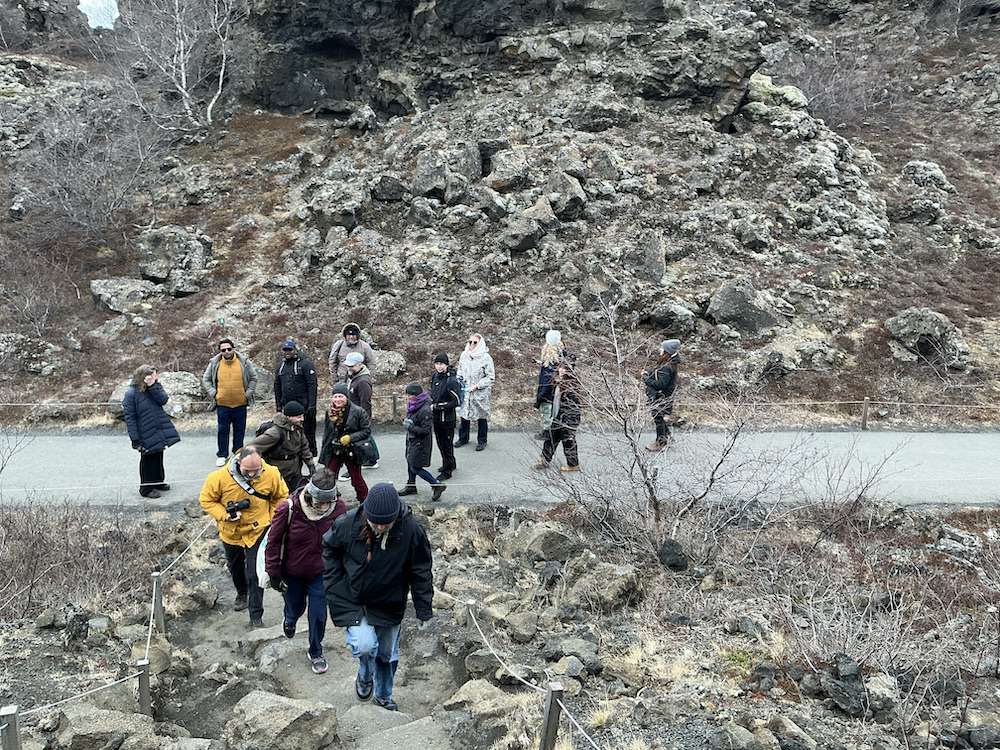
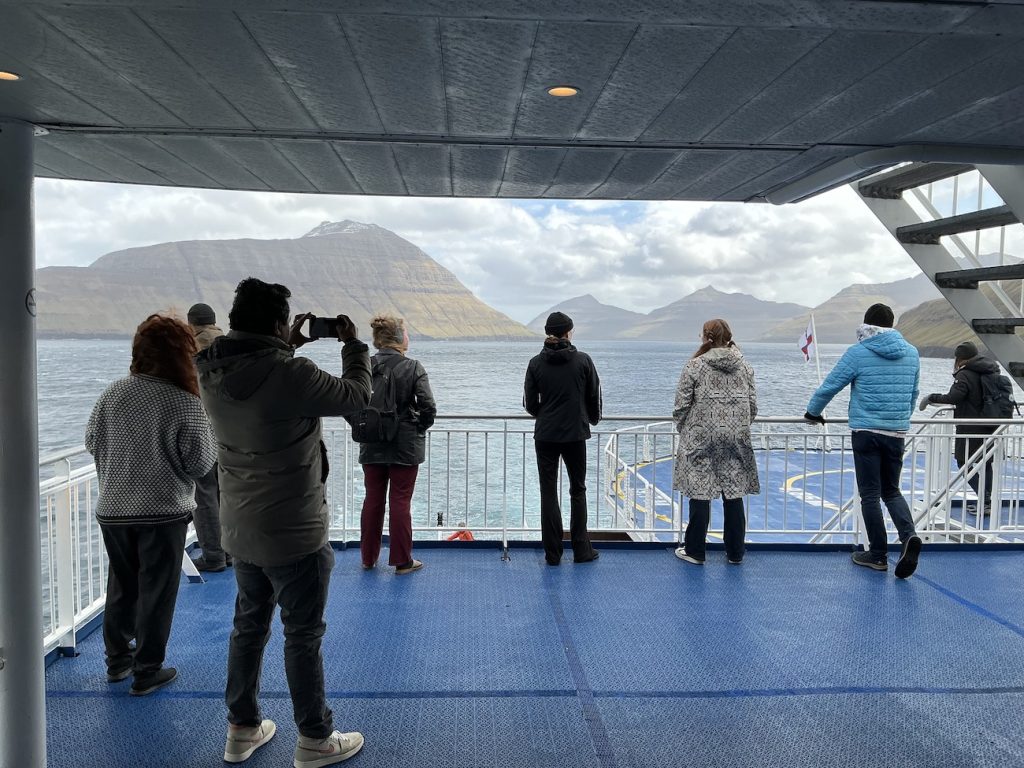
Three weeks ago, on Tuesday, our Knowledge at Sea community arrived in Tórshavn, Faroe Islands. This is a sister/brother community to the Åland Islands, which I come from, and which I visited last when I was still a young teenager. Eduardo Abrantes has been there more recently, doing some artistic work with the local communities. So, even though we did not know for sure whether the passengers would be allowed to go out of the boat, once this became clear to us, we were happy to accommodate the ”classroom” to this encounter.
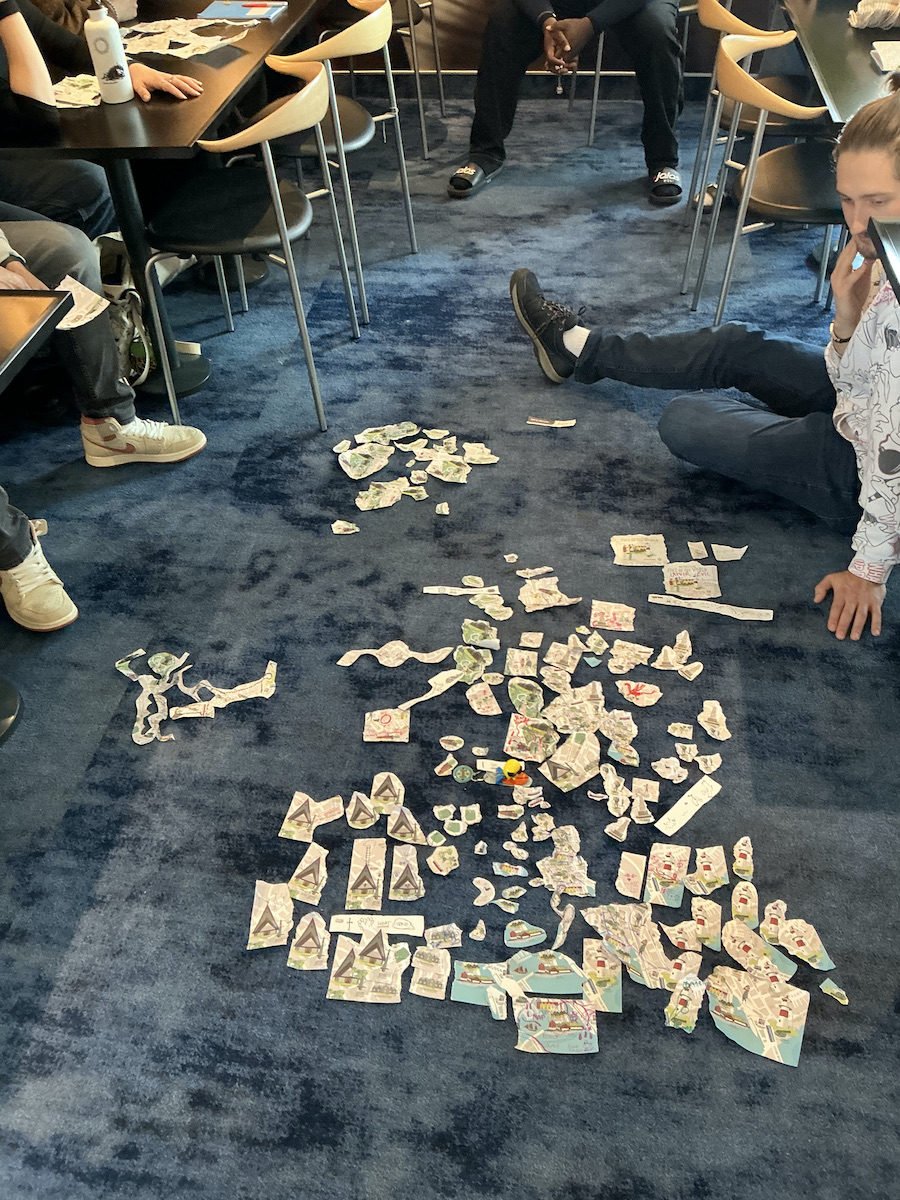
Continuing with the theme of reading landscapes instead of texts, and also the idea of making a travel report or story of pilgrimage, we asked the community to take note of what they observed through all their senses. Inspired partly by the work of Sami religious scholar Jorunn Jernsletten (Landskap som tekst og handlende subjekt) and Emma Göransson Almroth’s writings, we wanted to investigate what kinds of relationships could be mapped out when attending to not only the majority and dominant scientific voices, but minor gestures and diverse ways of knowing.
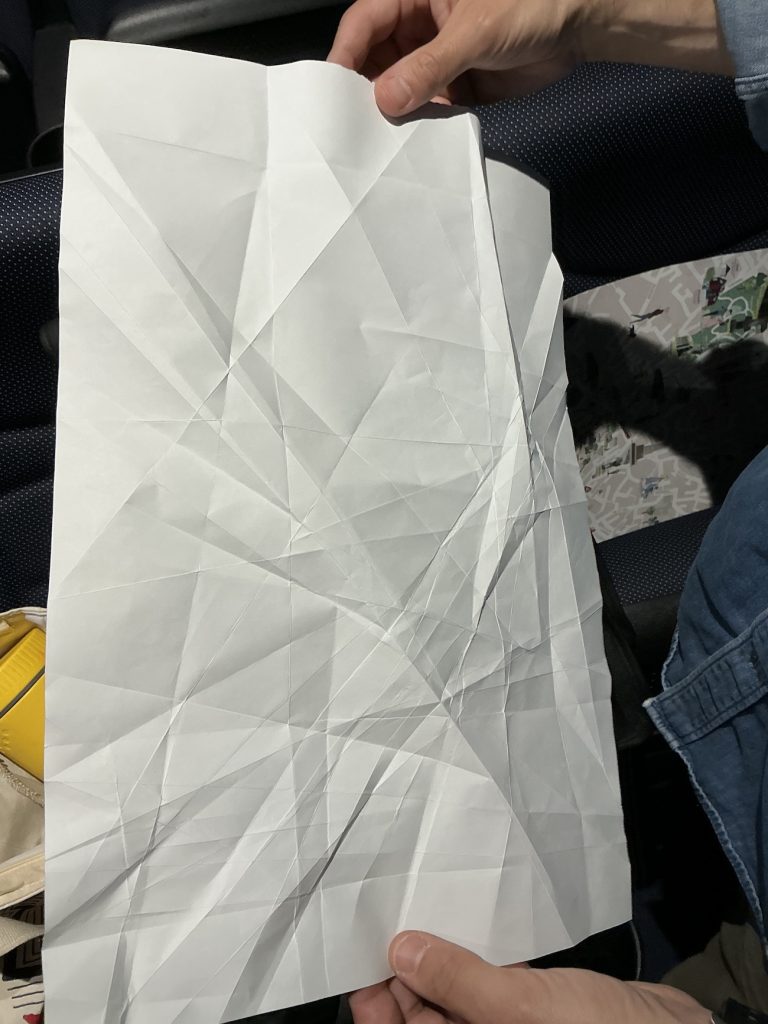
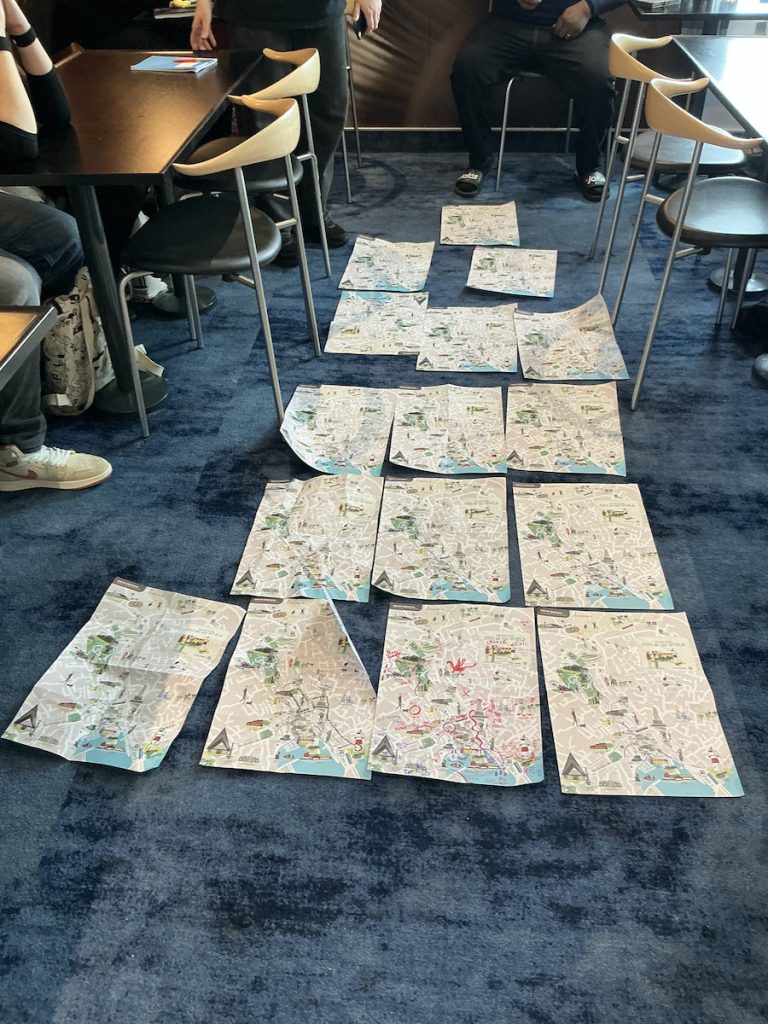
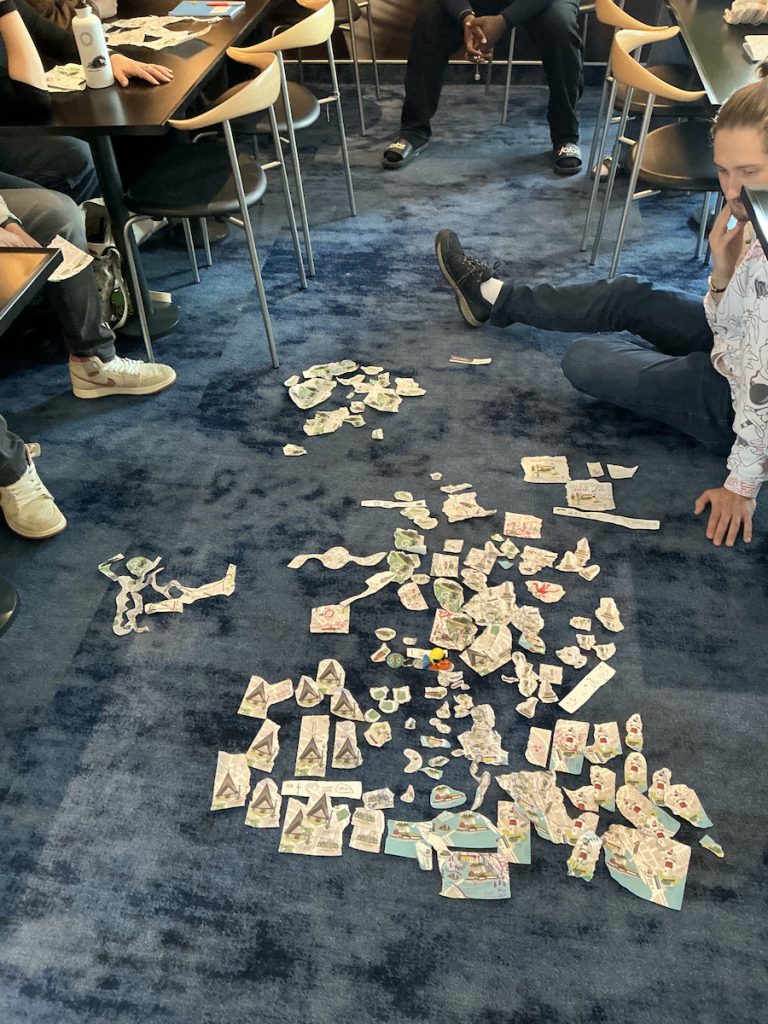
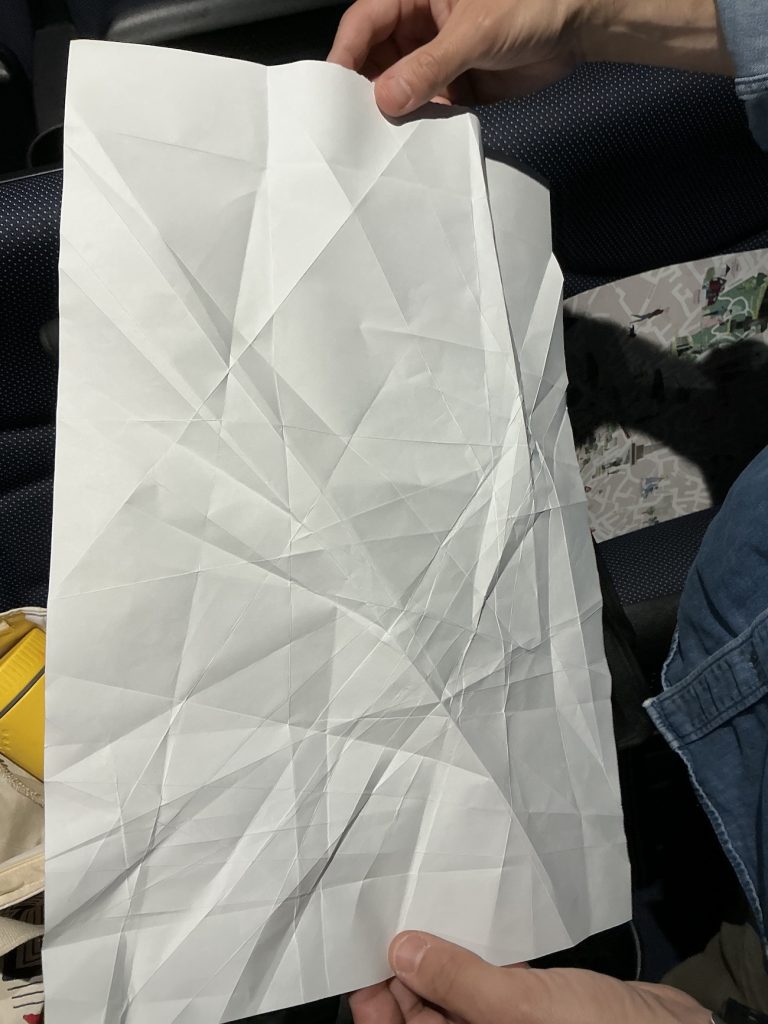
Once back at Smyril Line we listened to each other’s storytelling and created traces of the shared experiences. Pre-modelling an Almanack of Transdisciplinary Gnoseology (a concept Eduardo and I will develop further in our new research project), we also experimented with how different kinds of knowledge can be put together in something that does not reflect a ”flat plane” with one dominant way of knowing taking centre stage. As a tool for transdisciplinary work, we want instead to give space for both many different ways to tell the story, and for making a wide variety of connections between the various forms of sensing the world. This de- and reconstruction of the map is something I learned from a special issue in Cartographica and the article: Decolonizing the Map: Recentering Indigenous Mappings by Reuben Rose-Redwood et al.
I continue to be grateful to the participants from Skärgårdshavets Biosfärområde, Kimitoöns kommun | Kemiönsaaren kunta | Municipality of Kimitoön, Åbo Akademi University, Trinity College Dublin, Eötvös Loránd University and CHARM-EU network for working with us to make this happen and Stiftelsen för Åbo Akademi, Svenska kulturfonden/The Swedish Cultural Foundation in Finland and Nordisk Kulturfond for making it possible!
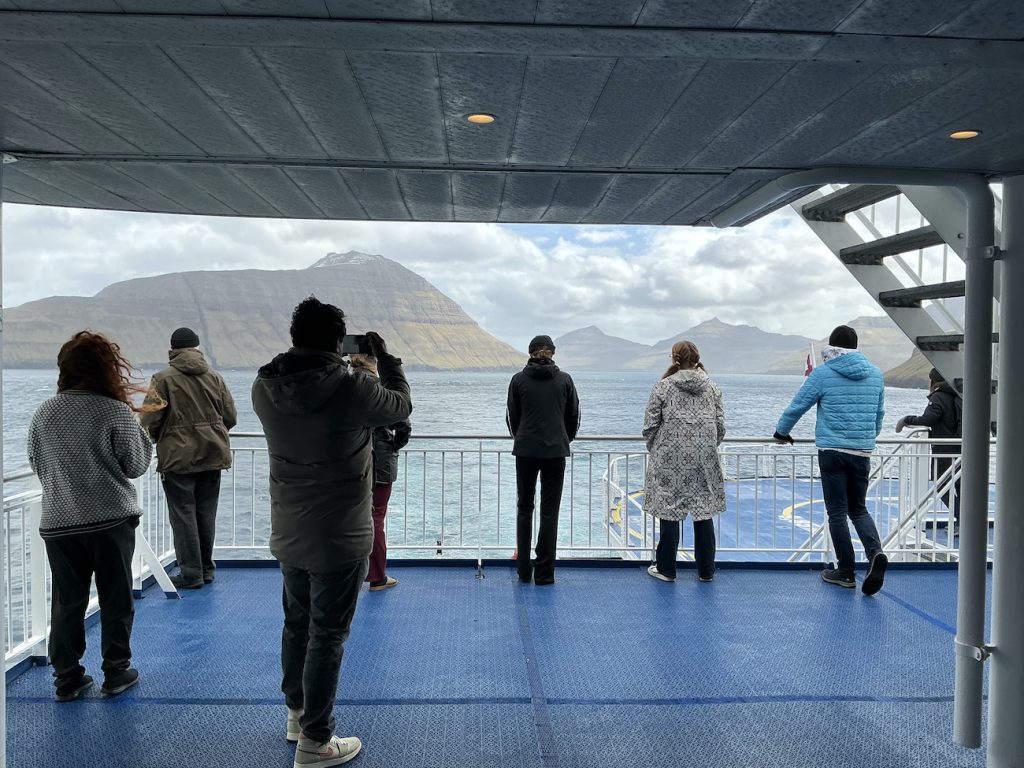
Three weeks ago, our Knowledge at Sea – Transdisciplinary Community Practices for Sustainability group spent our first whole day travelling over the North Sea.
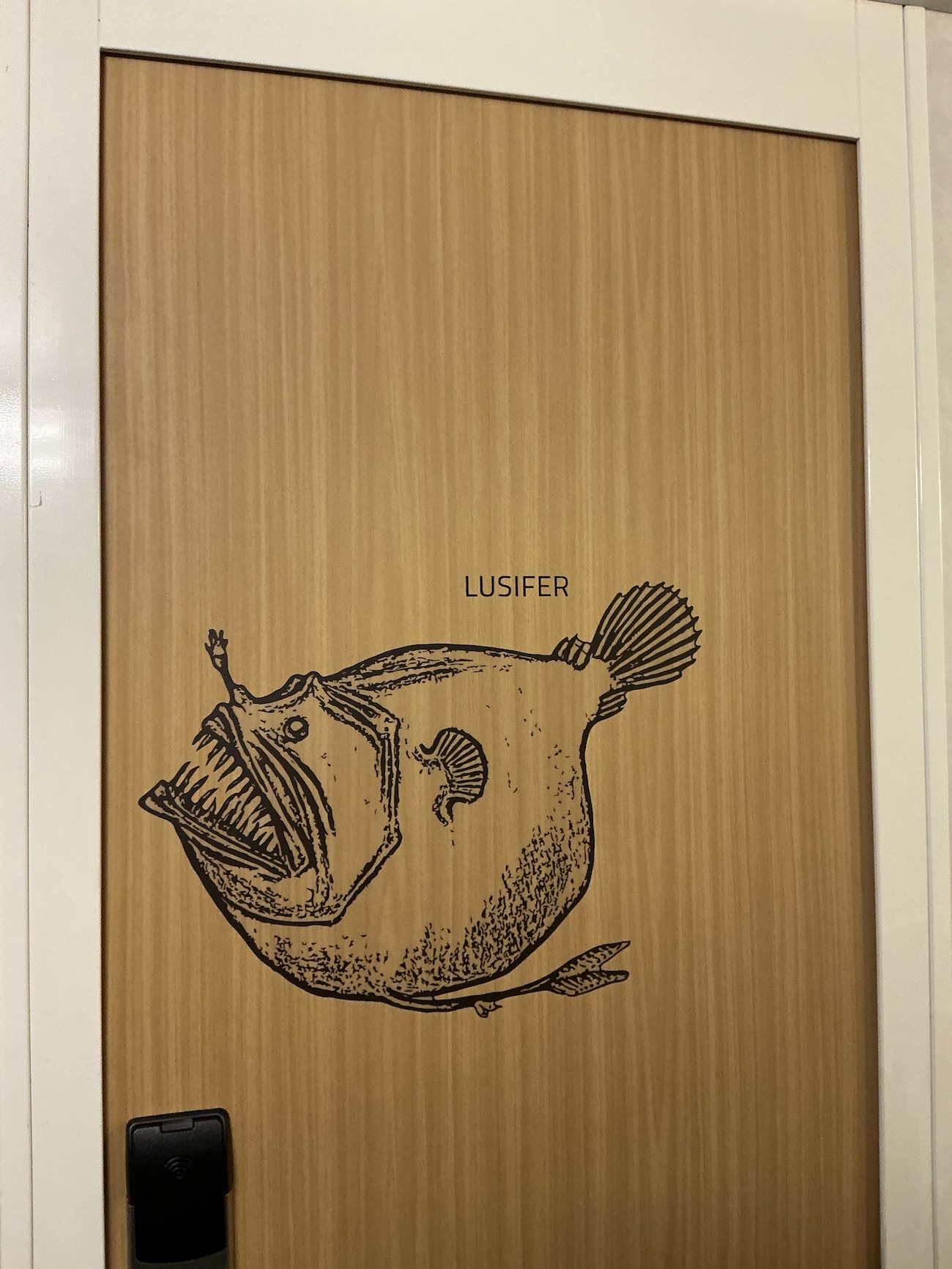
Particularly when we saw the huge oil platforms out there as artificial islands, I came to think about Marion Graus’ work on Norwegian Petroleum culture, but also their work together with Lovisa Mienna Sjöberg on the Leviathan and other creatures in the deep! You can find their Fish, Fetishization, and Faith in the Arctic Ocean here!
Originally, Eduardo Abrantes and I had planned that one of the tools we would use to set up the community work in a transdisciplinary manner was to read Olaus Magnus’ travel log with nature phenomena and descriptions of fish and fishing practices, as a de-stabilising entry into an unknown world. In the end, however, the only part we stayed with was the monsters on the map! Asking how myths and so-called ”imaginary creatures” can be part of minor histories that help us read and interpret the deeper and sometimes unseen layers of a land/seascape?
Another practice we brought with us, where we aimed at bringing the participants from Åbo Akademi University, Trinity College Dublin, Eötvös Loránd University, Skärgårdshavets Biosfärområde, Kimitoöns kommun | Kemiönsaaren kunta | Municipality of Kimitoön and the artists Frank Berger, Robertho Paredes Coral and Saija Lehtonen to a more equal starting point, at the level of introductions, was to think about what skills they bring with them and which kinds of sensory experiences they have gathered, that can enable them to ”read” and be with the Sea and the boat as participants on this journey?
We are grateful to Svenska kulturfonden/The Swedish Cultural Foundation in Finland, Stiftelsen för Åbo Akademi, and Nordisk Kulturfond for making this course possible.
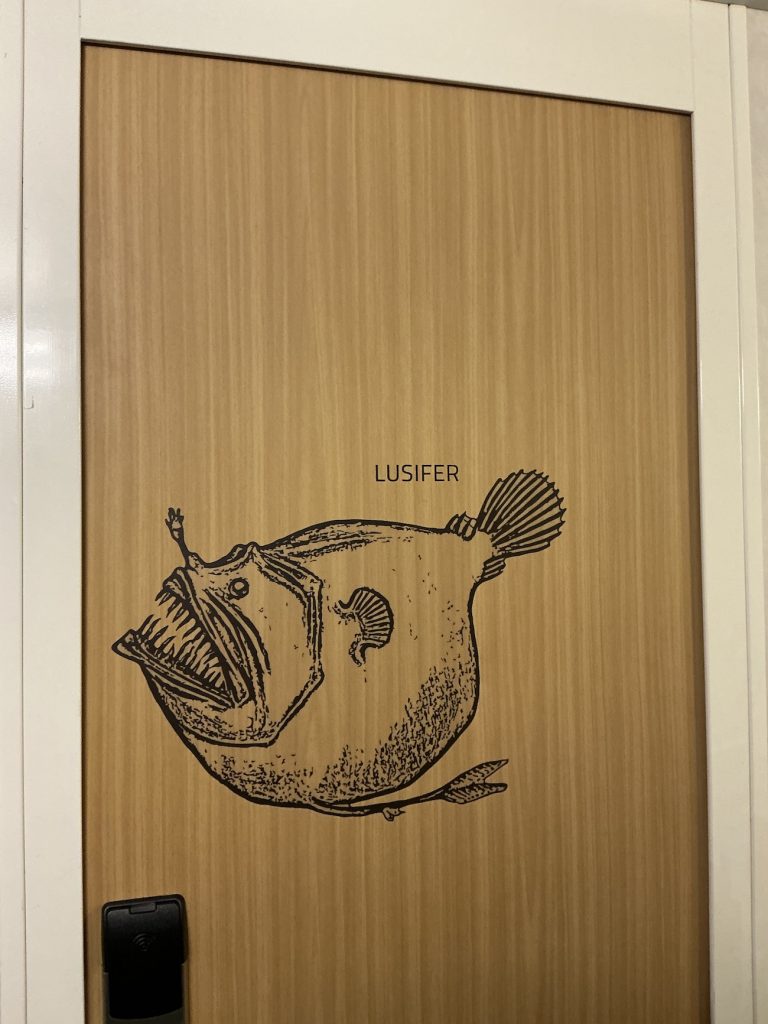
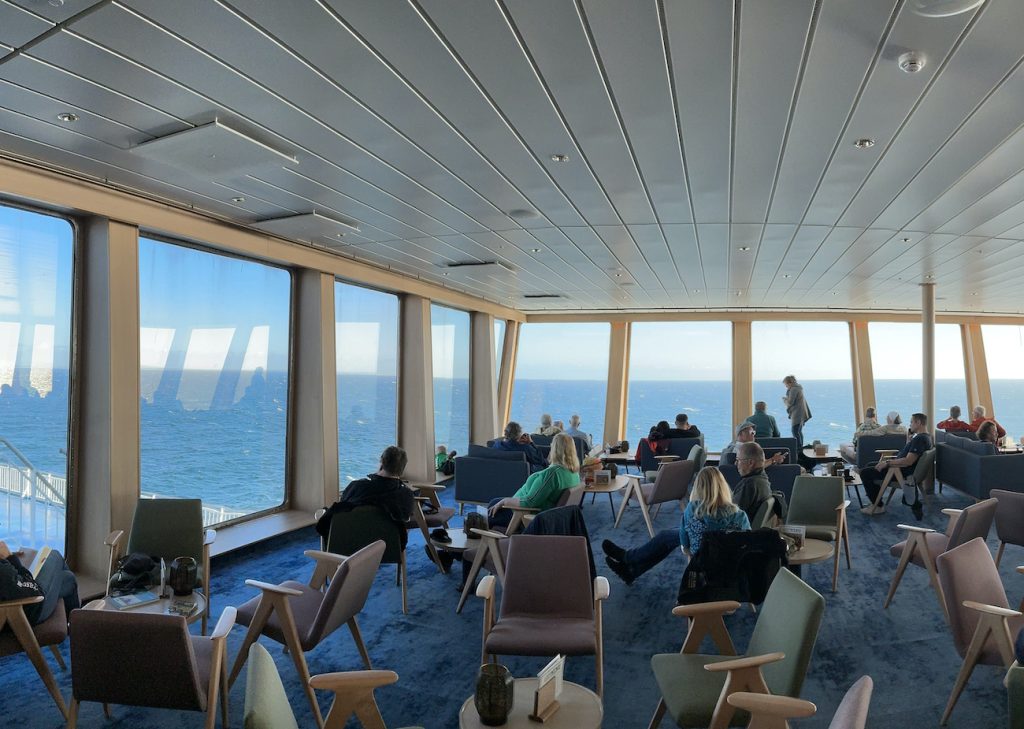
Exactly three weeks ago, a group of students from Åbo Akademi University, artists like Frank Berger & Saija Lehtonen and cultural workers from the Skärgårdshavets Biosfärområde set out on a boat, train and boat ride through Sweden and Denmark towards Iceland. In the coming posts here, I will open up some of the things that happened during our Knowledge at Sea journey.
Ever since I myself was a Master’s student in the International program of Education at University of Oulu – where we would do study trips every year – and my own theological and historic explorations with site-specific knowledge have been developing, I have been pondering about how to do teaching sessions where these methods can be applied.
On the one hand, I have wanted to bring people into intentional communities of SLOW travel while avoiding the usual pitfalls of tourist mindsets and voyeuristic explorations. For this purpose, a classic text in political theology, MIGRANT, TOURIST, PILGRIM, MONK: MOBILITY AND IDENTITY IN A GLOBAL AGE (2008) by WILLIAM T. CAVANAUGH, became a good companion for our trip.
On the other hand, setting the plate for transdisciplinary work where all members can be equal knowledge partners is a task I know requires quite a lot of re-formulation of academic practices, so creating a fruitful learning environment requires more than mere experimentation. It is for this reason that Eduardo Abrantes and I have been looking into how scripts can be made where knowledge is experienced and practised before it lands into concepts and academic formulations. We are aware that such approaches can create tensions and even confusion, and that is why intentional structures are needed that carry the load of form and freedom.
For this journey, each place we visited created a form, daily check-ins, created a structure and modelling leadership that is in constant dialogue with what we encounter, was what we aspired for. And, bringing in voices from Cameroon, Peru, India, and different language traditions in the Nordics, in addition to the disciplinary differences, is not always an easy task.
After the journey, I am deeply grateful for the co-collaboration that did happen and particularly how the co-created knowledge was able to bridge some of the relevant topics that arise when wanting to build bridges between Global South and North perspectives! The community really stepped in to make the learning alive and anchored in the here & now (rather than abstract ideas or ideals).
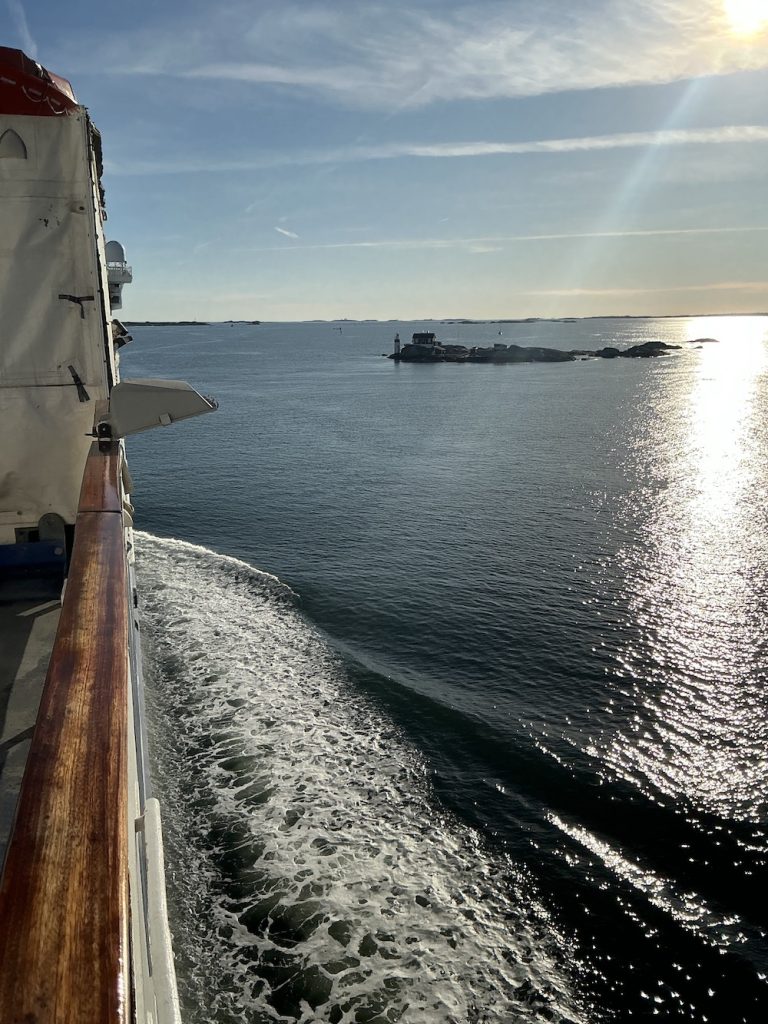
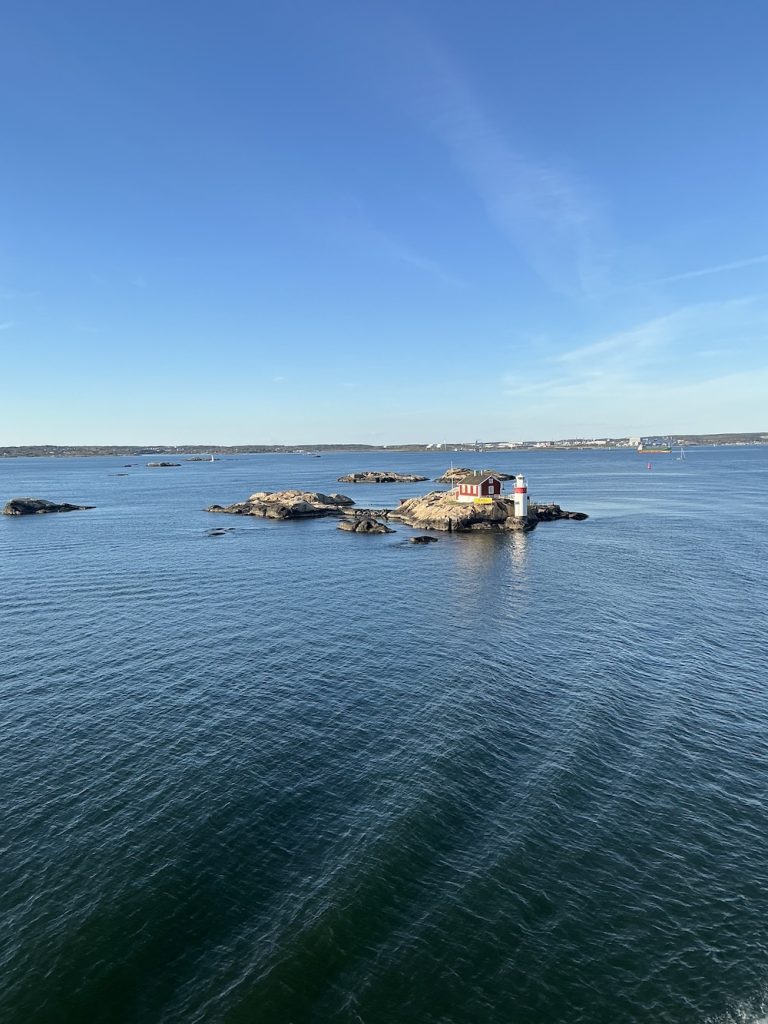
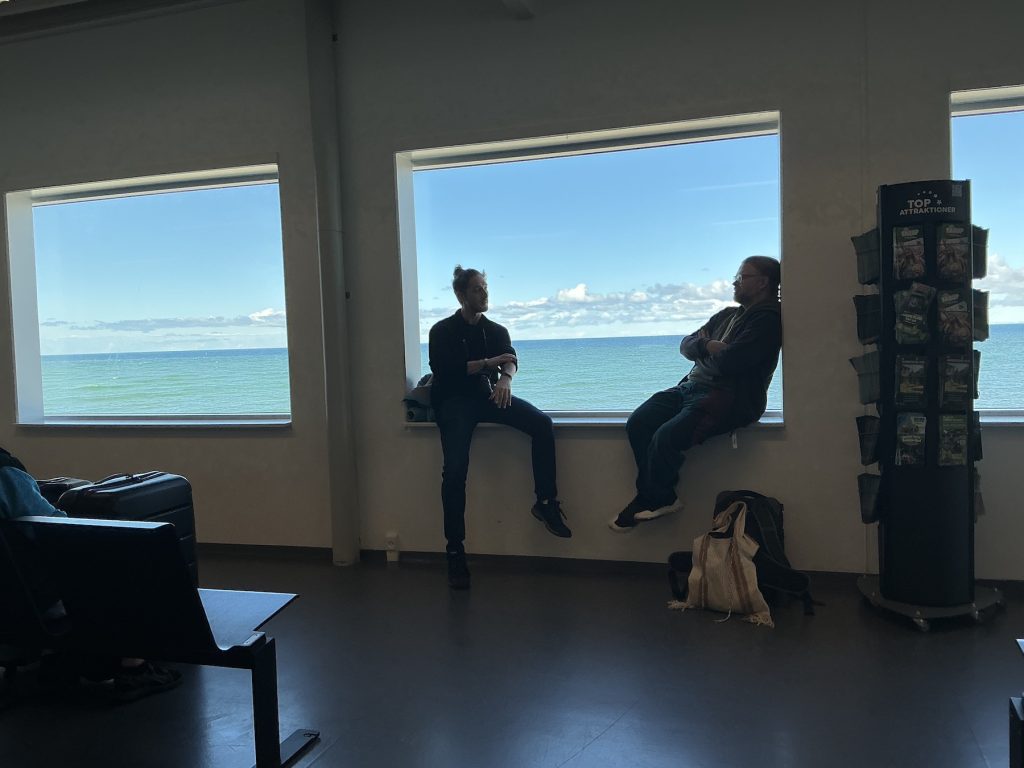
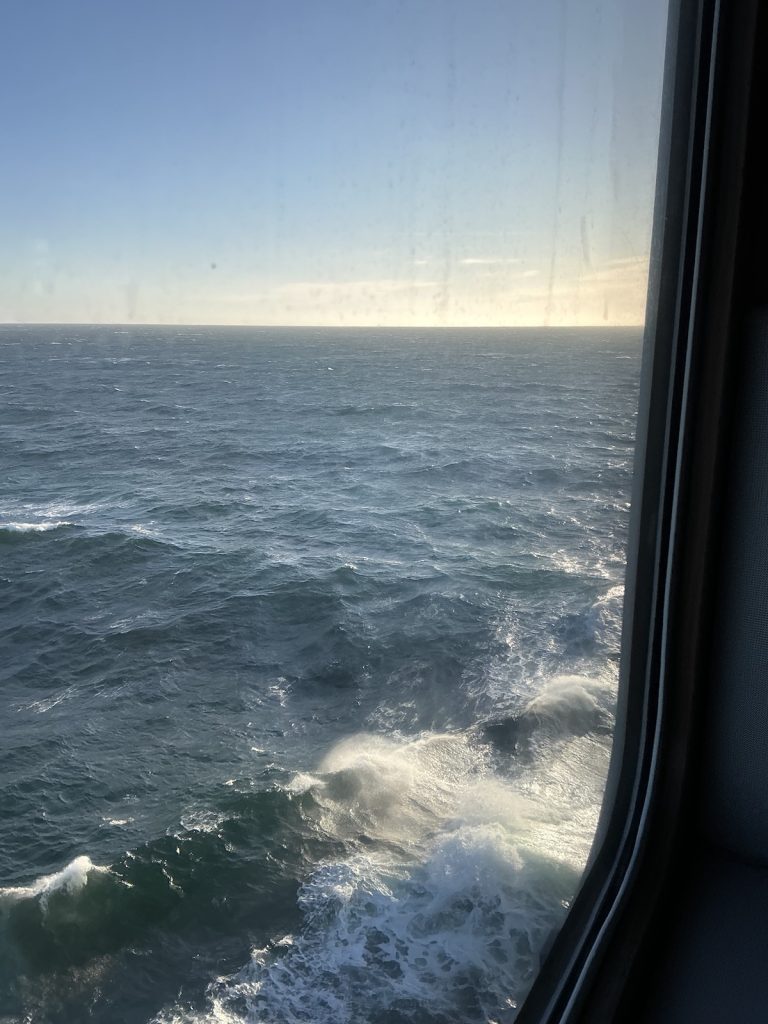
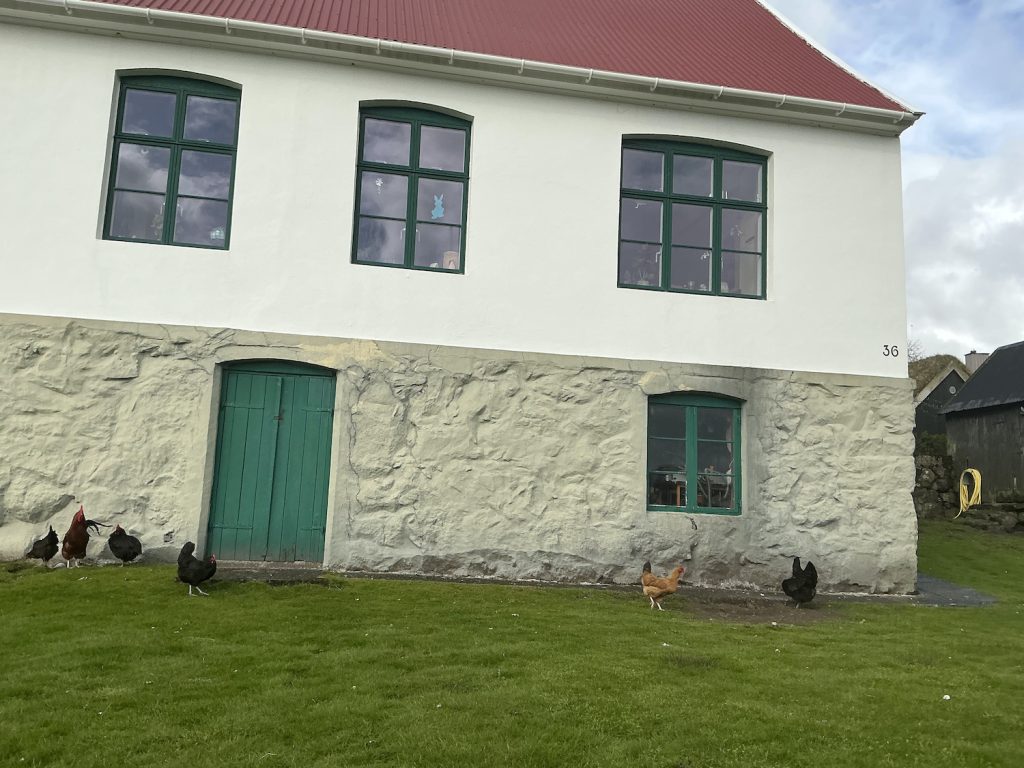
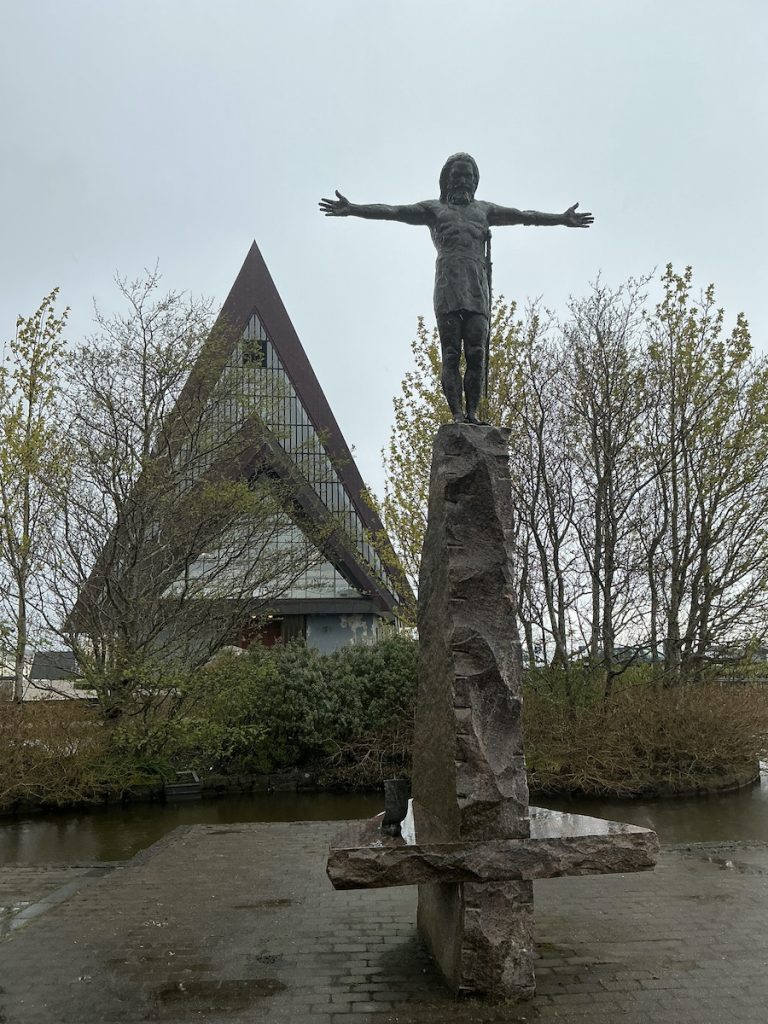
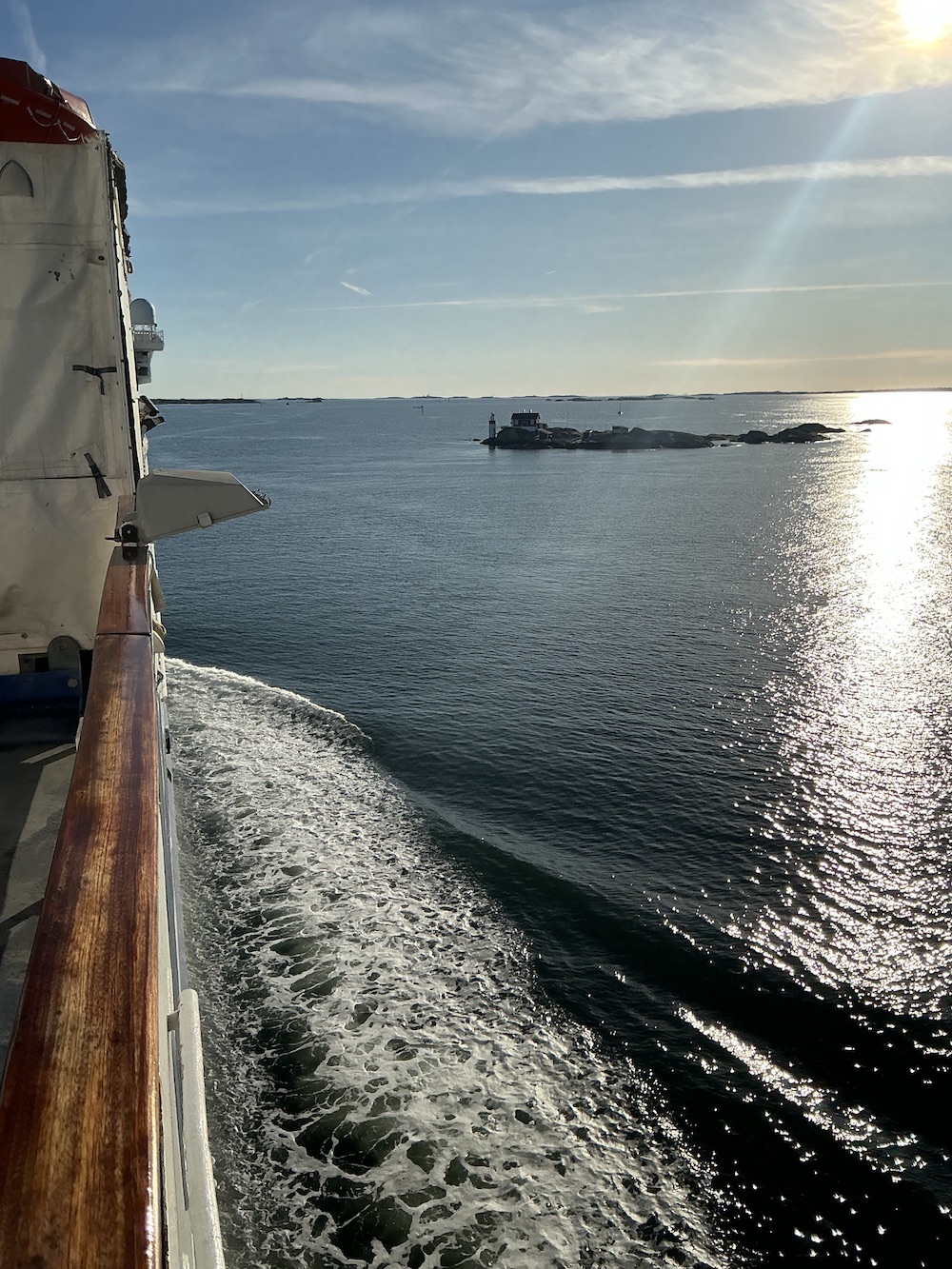
Photos from Göteborg, the harbour in Hirtshals and the travel on board Smyril Lines to Iceland.
We are grateful to Stiftelsen för Åbo Akademi, Svenska kulturfonden/The Swedish Cultural Foundation in Finland, CHARM-EU and Nordisk Kulturfond for making this learning possible!
Last week, Eduardo Abrantes and I met in Turku to attend the Polin days at Åbo Akademi University.
Most of our time was, however, used to go through the last preparations of our CHARM-EU course: Knowledge at Sea where we will bring students from Eötvös Loránd University, Trinity College Dublin and Åbo Akademi on a Transdisciplinary Journey to Iceland! We look forward to the research visits at University of Iceland (Háskóli Íslands), Kerecis, Arts Iceland Residence in Isafjordur and many more things!
And we are particularly grateful for receiving an extra funding from Svenska kulturfonden/The Swedish Cultural Foundation in Finland for this journey!
With the help of Nordisk Kulturfond, Stiftelsen Åbo Akademi and Svenska Kulturfonden, we can join students and researchers with artists and cultural workers from the Skärgårdshavets Biosfärområde to the course and create a truly transdisciplinary experience!

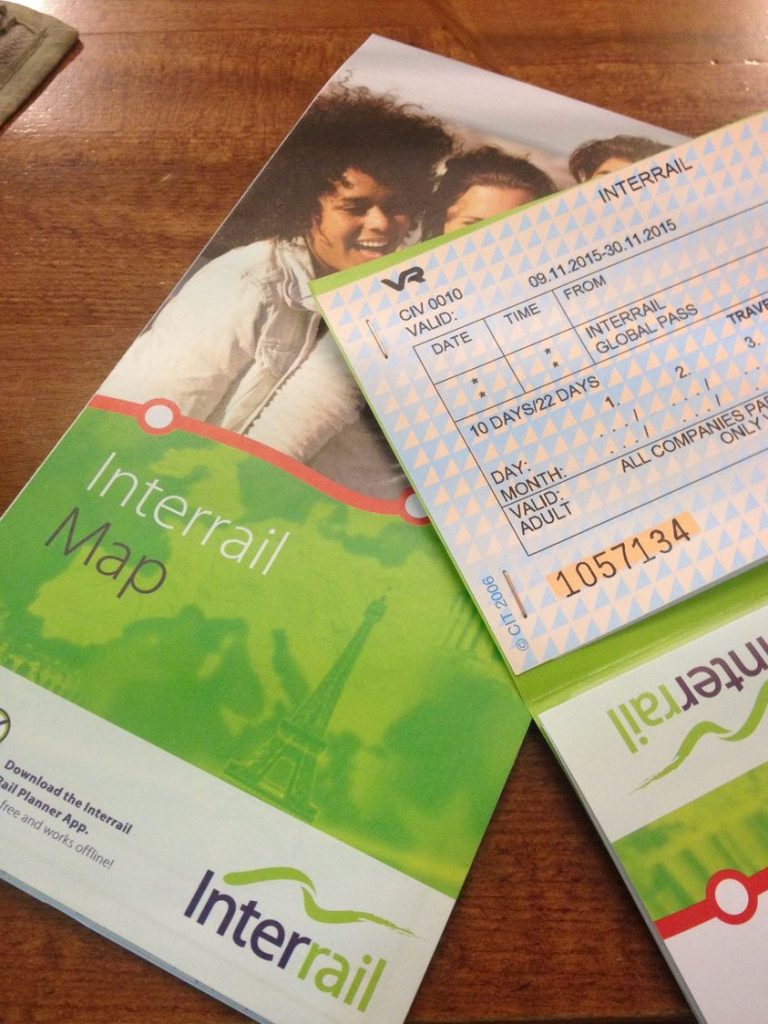
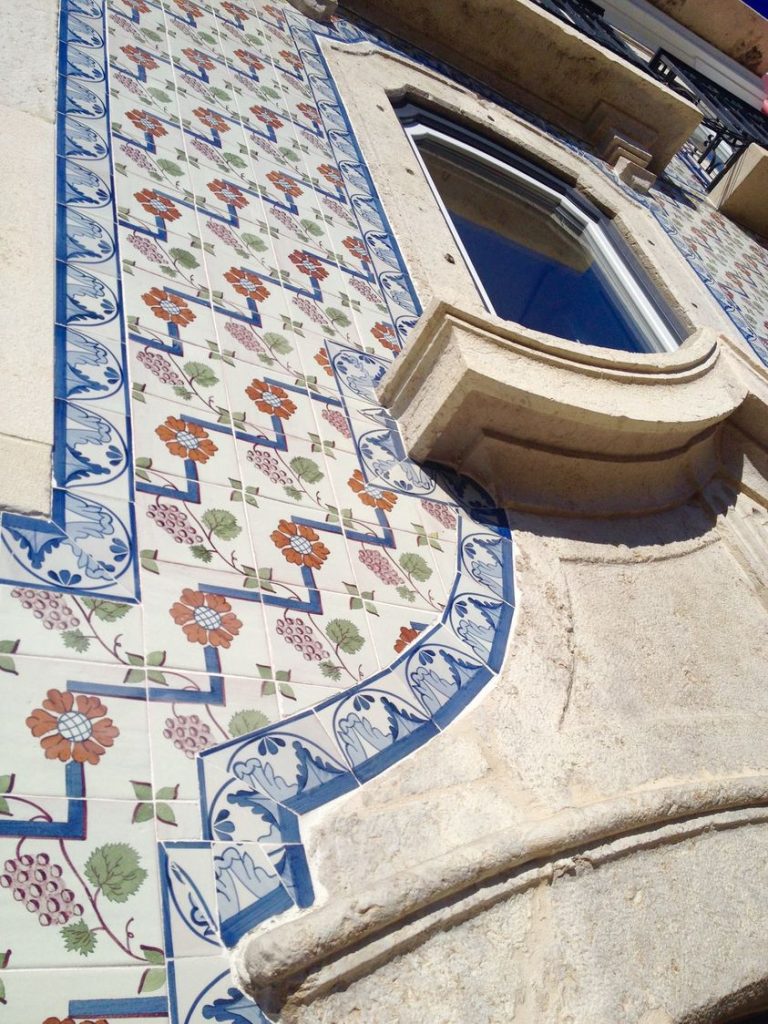
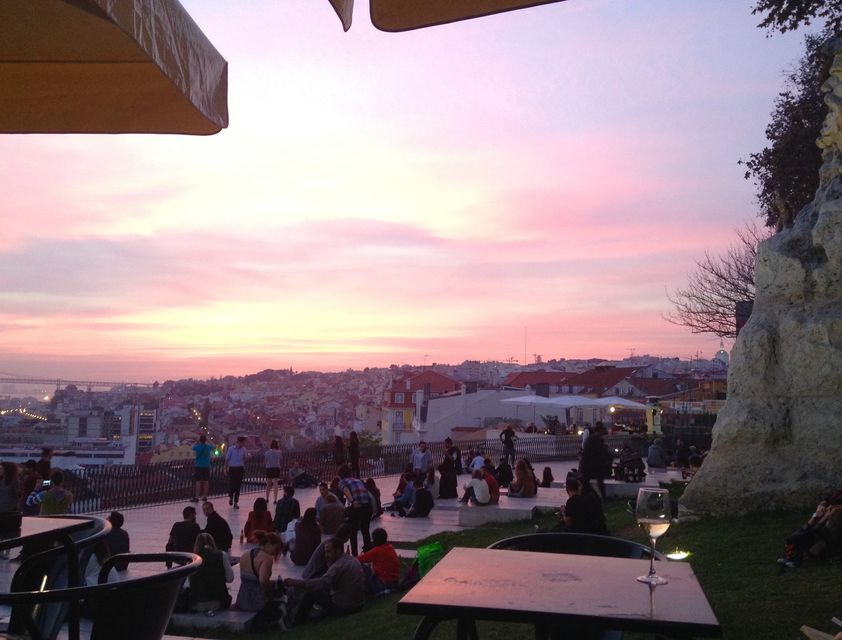
I sat myself down in the train and realised that it is now exactly 10 years since this journey began.
In November 2015, I was invited to a conference on the theme of Women and Religion in Lisbon. As I had committed myself to slow travel, I decided to make the journey by train, just like I had done in 1999 when I moved to live in Portugal for a year. However, on my way back, something unexpected happened!
I took the train to Madrid instead of Paris, and when I woke up in the morning, I learnt that there had been an incident in Paris, so trains were cancelled, and travel would have been very restricted on that route.
Instead, I went to the Prada museum and got a first inkling about how important it would be for my research on dance in the Christian traditions of the Latin West to investigate artworks in the medieval period and also to do on-site visits to the places where we know that there are historical records of dancing. The following year I travelled all across Europe in my medieval dress to visit the sites of importance for my study. In my doctoral thesis, I did not write much about this aspect of my methodolog,y but the practice itself stuck with me.
During the past years, I have learnt so many valuable lessons about this kind of research methods, particularly from Eduardo Abrantes, and now it is time to put it to the test. The Praxis project has a theme where knowledge migrates between the past and the present, and for the coming month, I will be migrating from the north to the south, from monasteries to universities and between texts and embodied practices, weaving a liturgy of travel in the footsteps of the first wave of liberation theology.
I look forward to all the unexpected encounters!
(Photos are a blast from the past)
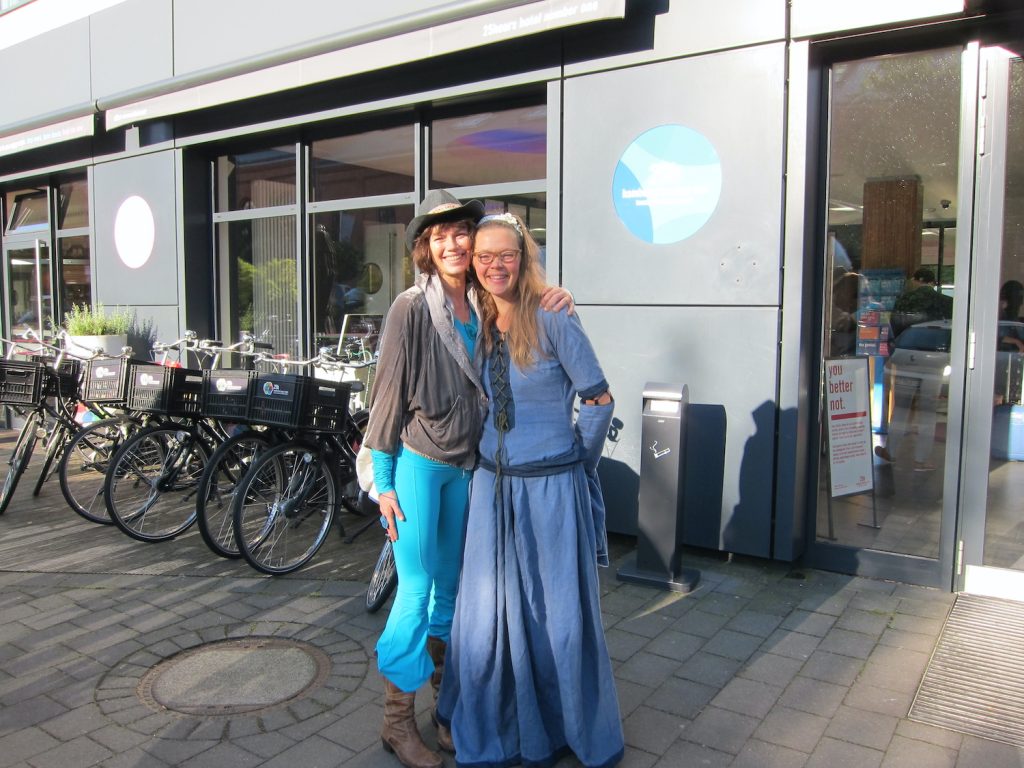
Ibland är det intressant, hur så många olika bitar fallet på plats, på en och samma gång!
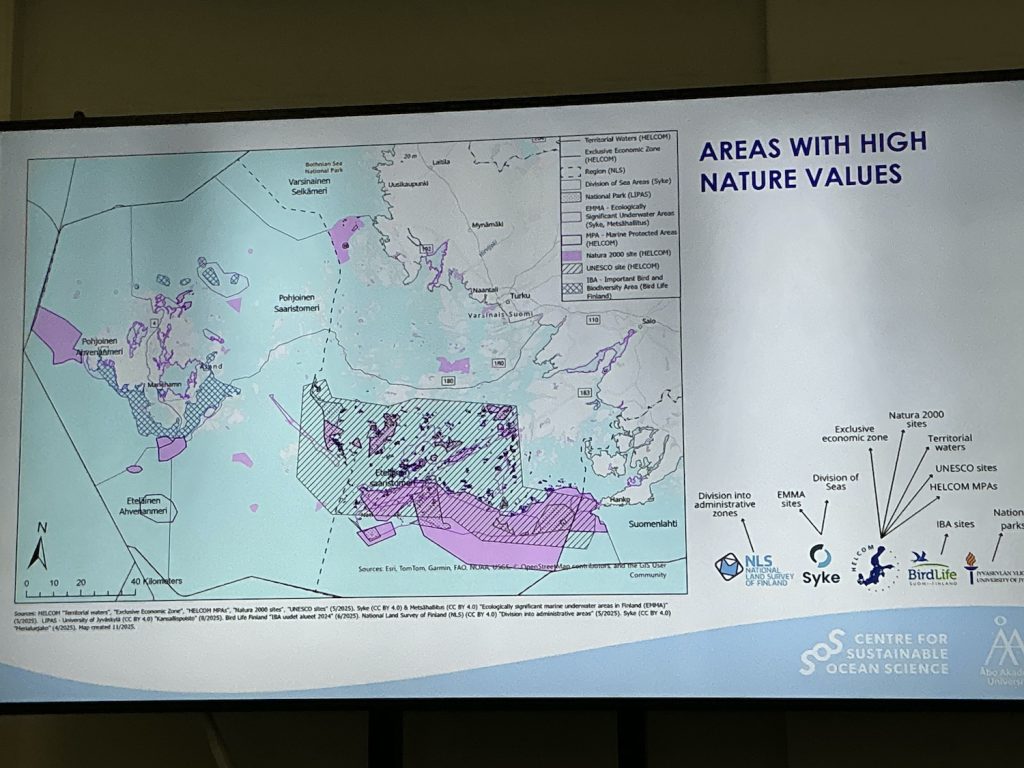
Denna vecka ordnade Högskolan på Åland ett seminarium som de kallade Waterway Meet & Greet 2.0 med naturturism och pilgrimsvandring som tema. I och med mitt uppdrag som sekreterare i Franciskus på Kökar rf. som har som uppgift att underhålla den del av St. Olof leden som går genom Kökar, tänkte jag att det vore bra att närvara på träffen.
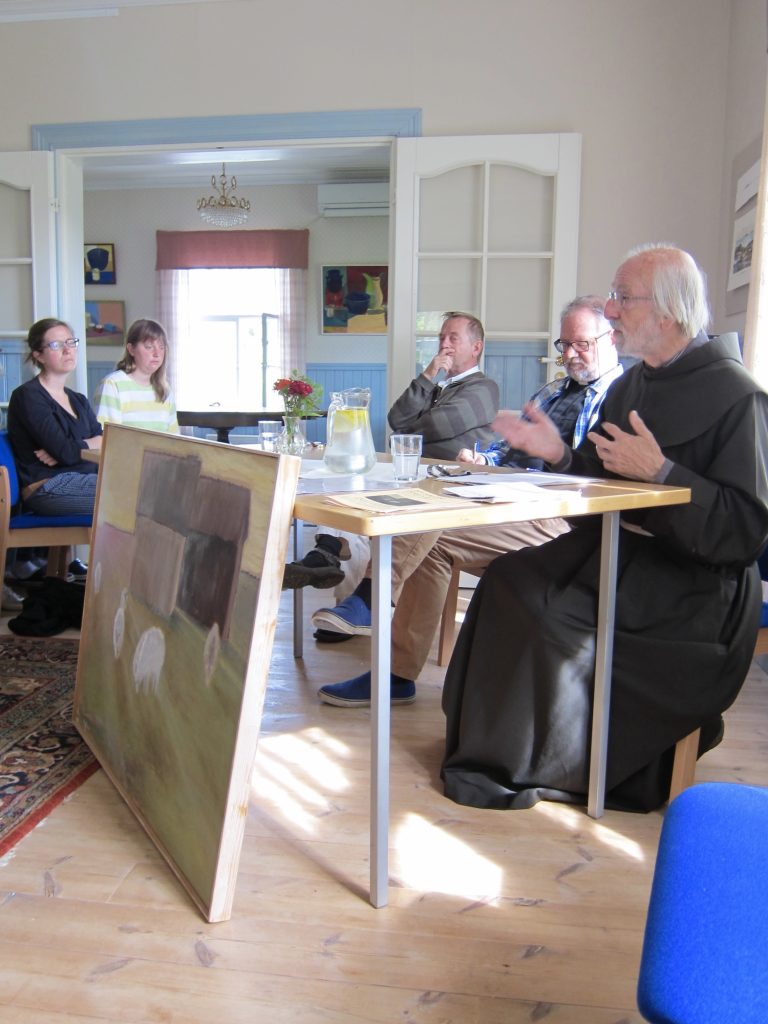
Jag blev glatt överraskad att det var en så stor sammanslutning av både lokala företagare, turistbyrån och pilgrimsvandringsaktiva på plats, tillsammans med liknande grupper i t.ex. Stockholms skärgård. Speciellt glädjande var att Annastina Papinaho från Pilgrimscentret från Åbo Domkyrka närvarade.
Vi behöver flera brobyggande nätverksträffar som dessa, för precis som Anna Törnroos Remes och Emma Holmback berättade om på föregående veckans konferens om GIS, samlas det ofta in värdefull data och skapas viktiga projekt både på den åländska sidan om skiftet och från fastländska sidan, men dessa samtalar inte alltid med varandra. Precis som i frågan om marinbiologisk forskning så har det också varit, i frågan om pilgrimsvandringsleden – olika aktörer gör super viktigt arbete, men är inte alltid medvetna om varandras verksamheter eller så fattas bara tiden att sätta sig ner och visionera tillsammans!? Som aktörer är vi dock alla så små, att vi verkligen behöver varandra och det stöd som samarbete kan skapa.
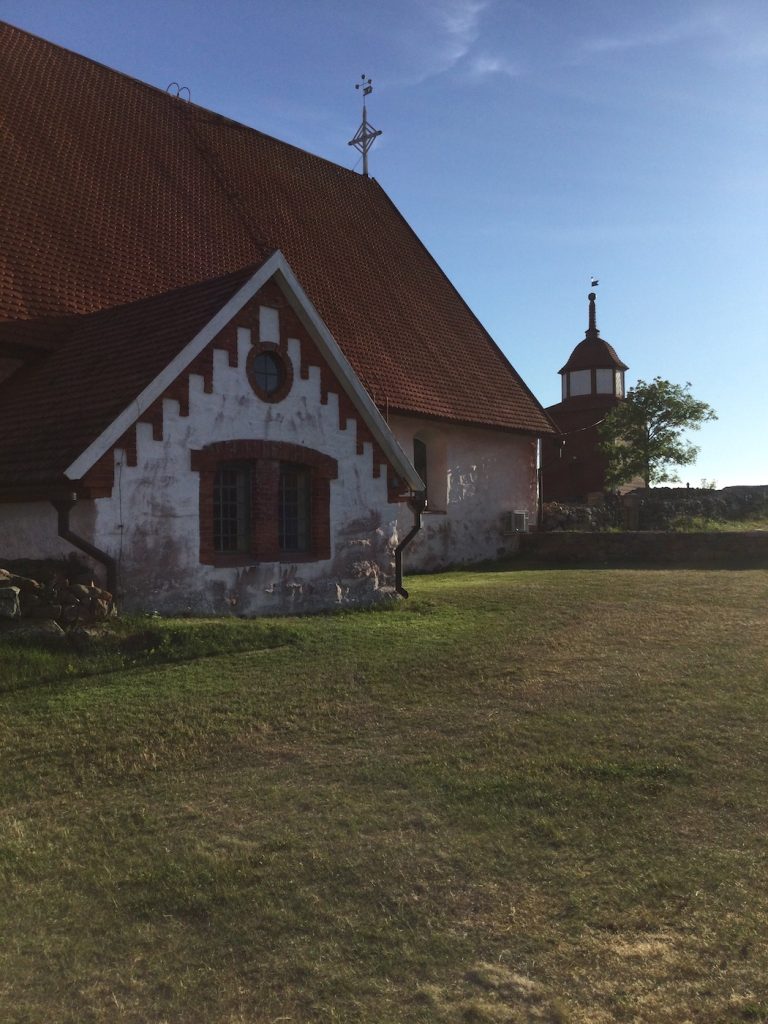
Det är just här som jag ser att Kökar blir en nyckelpunkt. Det är inte enbart en slump att det var just på Kökar som man skapade ett Härbärge då när St. Olof leden initierades av bl.a. Christian Pleijar och Ester Laurell. Precis som med många andra fina visioner, så behövs det ändå en lokalförankring och många timmar med frivilliga insatser av entusiaster för att ett projekt skall slå rot och bli hållbart i det långa loppet. På Kökar är det församlingen och lokalbefolkningen samt de som engagerar sig i den årliga Fransiskusfesten som utgör den klippan.
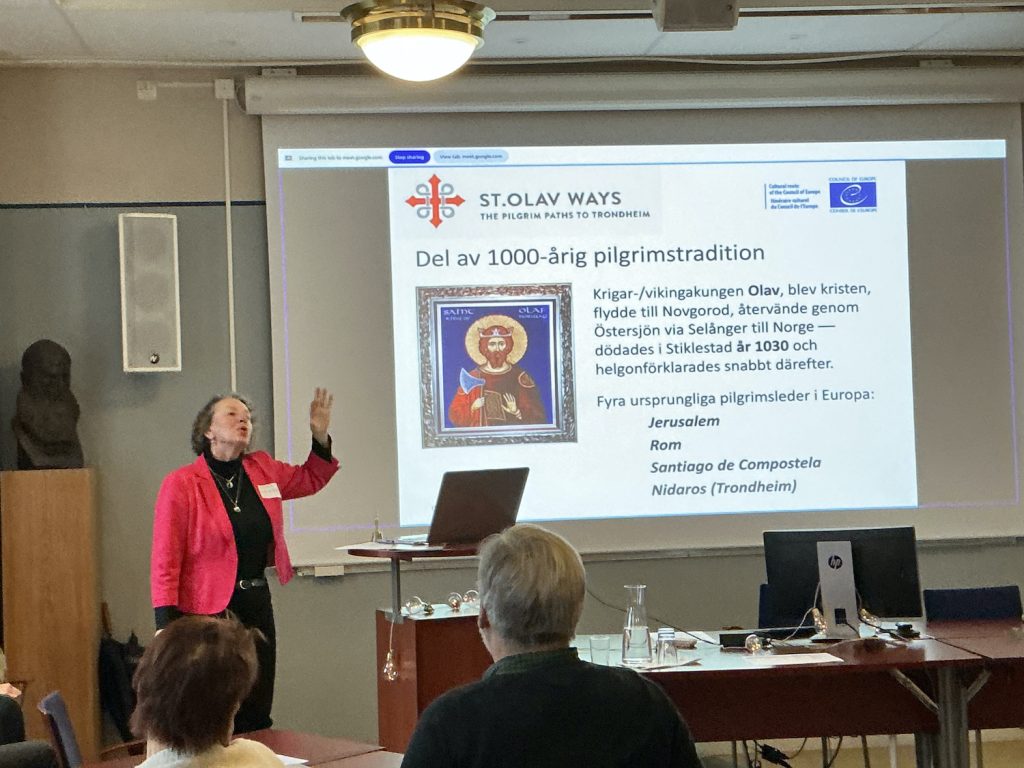
Precis som det var med heliga platser under medeltiden, så är det också idag – det är individer som blivit berörda, som kommit att älska ett landskap, en strandlinje och ett hav så att de delar sina berättelser om detta och är villiga att vårda just den platsen – som håller pilgrimsleden levande. På Åland syns detta bl.a. också genom de berättelser som strömmar in till den årliga publikationen St. Olof och det faktum att Valdemar Nymans pilgrimslandskap också går att hitta på den Åländska kartan för vandringar.
Jag minns, på ett mycket levande sätt hur Samuel Rubensson pratade på Fransiskusfesten 2016 att man många gånger – redan i den tidiga kyrkan – försökt locka turister och skapa ekonomisk vinning på konceptet Pilgrimsleder och platser. På medeltiden gjordes detta bland annat genom avlatsbrev, där folk fick direkt kompensation för att vallfärda och de lokala gästgiverierna gjorde pengar på övernattningar, matkostnader och upprätthållandet av marknader och souvenirer från platserna. En viktig lärdom är att både äventyrsfaktorn och det den ekonomiska vinningen är på inget sätt motstridiga med den andliga eller religiösa upplevelsen! Däremot kommer alla försök till att skapa heliga platser på ett artificiellt sätt eller fasthållandet av en rörelse som inte är rotad i en levande andlighet att dö ut! Om inte pilgrimen blir närd på ett djupare plan, kommer vandringen att tappa sin betydelse och fenomenet att sluta bära sig själv.
Det är här jag som teolog och forskare tycker att det blir väldigt fascinerande! Och ena sidan, precis som vi talade med Eduardo på GIS konferensen i Åbo, föregående vecka, finns det något i platsens betydelse och den kroppsliga upplevelsen av att vandra, dansa, röra sig och landa i skapelsen, som inte går att förmedla. Samtidigt är det så att när vi berörs på djupet, så vill vi gärna dela detta med någon! Vi vill att det som varit en oväntad gåva, en nåd av godhet, Glädje, frid eller oförutsägbar förvandling också får upplevas av andra. Och andra sidan, märker vi att de teknologiska framsteg som gjorts, de appar som finns tillgängliga idag, på något sätt bär på kapaciteten att facilitera och understöda möjligheten för nya människor att beröras av en plats och få erfara de många lagren av betydelser som kan finnas närvarande samtidigt och som på så sätt väver oss in i en ny sorts gemenskap. Det som många människor tenderar att göra, är att lägga dessa två sidor som motsatser till varandra. Antingen den kroppsliga och emotionell erfarenheten, eller den mentala och teknologiska ”okroppsliga” upplevelsen. I kyrkans sfär har man talat om en transcendent andlighet där det heliga finns bortom och utanför människan, eller så poängterar man den materiella (immanenta) andligheten, där Gud finns inom oss och vi enbart kan uppleva helighet i och genom kroppen. Det är just ur den här sortens dikotomier som folk ibland tänker att turism och pilgrimsvandring inte går ihop eller att Kyrkan inte längre behövs för nu har vi hittat en spiritualitet där människor genom naturen kan ha direkt kontakt till det andliga. Men jag skulle vilja föreslå att i båda dikena möts vi av traditioner som inte håller i längden. Den ena, försöker rationalisera allt och skapa kalkyler för att data-drivet föra fram förändring, vinst och effektivitet. Den andra sidan lyfter fram känslor, unika upplevelser och autenticitet som nyckelord för att leda fram inspiration och förvandling. I båda fallen, missar man den tysta, skrämmande och omtumlande ådran av att skapa/vara, återkomma/stanna, släppa/återfå, se i mörker och förnimma i mellanrummen. Att lära sig att leva med paradoxer är ett av de vanligaste sätten att beskriva kristendomens syfte med. Att stå i spänningsfältet mellan det vi kan råda över och det som är osäkert kan sägas vara en sorts kristen visdom.
Sagt på ett annat sätt, i en värld där många röster vill antingen dra åt det ena eller det andra hållet, kan det verka som en givande och bra lösning att säga att det inte är svart eller vitt, att föreslå att vi kan hålla ”många sanningar” och flera olika berättelser på en och samma plats. Detta kan exemplifieras med GIS, där flera lager av kunskaper från olika områden samlas ovan om varandra och är knutna till en specifik plats både vertikalt och horisontellt. Både i linjär historisk tid och genom säsongs biologiskt cirkulär tid lagras olika erfarenheter på varandra. Det är verkligen fint att se, hur t.ex. de materialpaket som skapats för barn och unga kring pilgrimsvandring just eftersträvar denna sorts dubbel eller trippel exponering. Här är denna plats, som samtidigt är detta och som varit detta och där du kan ta del i osynliga rytmer eller mönster som binder din upplevelse nu, med generationer som kommit före dig och kommer att komma efter dig! Att pilgrimsvandra på detta sätt, är att vara del av en sorts ritual, där vi länkas till platserna och får en upplevelse av gemenskap som går bortom här och nu.
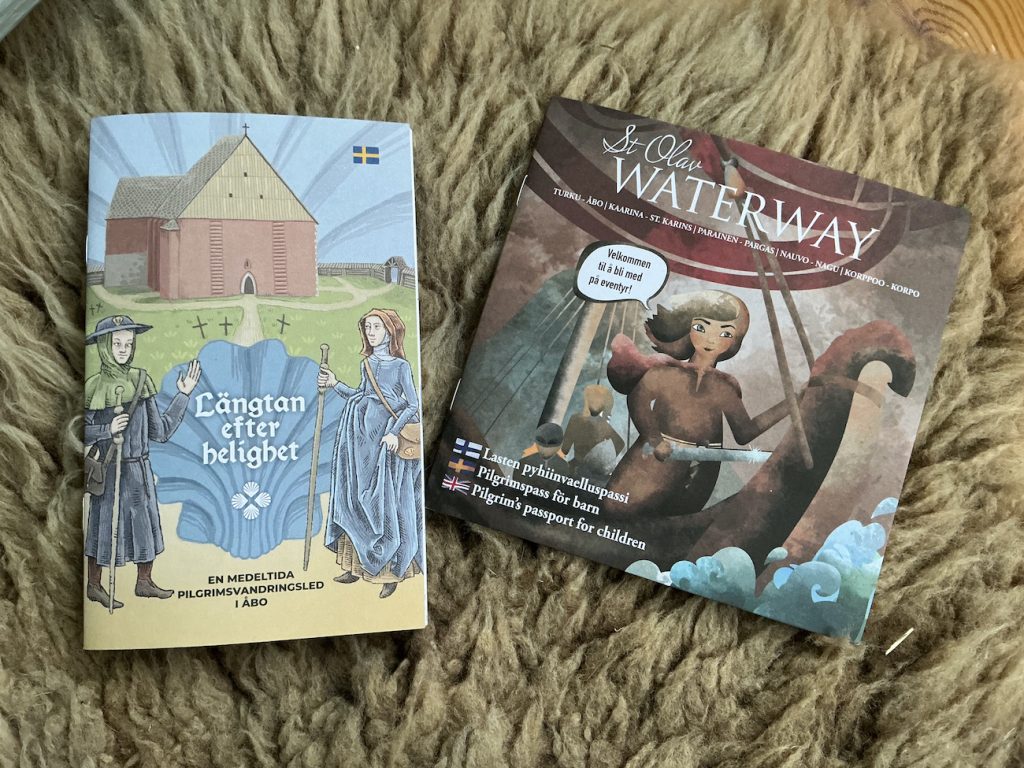
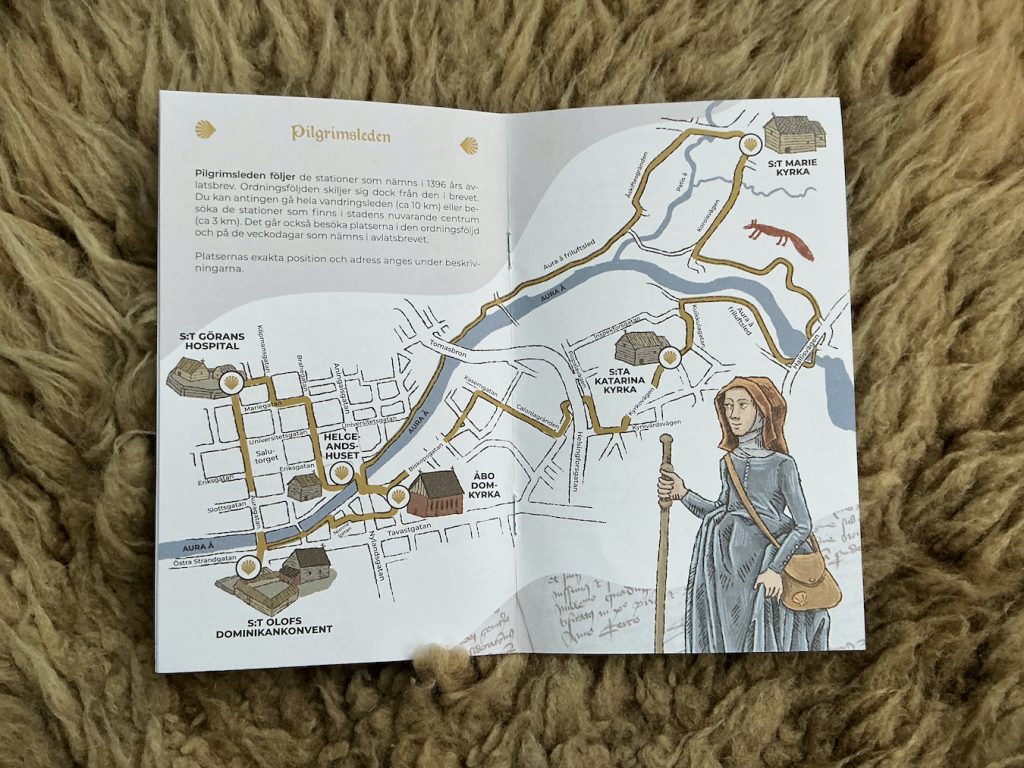
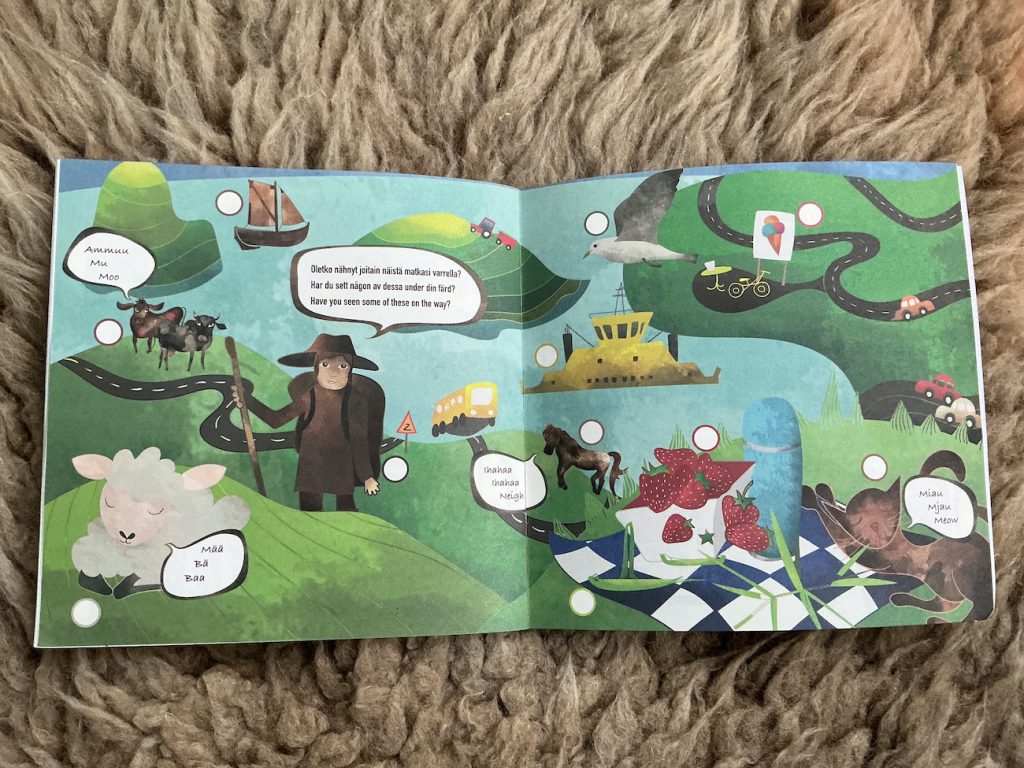
Denna typ av lös förankring är nog något jag tror att många längtar efter i dagens värld och som kan uppfylla en önskan om meningsfullhet människor bär på.
Samtidigt, har de senaste veckornas samtal och presentationer verkligen hjälpt mig att formulera att det jag strävar efter och önskar med vårt projekt är något mer/annat. I korthet tänker jag mig, att transdisciplinära förmågor, är inte enbart att vara i spänningen mellan olika discipliner och förhållningssätt. Att lära sig att stå i paradoxerna är en viktig förmåga, men man kan lära sig det på ett sätt som antingen leder till en sorts passivitet där man bara ser på komplexiteten men inte gör något, eller så kan den leda till ett febrilt görande på alla olika plan så att skapandet enbart tar slut på alla ens resurser. Det jag istället ser att transdisciplinära projekt ”kräver” för att leda till fruktbara resultat är att lära någon att älska! Med detta syftar jag på förmågan att förbli levande i mellanrummet.
Politiska teologen Vincent W. Lloyd skriver om den lyckliga erotiska kärleken som en erfarenhet av naken intimitet där jag både blir berörd och aldrig någonsin kan fullt ut röra. Vi dras mot den andre i en vilja att känna och upptäcka och samtidigt görs vi om av själva resan så att vi ständigt förändras och därmed aldrig kan bli sedda fullt ut. Det är både höjden av glädje och den djupaste osäkerhet. Så fort vi tror att vi har en manual, att vi vet att vi gör rätt val eller när vi försäkrat oss om att det finns en trygghet i att stanna eller gå, då har vi tappat kärlekens kraft till förvandling. Det kärleken medför är förmågan att fortsätta vara i handling och att kunna urskilja vilka vägar som är värda att gå på. Denna ”bekräftelse” uppstår inte för att vi får någon säkerhet eller visshet från ovan eller från utomstående blickar och referenser. Utan det är i själva görandet – i en hel natt av älskogsakt – som Lloyd beskriver att det ordinära – kroppen/materian blir helig. Men om vi gör utan uppmärksamhet eller tror att vi kan stanna i den intensiva upplevelsen för evigt, då har vi också tappat bort oss. Istället är ett liv väl levt, en ständig dans mellan vikt och viktlöshet, att bli förd, hänförd och uppleva från ett avstånd. Det är så dansen går vidare och en balans bli till.
Det är också just detta jag blev begeistrad av med Dunderflisan ute på Mörskär, ett projekt jag och Eduardo kommer att återkomma till om och om, de kommande åren.
Efter sommarens performans av Spirit Land/Vuoiŋŋalaš Eanadat i St. Anna kyrka på Kökar, avtackade Fransiskusföreningen Emma Göransson Almroth och Frank Berger + musikerna med att donera ett gammal takspån från kyrkan till dem. Nu har Frank vävt ihop många ekumeniska trådar och målat detta.
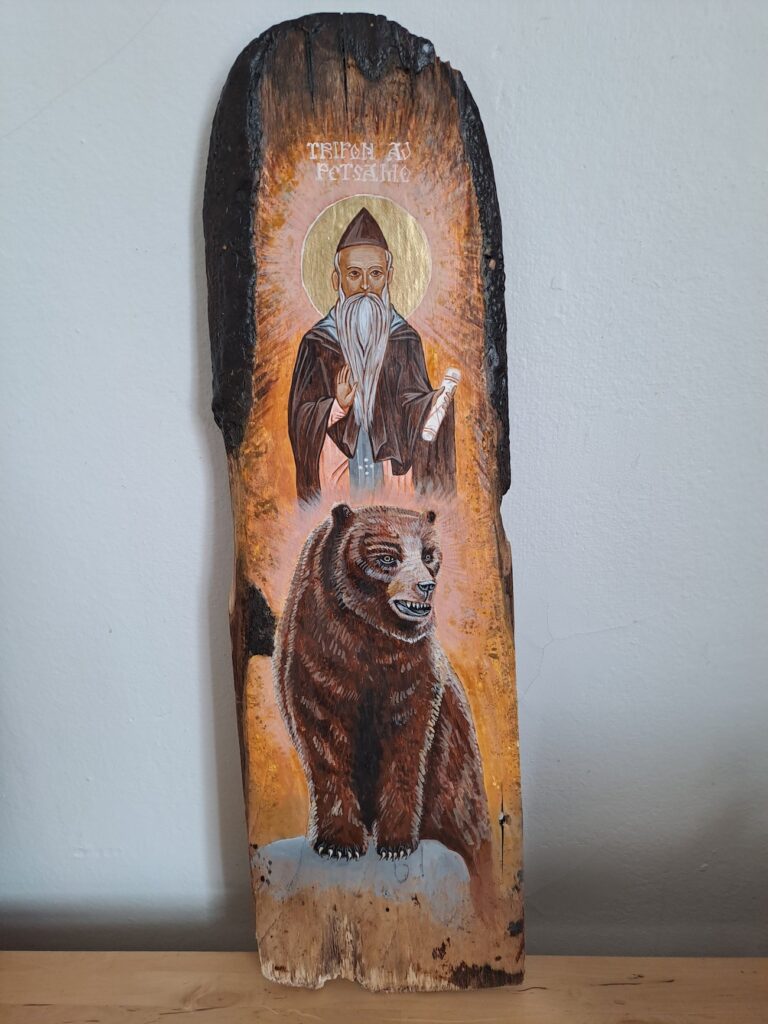
Trifon av Petsamo (1495-1583) var en prästson född i Novgorod, och som upplevde en kallelse till missionär på Kolahalvön. Han räknas som den förste missionären på skoltsamiskt område. Han är idag relativt okänd bland ortodoxa helgon i stort, men mera välkänd just i Sapmi. Han togs, enligt legenden, relativt väl emot på grund av sin vilja att lära sig och bevara skolstamernas språk och kultur.
Det berättas i källorna att Trifon bakade och medan han var upptagen med annat kom björnen in i huset och började äta av degen. Helgonet bad björnen i Jesu namn att lämna honom ifred. Efter den händelsen stördes inte klosterområdet av några vilda djur, utan renarna fick beta ifred.Jag tycker om den berättelsen. Den visar på att en människas helgelseprocess leder till att man lever i närmare harmoni med naturen.
Denna ikon är målad på ett gammalt takspån som suttit på Kökar kyrka på Åland. Eftersom träet är tjärat drog det först inte i sig temperan alls. Kanterna av brädan är hårda av tjocka klumpar med intorkad tjära. När jag försökte måla på takspånet blev färgen bara till droppar som torkade långsamt och som man kunde torka bort med fingret nästa dag utan att de fastnat på underlaget.
Efter lite omgångar med sandpapper och nästan 20 lager konstnärsgesso på ytan lyckades det hela bättre.
Jag valde att använda relativt få pigment, och så ”naturliga” som möjligt. Bränd umbra, gul och röd ockra, shungit (en sorts mald stenkol), järnoxidbrunt. Vidare använde jag titanvitt som måhända är ganska nytt (började framställas under 1800-talet), men väldigt mycket bättre för hälsa och miljö än blyvitt som användes före det, och som är mycket giftigt. Glorian är målad med finmalt mässingspulver upplöst i äggtempera.
Du kan också läsa Franks nypublicerade artikel om processen med kompositionen av Spirit Land/Vuoiŋŋalaš Eanadat, här.
In certain theological contexts, particularly in Sweden, Martin Lönnebo (27 February 1930 – 26 April 2023) is considered almost a modern-day saint. I myself have sat at his feet during the legendary ”efterglöd” sessions of the meetings called Pilgrims Höstmöte, where young adults from across denominations gather in Bjärka Säby to listen to inspiring theologians, artists and thinkers from around the western world. I’ve heard Lönnebo’s encouraging words: ”Be like a wood-heated oven” and seen the loving care and intellectual depth in his eyes when he speaks about ”trasmattsteologi” (theology of weaving).
Martin Lönnebo is hailed for the fact that in a certain modern, secular and post-religion period of the evangelical lutheran Swedish church, he brought in elements like – prayer beds and lighting candles in a mass – that were considered too Catholic or ”popish” when introduced, yet soon became so immensely popular that people do not even understand the level of innovation these spiritual practices brought with them. Lönnebo was skilled, not only in speaking to and working with the everyday ordinary spirituality of people. He also had a deep knowing of the mystical traditions of Western Christianities.
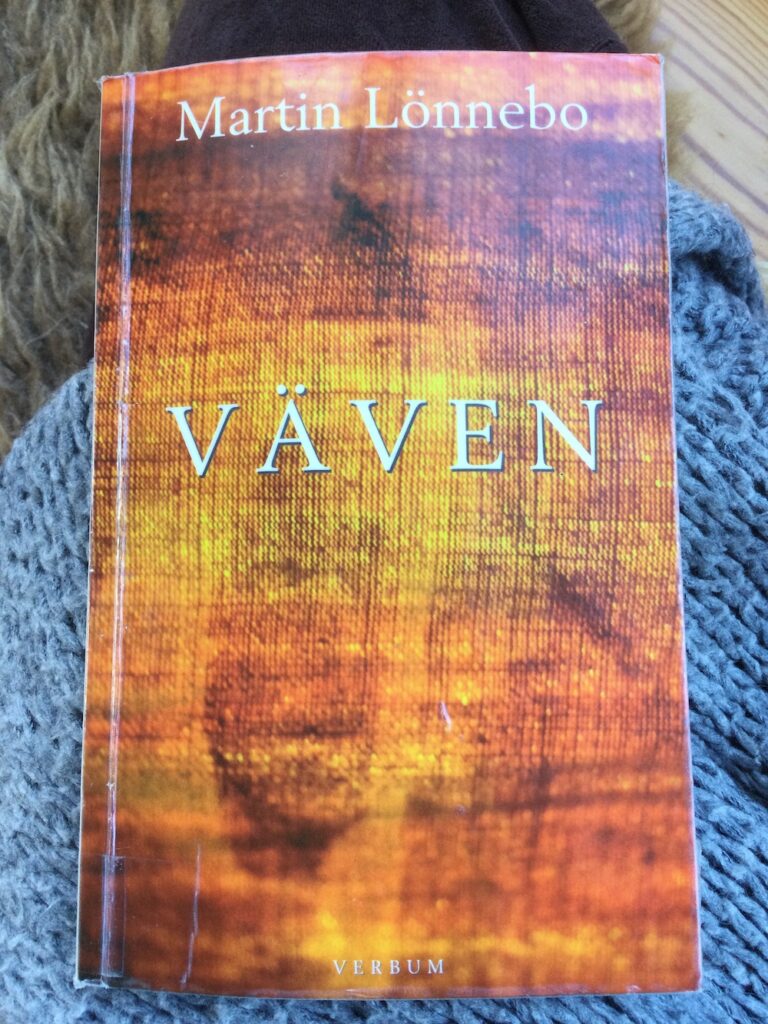
In our research project, I have, for example, used his three-fold dedication of the book Väven, to Cosmos (rymden), Heart (hjärtat) and Sand (sandkornet), as a theoretical frame for building ethical approaches to functioning and brave space of dialogue.

Photos: Laura Hellsten
Martin Lönnebo has a very poignant way of making sure that theological thinking and work always speak to and is open for, the wonders of life, the intellect found in emotional awareness and care work, as well as the brokenness of living as embodied beings in a world full of suffering.
However, this blog post is not so much about Martin Lönnebo, but my more unexpected encounters with Valdemar Nyman (15 August 1904, Vasa in Österbotten, Finland – 25 November 1998, Mariehamn, Åland Islands). As I grew up in Mariehamn, I have always been aware that there is a person named Valdemar Nyman and that he was an influential figure both in the cultural and theological spheres of the Åland Islands. I also remember that during my first visit to the Franciscan feast on Kökar, in the summer of 2016, a theatre play based on the book Broder Kilian by Valdemar Nyman was presented in the church.
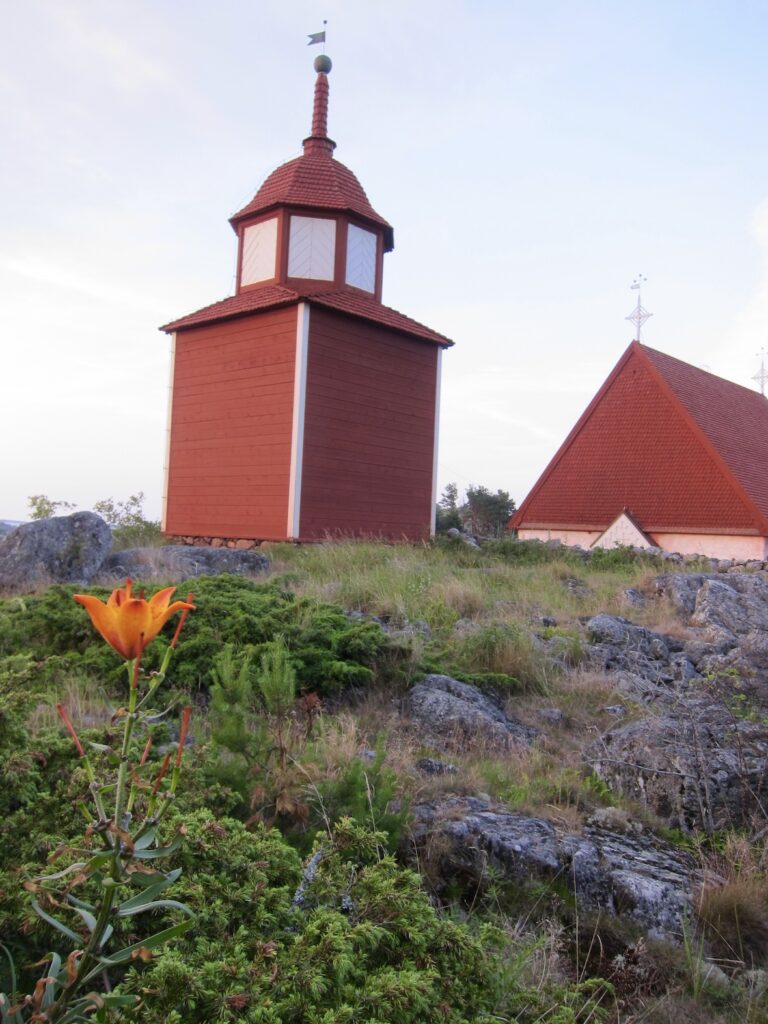
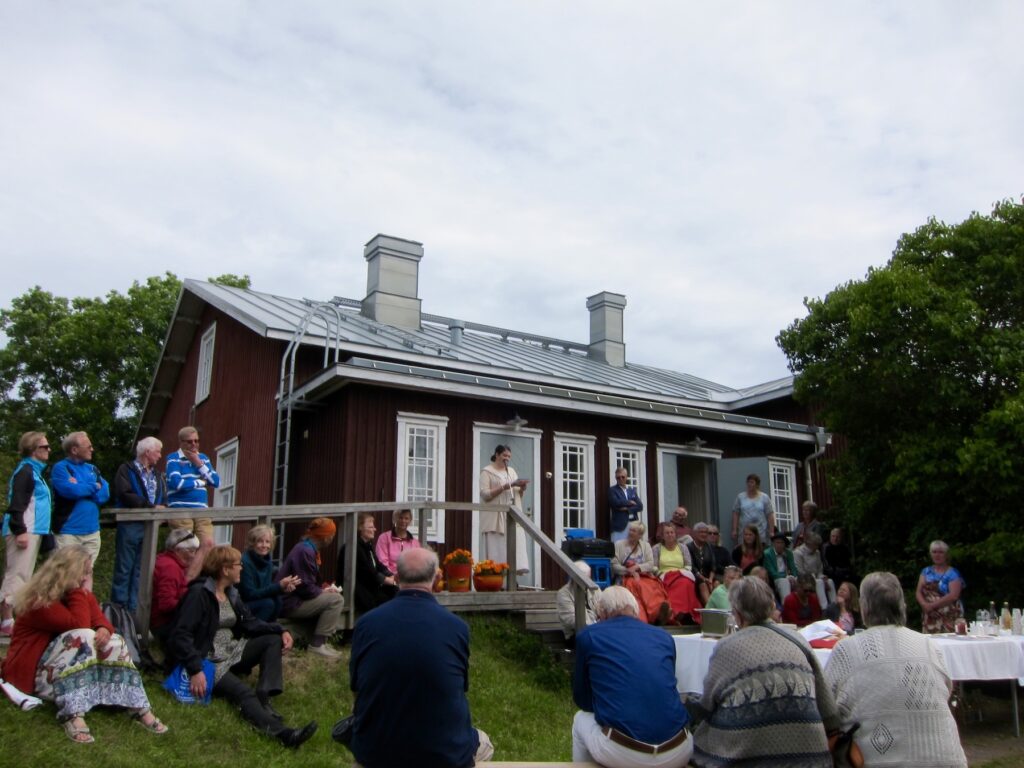
Photos: Laura Hellsten
Broder Kilian (1947), made a huge impression on me as I recognised how this novel carried the capacity to engage modern existential questions while relating the answers to a deeper strand of Franciscan theology that is rooted in the monastic traditions of the Middle Ages. I don’t even remember the exact plot of the story, but I do remember that my own explorations of sailing in a small open boat, dressed in medieval clothes, in order to understand in more depth how the medieval people might have journeyed on the pilgrimage route that we now know as St. Olov Waterway, was resonated in the depictions of how God and creation speak in the same tongue.
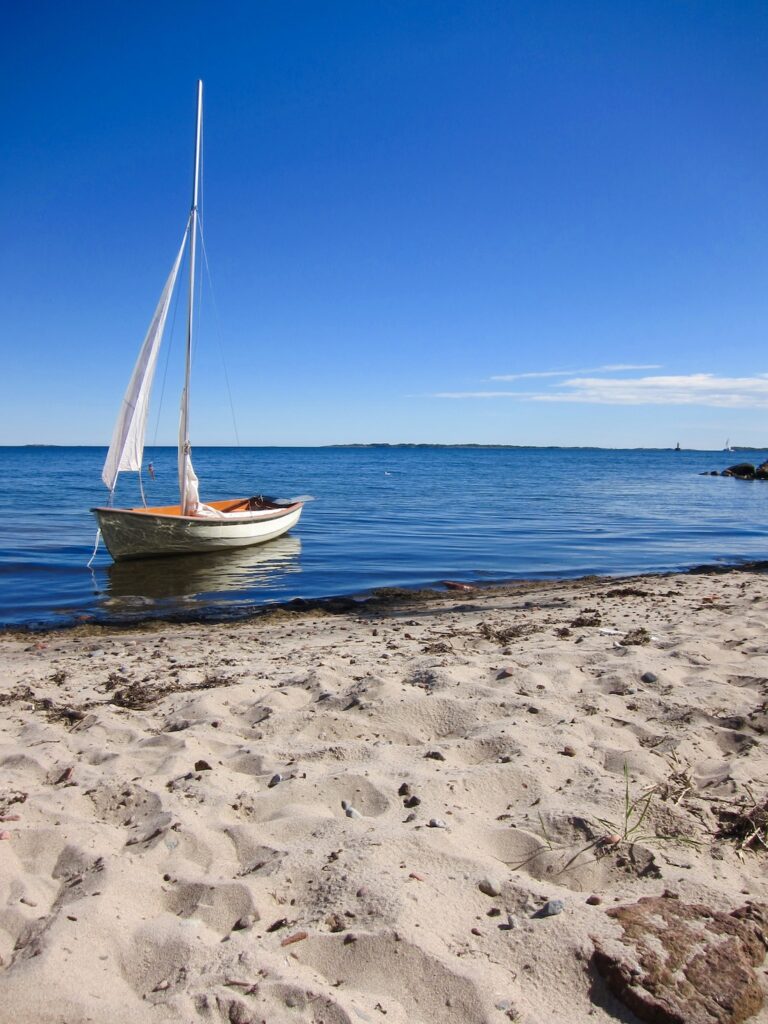

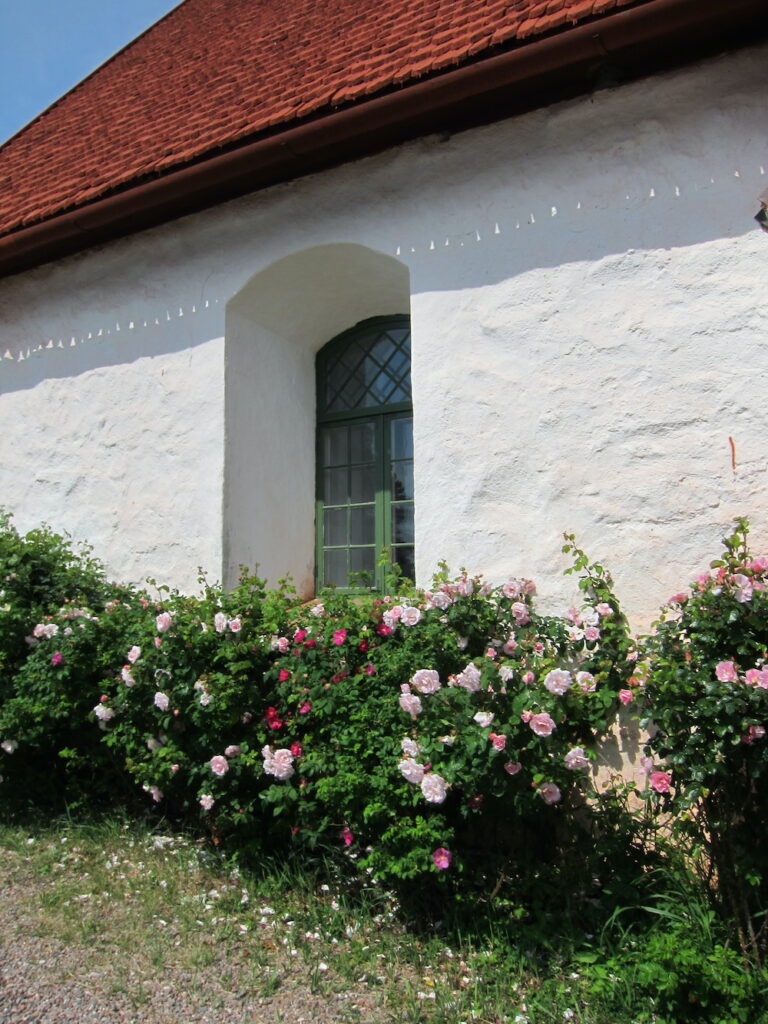
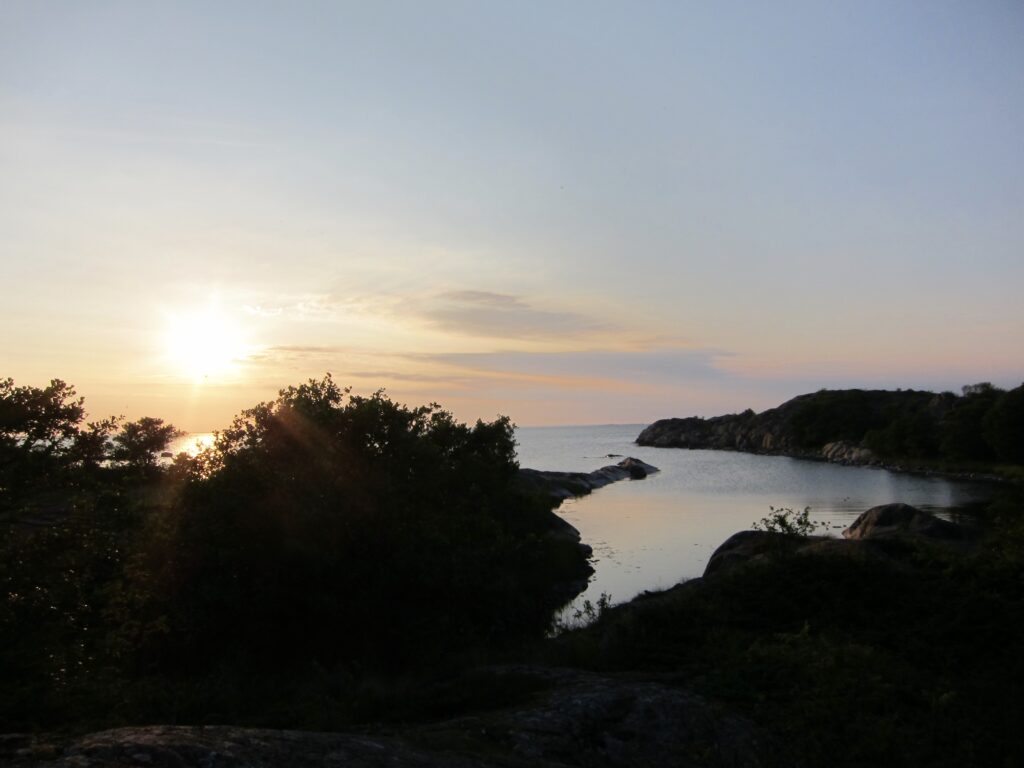
Photos: Laura Hellsten and of me Markus Hellsten.
Later on, I was gifted a book with collected sayings by Valdemar Nyman: Jag en stenskärva som det roar gudomen att kasta smörgås med (2004). When reading it, I would laugh out loud, with recognition of the humorous and profound wordings he coined.
Gud är som havet. Själarna som måsar över havet. Somliga flyger för högt och når inke kontakt med Gud som är därunder.
God is like the ocean. Souls like seagulls over the sea. Some fly high and do not find a connection to God, who is found in the depths/down under. p. 86
Tro änglarna. Extas är inte
flykt från verkligheten. Extasen
för dig in i verkligheten. Hjälper
dig nå din botten.
Trust the angels. Ecstasy is not a flight from reality. Ecstasy brings you into reality/existence. Helps you to find your bottom. p. 38
Katolsk betyder för mig allmännerlig, hela mänsklighetens omfattande (…) Jag tycker det är oförskämt att stå inför himmelens änglar och säga: ”Jag protesterar”.
Catholic signifies to me general, encompassing all of humanity (…) I find it rude to stand in the presence of the angels at the gates of heaven and say: ”I protest” p. 18.
These poetic renderings were able to catch, albeit fleetingly, the ”essence” of the kind of Christianity that I had been brought up with, both within my own family and through what I perceived as being the traditional way of doing church on the Åland Islands.
Towards an eco-theology that can steer the praxis project into new seas?
Once I moved to Kökar, in the autumn of 2023, one of my first tasks was to start exploring the writing of Valdemar Nyman and what he has to say about the archipelago. First, I was struck, in reading På Åländska Vägar – till lands och till sjöss (1980), by the fact that his thinking and writing was not only rooted in a sense of the presence of God in creation, he also carried extensive knowledge about the historical roots of the specific places he visited and a recognition of the importance of both local legends and the mythological features of stories that have influenced Western thinking. However, the unique feature of Valdemar Nyman is not his classicist schooling nor his local knowledge of history – there are plenty of people in his generation who have been formed by this kind of specialised knowledge. What I find intriguing is his fearless willingness to combine so many different genres (transdisciplinary thinking before the term was widely in use) and to layer the knowledges on top of each other.

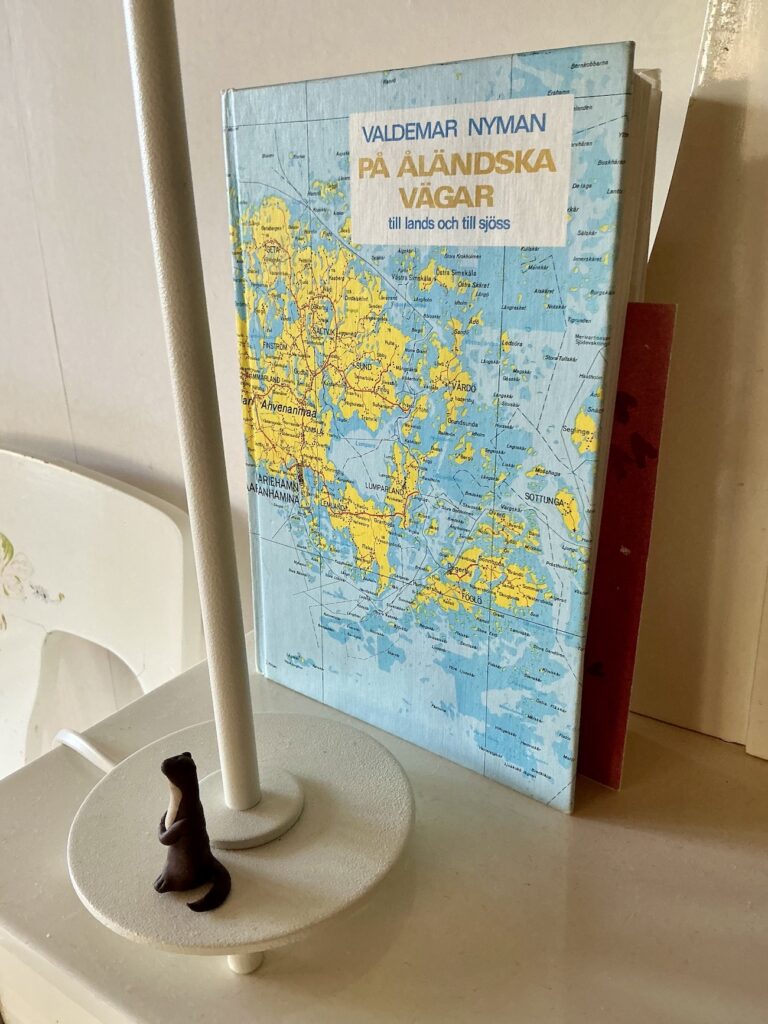
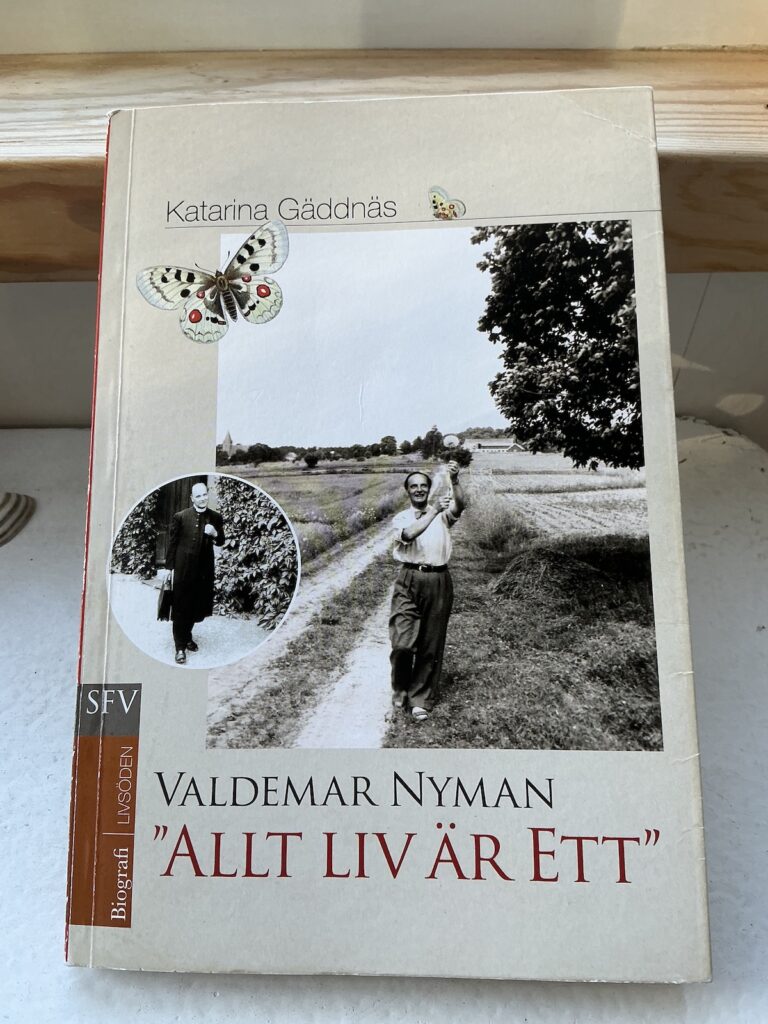
Photos: Laura Hellsten
The pluriversality of gnoseology, which Valdemar Nyman produced in his writing, has been much later described by Walter Mignolo as a path for decolonising Western mainstream epistemologies. In our current research project, we call this polysemous reading practices (a term I coined based on the writings of Peter Harisson and bearing in mind some of Catherine Keller’s work). One of the reasons why I am claiming boldly that a theologically schooled Western white male could have been practising unintended decolonialisation of the mind, is that in his writing we can find the traces of silenced and minor histories, like that of early Sami settlement on Åland (See recent article by Åsa Virdi Kroik).
Now, when I have been reading Katarina Gäddnäs’ book on Valdemar Nyman, I realise that there are also many other strands where this person was very much ahead of his time. I did not, for example, know that Nymans’ practice of lighting candles, putting fresh flowers on the altar, making the sign of the cross and kneeling during different parts of the mass, where met with such resistance in 1935 when he became the priest in Finström. In parallel with what I explained about Martin Lönnebo, I had always thought that these ”catholic” features of the spirituality of Åland were ingrained in the medieval buildings themselves. It is only now that I am learning that for Valdemar Nyman, much of this liturgical tradition was something he actually learnt while studying at the theological faculty of Åbo Akademi, and particularly from the teaching of the professors: Yngve Brilioth and Torsten Bohlin. (Fun fact is that in my current position as a post-doc in theology at the Polin Institute, I have been placed in the room named Bohlin!)
More importantly, for the current research project I am leading and collaborations we are planning with the SOS team, what I find particularly intriguing with the life and writings of Valdemar Nyman is what Katarina Gäddnäs describes as a process, not so much of Nyman falling in love with Finström as a landscape, the concrete church as a space for stories and the people of the Åland Islands as carriers of a rich history. Rather, I see in his life and writings a witness for the erotic encounters of Creator and creation. In his work, I sense the lands and seascapes embrace Nyman to be a voice for a kind of border dwelling that opens paths to new ways of being and living with the more-than-human lifeforms. What would be intriguing to explore is how much Nymans’ eco-theology resonates with Willie James Jennings’ writings about the need for a new Christian Doctrine of Creation. Such investigations, I look forward to being part of in the coming years!
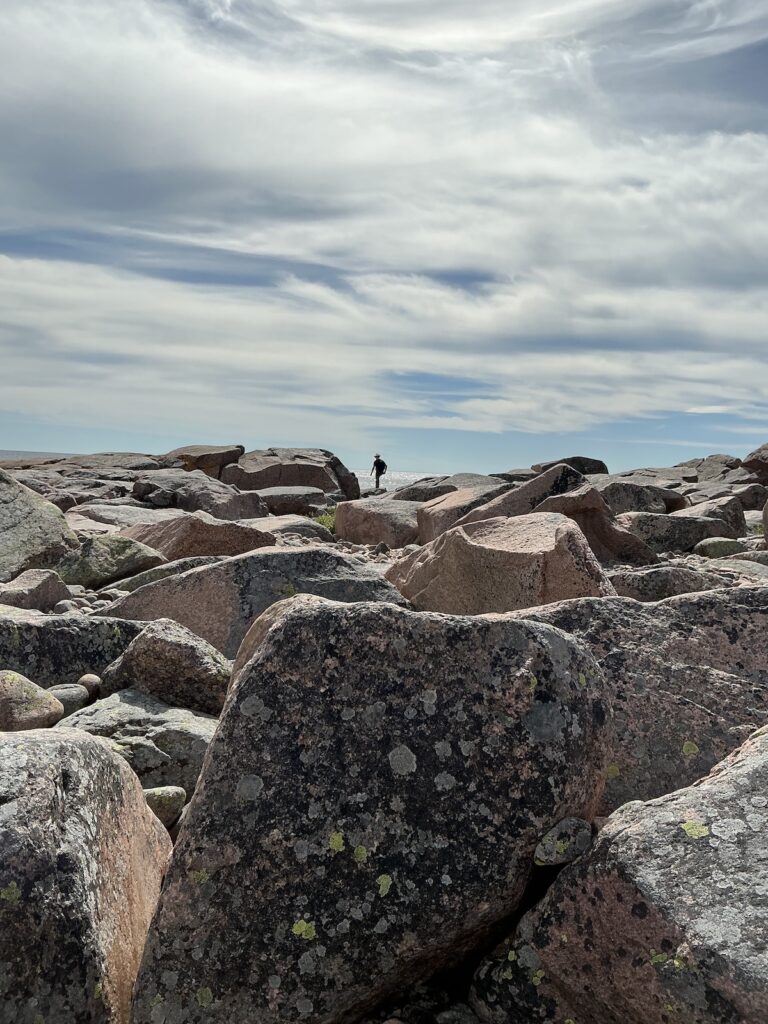
Photo: Laura Hellsten
Further readings:
Gloria Alzaldúa. 1987 Borderlands – La frontera : the new mestiza. Aunt Lute Book Company, San Francisco.
Katarina Gäddnäs. 2021 “Allt liv är ett” – Prästen och författaren Valdemar Nyman. Svenska folkskolans vänner, Helsingfors.
Peter Harrison. 2001 The Bible, Protestantism, and the Rise of Natural Science. Cambridge University Press, Cambridge and New York.
Peter Harrison. 2009 The Fall of Man and the Foundations of Science. Cambridge University Press, Cambridge and New York.
Peter Harrison. 2017 The Territories of Science and Religion. University of Chicago Press, Chicago and London.
Willie James Jennings. 2019 `Reframing the World: Toward an Actual Christian Doctrine of Creation´in International Journal of Systematic Theology Volume 21 Number 4 October 2019.
Willie James Jennings. 2020 After Whiteness: An education in belonging. William. B. Eerdmans Publishing Company, Grand Rapids, Michigan.
Willie James Jennings. 2021 Creating Home : Forming Christians Who Believe in Creation and Creatures – PART ONE and PART TWO.
Walter D. Mignolo. 1995 The Darker Side of the Renaissance : Literacy, Territoriality, and Colonization. University of Michigan Press,
Walter D. Mignolo, Rolando Vazquez. 2013. Decolonial AestheSis: Colonial Wounds/Decolonial Healings. Decolonial AestheSis in Social Text.
Walter D. Mignolo, Catherine E. Walsh. 2018 On Decoloniality : Concepts, Analytics, Praxis. Duke University Press, Durham, NC.
Walter D. Mignolo. 2021 The politics of decolonial investigations. Duke University Press, Durham.
Valdemar Nyman. 1982 På åländska vägar: till land och till sjöss. Söderström, Borgå.
Catherine Walsh. 2014. Pedagogical Notes from the Decolonial Cracks. e-misférica. 11, 1.
04.06.2026 | Uncategorised
How to relate to the lands and waters?
When it comes to transdisciplinary work, our experience has shown us that it is quite common nowadays for people from the natural sciences to team up with artists of different kinds and do a fun project together. In communities like the SOS team, almost everybody has tried this at one point or another. What is […]
03.06.2026 | Uncategorised
Sea-scapes into Landscapes
Once we arrived in Iceland, Seascape turned into Landscapes… At first, I was a bit baffled, trying to imagine how this would have looked to the earliest medieval travelling monks who arrived on the island from the South. Not a very hospitable place and not easy to land! I remember reading the Voyage of Saint […]
02.06.2026 | Uncategorised
Mapping traces of Pilgrimage
Three weeks ago, on Tuesday, our Knowledge at Sea community arrived in Tórshavn, Faroe Islands. This is a sister/brother community to the Åland Islands, which I come from, and which I visited last when I was still a young teenager. Eduardo Abrantes has been there more recently, doing some artistic work with the local communities. […]
01.06.2026 | Uncategorised
At Sea
Three weeks ago, our Knowledge at Sea – Transdisciplinary Community Practices for Sustainability group spent our first whole day travelling over the North Sea. Particularly when we saw the huge oil platforms out there as artificial islands, I came to think about Marion Graus’ work on Norwegian Petroleum culture, but also their work together with […]
29.05.2026 | Uncategorised
Knowledge at Sea – Intro
Exactly three weeks ago, a group of students from Åbo Akademi University, artists like Frank Berger & Saija Lehtonen and cultural workers from the Skärgårdshavets Biosfärområde set out on a boat, train and boat ride through Sweden and Denmark towards Iceland. In the coming posts here, I will open up some of the things that […]
13.04.2026 | Uncategorised
Funding News for Knowledge at Sea
Last week, Eduardo Abrantes and I met in Turku to attend the Polin days at Åbo Akademi University. Most of our time was, however, used to go through the last preparations of our CHARM-EU course: Knowledge at Sea where we will bring students from Eötvös Loránd University, Trinity College Dublin and Åbo Akademi on a […]
01.01.2026 | Uncategorised
Slow travel
I sat myself down in the train and realised that it is now exactly 10 years since this journey began. In November 2015, I was invited to a conference on the theme of Women and Religion in Lisbon. As I had committed myself to slow travel, I decided to make the journey by train, just […]
08.12.2025 | Uncategorised
Pilgrimmer över havet
Ibland är det intressant, hur så många olika bitar fallet på plats, på en och samma gång! Denna vecka ordnade Högskolan på Åland ett seminarium som de kallade Waterway Meet & Greet 2.0 med naturturism och pilgrimsvandring som tema. I och med mitt uppdrag som sekreterare i Franciskus på Kökar rf. som har som uppgift […]
18.11.2025 | Uncategorised
Franciskusfestens ekumenik i praktiken
Efter sommarens performans av Spirit Land/Vuoiŋŋalaš Eanadat i St. Anna kyrka på Kökar, avtackade Fransiskusföreningen Emma Göransson Almroth och Frank Berger + musikerna med att donera ett gammal takspån från kyrkan till dem. Nu har Frank vävt ihop många ekumeniska trådar och målat detta. Trifon av Petsamo (1495-1583) var en prästson född i Novgorod, och […]