
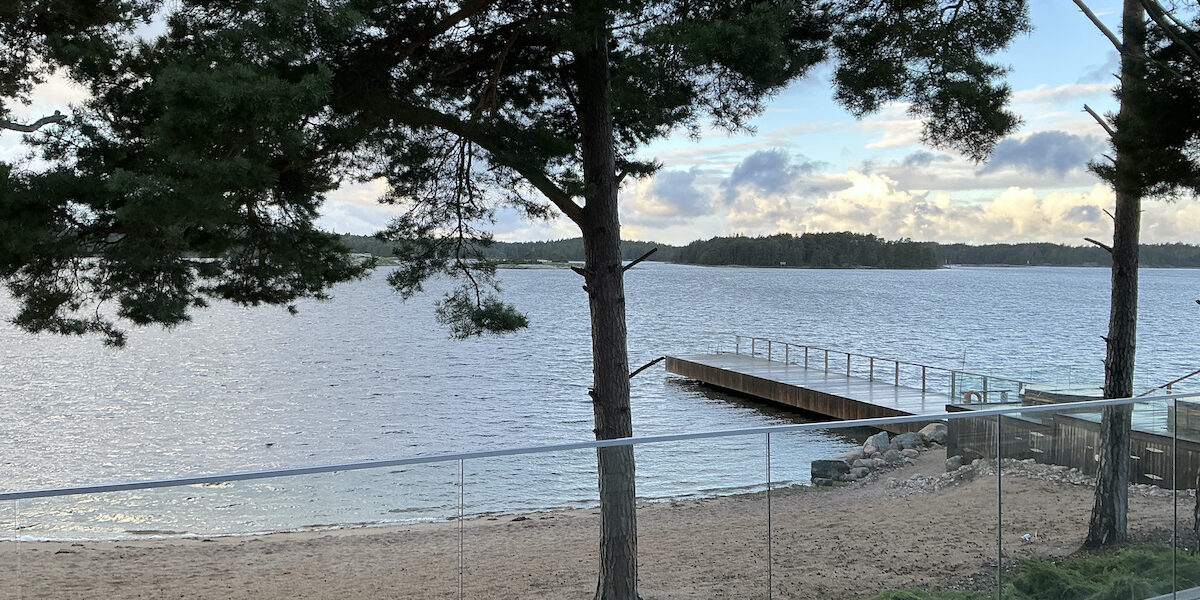
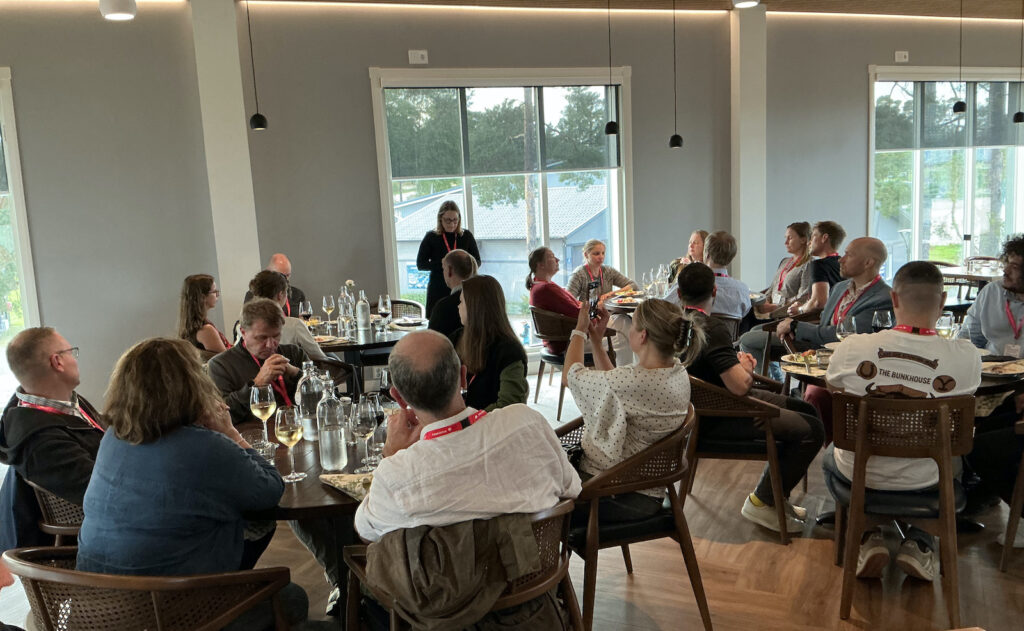
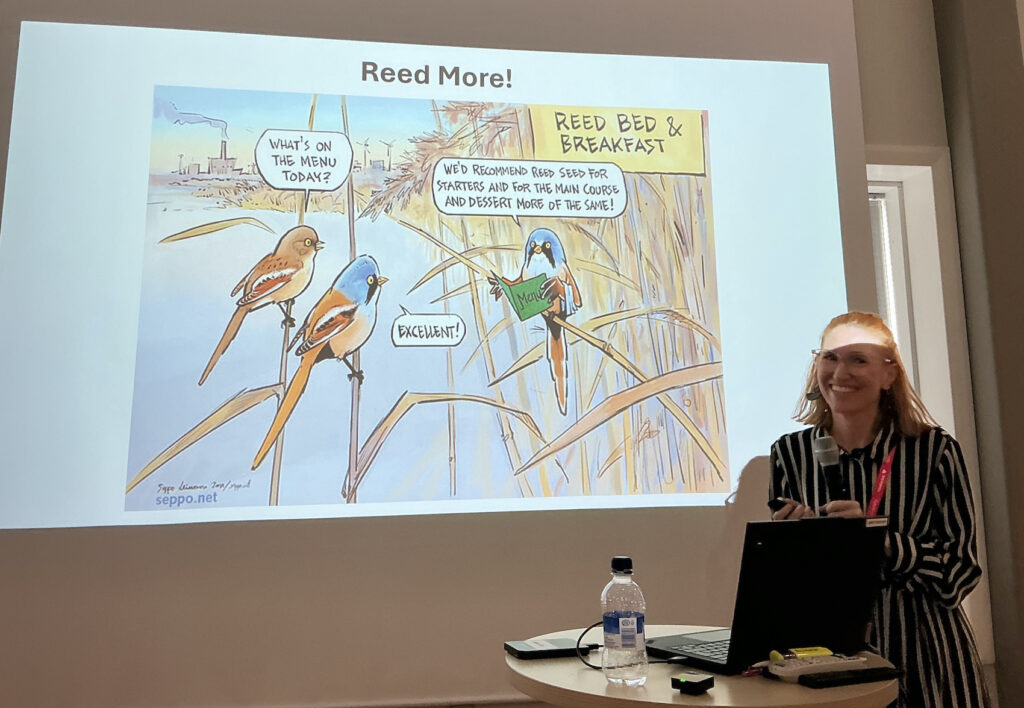
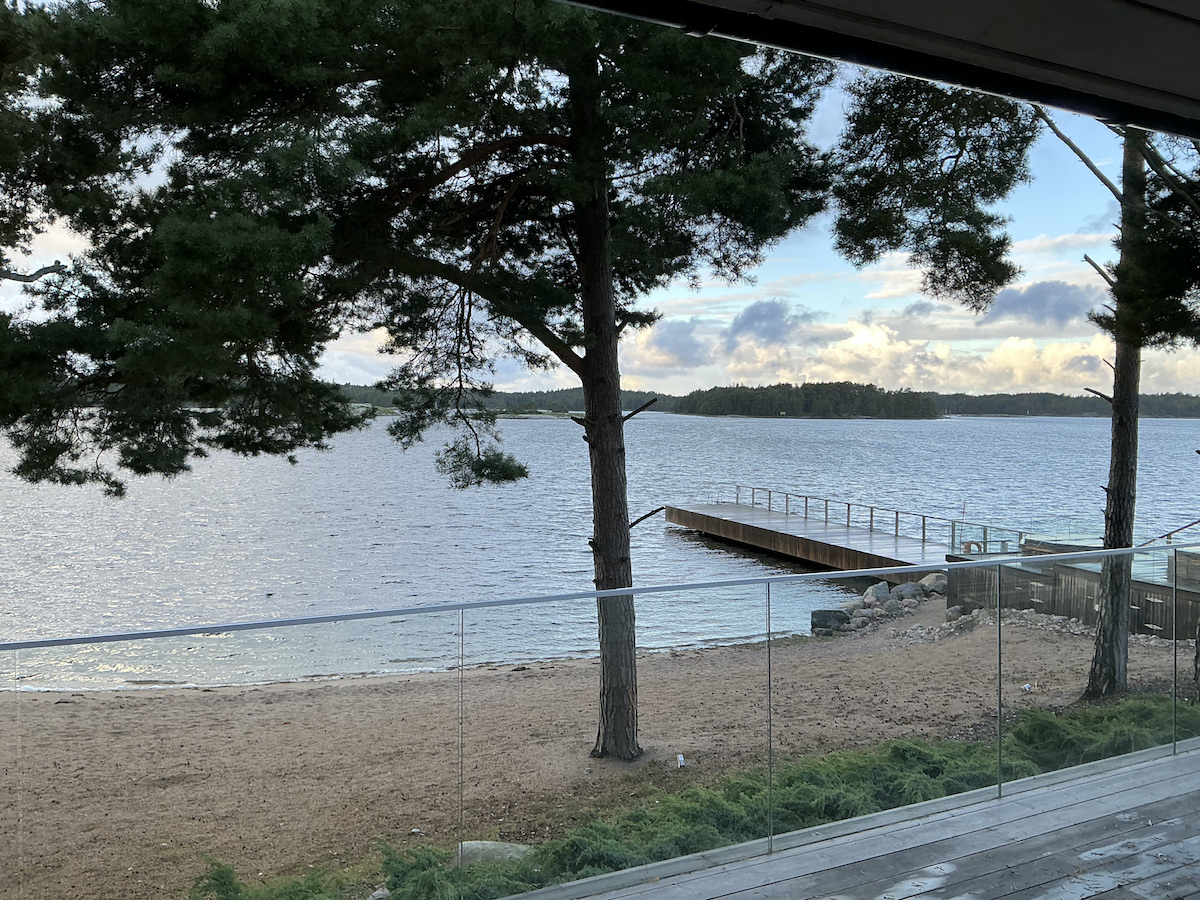
Last week, Eduardo and I had the pleasure of taking part in the annual meeting of our collaborators in the Centre of Sustainable Ocean Science’s yearly gathering in Kasnäs.
It was lovely meeting old acquaintances, but also seeing so many new faces and getting to know people from a variety of different fields. Many of the themes discussed touched upon governance and how to increase the protection of marine habitats in the archipelago region and Ålands islands.
As a theologian, I was both perplexed and happy to hear so many people speak about the need for good and wise stewardship instead of focusing only on legal measures and land or water ownership. In relation to our research collaborations for the coming four-year period (yes, we sent in a new application to KONE on Monday!) it was also intriguing to hear so many people speak about the need to engage local communities and also continuing to engage with many different kinds of knowledge – including local traditions and community action!

Once returning home to Kökar, I was struck by how much this new season in our research collaborations simultaneously is an opening of something new, keeping all the goodness of what we have done, and returning to something old!
In the new research plan, there is a section that states:
This project builds on a pilot created in collaboration with a Nordic Summer University study circle, which tested the potential of transdisciplinary (TD) symposia with nomadic communities. The aim was to bring together students, researchers, and artists from across the Nordic-Baltic region to foster dialogue around eco-social challenges and explore how encounters with diverse cosmologies—past and present—can support or hinder TD knowledge production. In the pilot, we conducted TD readings of medieval travel accounts, where theologians and merchants described encounters with non-European others in Africa, the East, the North, and across the Atlantic. (…) The study circle attracted students from the Global South, as well as artists and researchers with Indigenous backgrounds, though we were unable to engage participants from the natural sciences. Reading sessions also explored how non-archival sources and minority accounts—methods pioneered by Walter Mignolo and Saidiya Hartman—can be foregrounded in decolonial historical discussions. According to student feedback, the most liberating and transformative experiences came from artist-led workshops grounded in artistic research methods. These findings align with previous research showing that artists play key roles in generating both orientational and transformative knowledge in TDR projects. This is partly because artists help facilitate what Törmanen et al. call systems knowledge—the capacity to experiment, activate creative thinking, make wise decisions, and create spaces open to attunement and vulnerability. Moreover, the collaboration between artistic research and theology represents a return to pre-colonial relationships between art and spiritual inquiry. Peter Harrison’s work illustrates how theological knowledge once centred on performance, ritual, and minority accounts that shaped social imaginaries, while Natural Philosophy focused on abstract conceptualisations of the world. With the rise of modern science, theology became text-based and dogmatic, losing its polysemous engagement with creation. Simultaneously, the natural sciences started experimenting with practices and adopted rigid notions of objectivity and data collection as the sole valid paths to knowledge.
The three things that have proven very good and that we will keep developing are hosting transdisciplinary symposia where we practice theo-artistic interventions, and facilitating the training and development of transdisciplinary skills and tools by experimenting with polysemous reading practices.
In the planned symposia for 2025-2029, we move away from looking at questions of racialisation and encounters with indigenous communities in the texts we are reading together and instead focus on how creation is described and how local communities engage with the non-human world they encounter. This means that in the new symposia, there are two things we do that are completely new. The first one is to have an explicit invitation to people working with marine knowledge for our symposia and to take on questions of biodiversity loss as our guiding north star in the dialogue sessions. The second new aspect is that we will now be working with Kökar and Husö biological station (both on the Åland Islands) as two case studies to create a platform that I have called an Almanack of Transdisciplinary Gnoseology. The purpose of the almanack is to bring together all the different forms of knowing that our participants and the community work facilitates and gathers into one and the same place.
In this part of the work, we are inspired (amongst others) by Max Liboiron’s LAB. In the research plan, I described it like this:
Current sustainability research shows that human activity has already breached several critical planetary boundaries, including biosphere integrity. This boundary encompasses not only genetic diversity but also functional diversity, which is far more complex to measure. Biodiversity loss affects not only species and ecosystems but also human relationships with nature. These relationships are often reductively referred to as “ecosystem services,” which include cultural aspects such as aesthetic, religious, and spiritual values. This project asks: Can TD communities reimagine human–nature relations by critically engaging with the problematic legacies of past decisions, while also cultivating creativity for new interventions? Can we work toward solutions for biodiversity loss that include a plurality of voices—heard, recognised, and invited into dialogue?
Richard H. Grove’s Green Imperialism (1995) reveals how environmentalism and conservation concepts are deeply entangled with colonial modes of reasoning, governance, and scientific organisation. Today, many environmental and biodiversity initiatives turn to Indigenous communities and traditional knowledge systems for alternative approaches to sustainability. While Indigenous communities are diverse, many share principles of care and reciprocity in their relationships with non-human beings. Unfortunately, collaborations with traditional knowledge practitioners come against not only the existing asymmetric power relations that can be found between academic and non-academic participants, they encounter additional challenges. These disparities manifest not only in economic and political terms but also in epistemological and worldview clashes. Such tensions raise important questions: How can scientifically trained researchers engage with the spiritual dimensions of knowledge and the lived realities of people whose relationships with land, sea, and invisible or silenced knowledge forms are deeply interconnected? In the emerging field of critical sustainability science, there is a growing call to decolonise TDR. This involves teaching skills for engaging local communities as equal partners, listening to and integrating diverse ways of knowing, and actively resisting extractivist research practices.
This project’s novel approach is to recognise that movements towards decolonising TDR can function as tools that facilitate transdisciplinary investigations (TDI) also for non-indigenous communities. We ask: How can researchers trained within the siloed structures of Western academia acquire TD skills and tools that challenge dominant colonial patterns of knowledge production? Max Liboiron’s pioneering work on sustainability and colonialism offers valuable insights. Crucially, they caution against conflating “Western” and “colonial”. Instead, they distinguish between Indigenous science, anti-colonial sustainability work, and dominant scientific practices. Indigenous science is defined as “science done by and for Indigenous people within Indigenous cosmologies”[21]. While this project does not claim to teach Indigenous science, some participants carry and promote Indigenous knowledge and cosmologies.
Anti-colonial scientific methods, by contrast, aim to: “not reproduce settler and colonial entitlement to Land and Indigenous cultures, concepts, knowledges (including Traditional Knowledge), and lifeworlds.”[21]. These goals align with the skills and practices cultivated in the symposia developed by this project. Importantly, Liboiron highlights the distinction between dominant and non-dominant forms of science. Not all Western scientific traditions are based on dominance and mastery; some have emerged from periods where humans were not viewed as separate or superior to nature. This project takes seriously theologian Willie James Jennings’ claim that dominant Western science has displaced humans from the lands they inhabit and wounded their sense of creatureliness. Echoing Frantz Fanon, we acknowledge that colonial wounds—long-term effects of colonisation—create specific pathologies in both colonisers and the colonised. These patterns often become embedded in what are perceived as self-evident worldviews and habitual practices. Jennings refers to this as a distorted Christian social imaginary, which has come to shape intellectual and pedagogical norms in universities.
Anti-colonial work involves identifying and breaking with these entrenched patterns—a difficult but necessary task. This project boldly proposes that engaging with non-dominant ways of knowing, sensing, feeling, and being can help us unlearn and open space for truly TD collaboration. Liboiron argues that not all Western methods are extractive and that knowledge can be co-created ethically and sustainably.
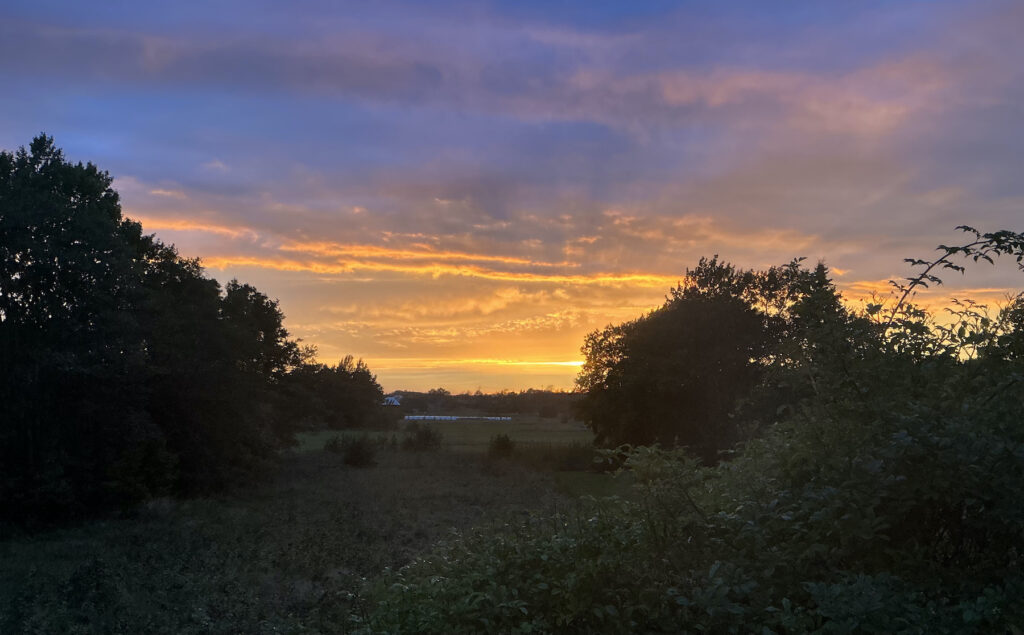
Finally, this takes us to my last and final share, which is to return to something old. In an article I wrote in Swedish for the Åland Islands church community yearbook St. Olof, I muse about the community knowledge my Grandmother told me when I was a child.
We often walked around in the local forests around the cottage in Erikvalla (outside Turku) or strolled on the shores of our island out in Nagu, and she would share what most people would call fairy tales. However, my take is that in these walks, the knowledge that was transmitted was much more than children’s stories about the unseen world. Instead, she opened a spiritual dimension to me by introducing entities with whom we share this planet, even when they are not always seen through our normal senses. The second thing she did was that she taught me how to pay attention! If one wants to pick mushrooms (which was my grandfather’s trade, not my grandmother’s visionary field) or commune with those that keep the forest safe, this requires training and tuning the senses.
Such work I look forward to doing in our community sessions!
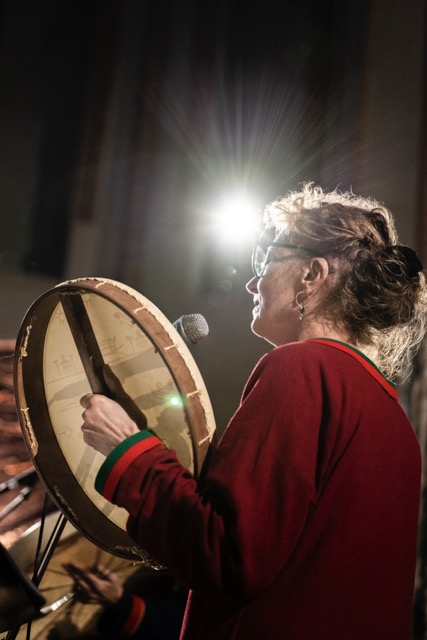
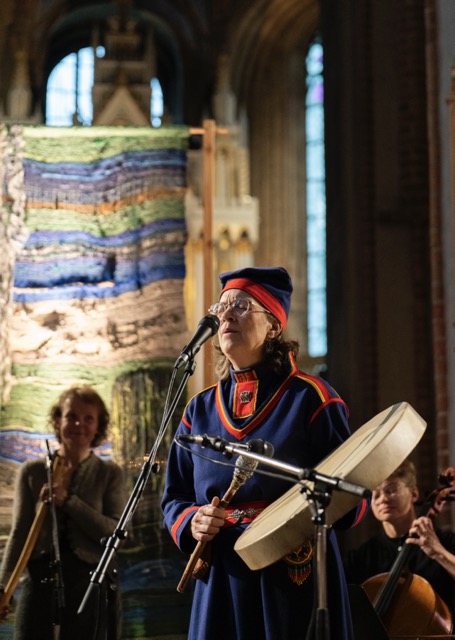
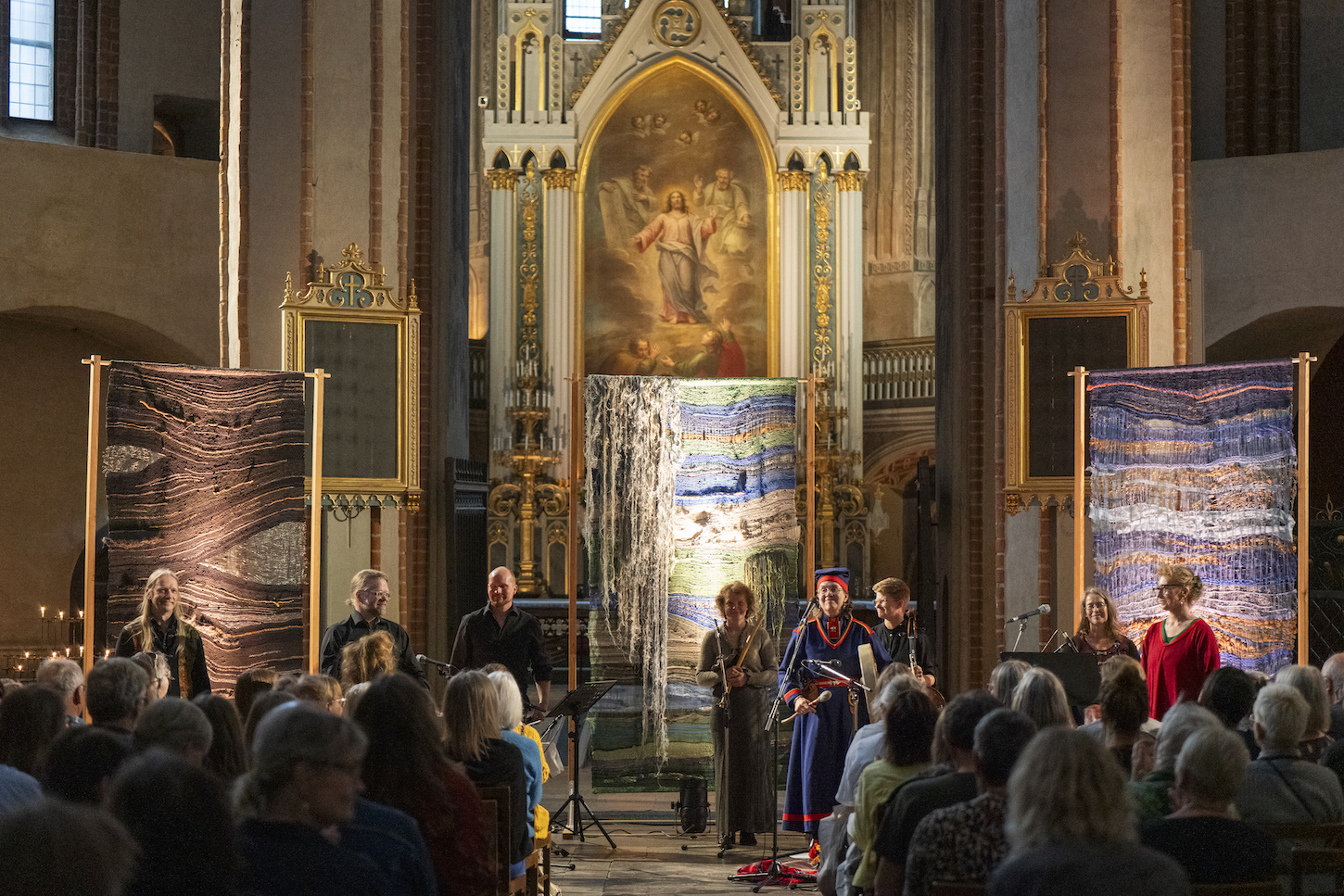
Under torsdagens kvällsprogram i årets Aboagora med tema Venus – Fred, fick de som deltog i performansen Spirit Land/Vuoiŋŋalaš Eanadat i Åbo Domkyrka var med om ett historisk skeende.Under svenska kyrkans vitboksarbete och i ett flertal avhandlingar och artiklar publicerade av samiska forskare framkommer det att ett av de koloniala arv vi har att hantera i Sverige-Finland är uppfattningen att den samiska jojktraditionen och användningen av trumman inte är förenliga med kristen tro. Därför var det en viktig stund när svensk/samiska konstnärinnan Emma Göransson Almroth, Sverige och jojkaren, och kompositören Nina Nordvall Vahlberg, Sapmi/Sverige framförde tre olika jojkar ackompanjerade till samiska trummor, i det verk finlandssvenska musikern, kompositören och teologen Frank Berger, Åbo, Finland komponerat.
Performansen Spirit Land/Vuoiŋŋalaš Eanadat bestod av tre kosmologiska sfärer från traditionell samisk mytologi – Vuolleamaibmi (Underjorden), Eana (Jorden) och Albmi (Himlen) – gestaltade genom monumentala textilkonstverk. Vävarna har tonsatts av Berger och framförs av åtta musiker i dialog med poesi av Göransson Almroth.
Samarbetsprojektet har växt fram under forskningsprojektet Praxis of Social Imaginaries finansierat av Polin Institutet för teologisk forskning vid Åbo Akademi. Det har även understötts av en studiecirkel vid Nordiskt Sommaruniversitet, samarbete med Sigtunastiftelsen och understöd från Svenska Kulturfonden och Stiftelsen Åbo Akademi. Medarrangörer var Åbo svenska församling och Åbo domkyrkoförsamling.
Efter konserten i domkyrkan den 11.9.2025 påföljde ett samtal i Sibeliusmuseet lett av forskningsledare LauraHellsten. Där diskuterade Göransson Almroth,Nordvall Vahlberg och Berger frågar om och hur konsten kan vara del av de pågående försoningsprocesserna mellan kyrkorna och samer.
Medverkande i Spirit Land:
Frank Berger – kompositör, vevlira, sång
Emma Göransson Almroth – textilkonstverk, jojk, trumma, poesi
Nina Nordvall Vahlberg – jojk och trumma
Marianne Maans – violin
Carolina Bjon – cello
Olli Liljeström – slagverk
Kari Mäkiranta – keyboards
Minna Hokka – övertonsflöjt
Kim Engblom – ljudteknik
Bilder: Pekko Vasantola
LEHDISTÖTIEDOTE
Torstaina tämän vuoden Aboagora – Venus tapahtumaan osallistuneet saivat kokea jotain historiallisesti uutta kun Spirit Land/Vuoiŋŋalaš Eanadat -performanssi esitettiin Turun Tuomiokirkossa. Sekä Ruotsin kirkon Vitbok projekti, että moni saamelainen tutkimustyö on osoittanut, että yksi kolonialismin haavoista Suomessa ja Ruotsissa on se käsitys että saamelainen joiku- ja rumputraditiot eivät sovi kristillisiin yhteisöihin. Siksi oli suurenmoinen hetki kun ruotsalais-saamelainen Emma Göransson Almroth (Ruotsi), sekä joikaaja ja säveltäjä Nina Nordvall Vahlberg (Sapmi/Ruotsi) esittivät kolme eri joikua saamelaisrumpujen säestämänä suomenruotsalaisen muusikon, säveltäjän ja teologin Frank Bergerin (Turku) teoksessa Tuomionkirkossa.
Spirit Land/Vuoiŋŋalaš Eanadat -performanssissa Göransson Almrothin näyttävät, kookkaat tekstiiliteokset edustavat saamelaisperinteissä esiintyvää kolmea kosmologista sfääriä tai tasoa: Vuolleamaibmi(Alinen), Eana (Maa) ja Albmi (Yläilma). Berger on vuorostaan säveltänyt kahdeksan muusikon voimin esitettävän teoksen joka käy vuoropuhelua Göransson Almrothin teosten ja runojen kanssa: maisemat saavat äänensä kuuluviin uudella tavalla. Yhteistyö on kasvanut Åbo Akademin Polininstituutin teologisentutkimushankkeen Praxis of Social Imaginariesin kupeessa. Työtä on tukenut Nordic Summer University’n lukupiiri, yhteistyö Sigtuna Stiftelsenin kanssa, sekä saatu rahoitus Svenska Kulturfondenilta ja Stiftelsen Åbo Akademilta. Tapahtuman yhteistyötahoina ovat myös Åbo svenska församling ja Turun tuomiokirkkoseurakunta.
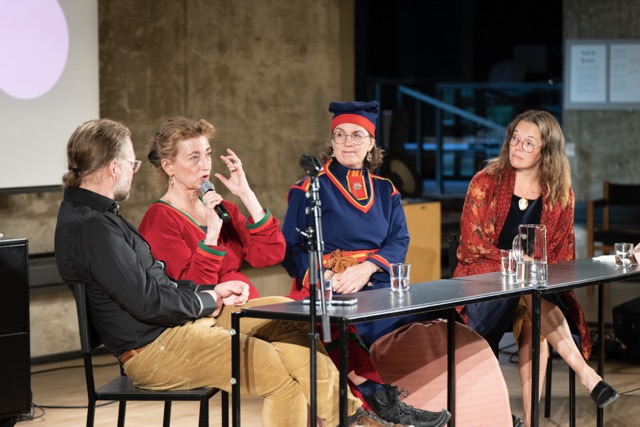
Esityksen jälkeen pidettiin keskustelutilaisuus Sibeliusmuseossa jossa tutkijatohtori ja projektin johtaja Laura Hellsten fasilitoi dialogia Göransson Almrothin, Bergerin ja Nordvall Vahlbergin kanssa siitä voiko ja/tai miten taide voi olla osa kirkon ja saamelaisten välistä sovintoprosessia?
Spirit Land -esiintyjät:
Frank Berger – säveltäjä, kampiliira, laulu
Emma Göransson Almroth – tekstiilitaideteokset, joiku, rumpu, runot
Nina Nordvall Vahlberg – joiku, rumpu
Marianne Maans – viulu
Carolina Bjon – sello
Olli Liljeström – lyömäsoittimet
Kari Mäkiranta – kosketinsoittimet
Minna Hokka – pitkähuilu
Kim Engblom – ääniteknikko
Kuvat: Pekko Vasantola
19.10.2025 | Uncategorised
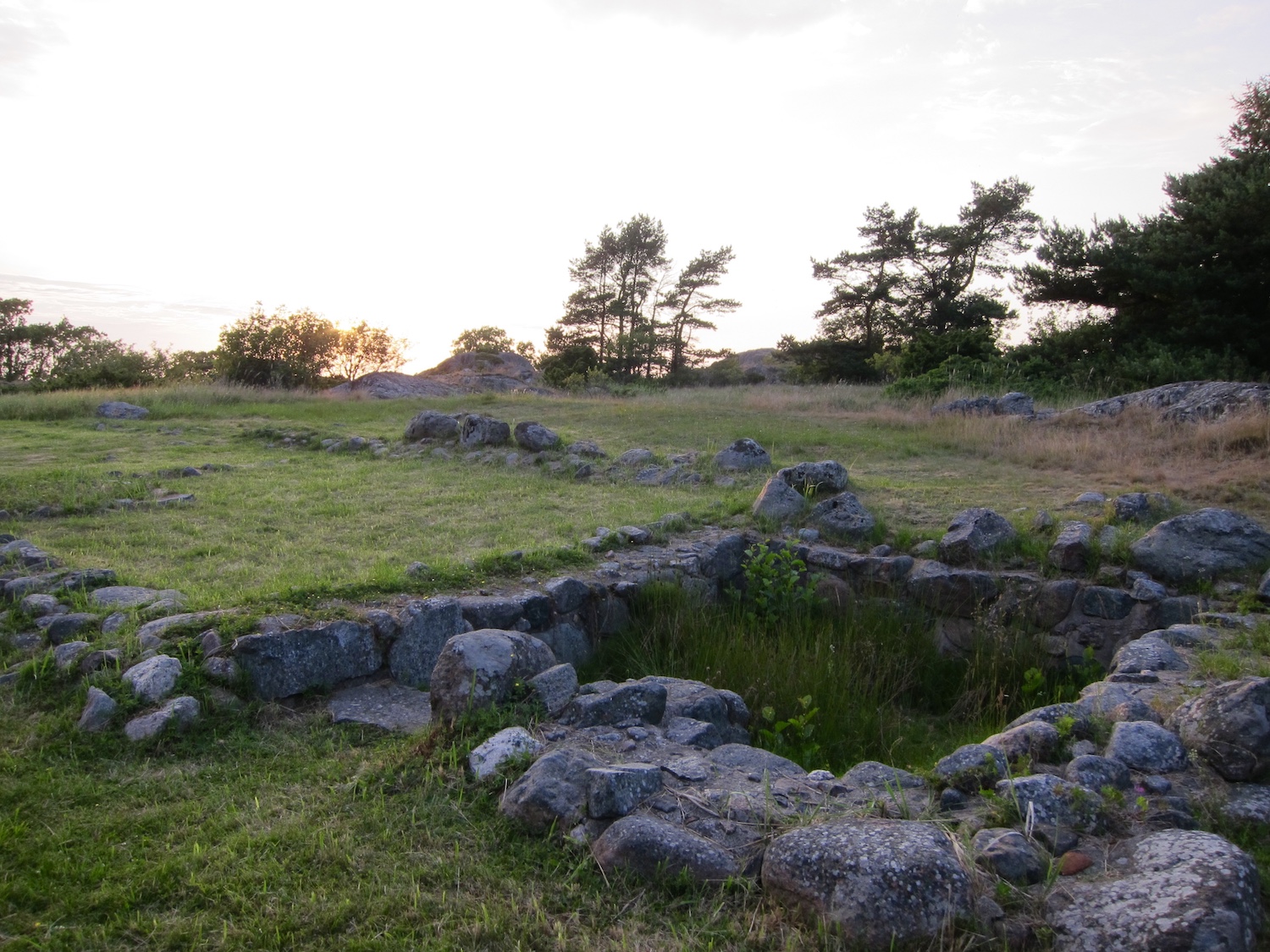
Tracing theological roots or finding my rudder!?
In certain theological contexts, particularly in Sweden, Martin Lönnebo (27 February 1930 – 26 April 2023) is considered almost a modern-day saint. I myself have sat at his feet during the legendary ”efterglöd” sessions of the meetings called Pilgrims Höstmöte, where young adults from across denominations gather in Bjärka Säby to listen to inspiring theologians, […]
22.09.2025 | Uncategorised
Kicking off the autumn
Last week, Eduardo and I had the pleasure of taking part in the annual meeting of our collaborators in the Centre of Sustainable Ocean Science’s yearly gathering in Kasnäs. It was lovely meeting old acquaintances, but also seeing so many new faces and getting to know people from a variety of different fields. Many of […]
14.09.2025 | Uncategorised
Pressinformation
Under torsdagens kvällsprogram i årets Aboagora med tema Venus – Fred, fick de som deltog i performansen Spirit Land/Vuoiŋŋalaš Eanadat i Åbo Domkyrka var med om ett historisk skeende.Under svenska kyrkans vitboksarbete och i ett flertal avhandlingar och artiklar publicerade av samiska forskare framkommer det att ett av de koloniala arv vi har att hantera i Sverige-Finland är uppfattningen att den […]